There are few films that have sparked as many debates among history buffs as Troy. On the surface, it feels incredibly historical. The armour is gritty, the cities look believable and, unlike many adaptations of Greek mythology, there isn’t a god in sight throwing lightning bolts across the battlefield.
But here’s the funny thing. By removing the mythology to make the story feel more realistic, the film actually moves further away from the ancient source material in some pretty significant ways.
So let’s break it down.
The Characters
This is where Troy starts off surprisingly strong.
Hector is probably the standout. Eric Bana’s portrayal captures almost everything people have admired about the Trojan prince for thousands of years. He’s honourable without being perfect, devoted to his family and willing to sacrifice himself for his city. If Homer were watching, he’d probably recognise Hector immediately.
Achilles is a little more complicated. Brad Pitt absolutely nails the warrior obsessed with glory and reputation, but the film sands off some of the rougher edges. Homer’s Achilles is fascinating because he’s capable of incredible tenderness one minute and horrifying brutality the next. The film gives us more of a blockbuster action hero than a deeply conflicted man.
Then we get to Patroclus.
This is probably the biggest change the film makes. Rather than Achilles’ closest companion, who many ancient writers later described as his lover, Patroclus becomes his young cousin. It’s an odd decision because it isn’t really done for historical reasons; it’s simply a change made for a modern audience.
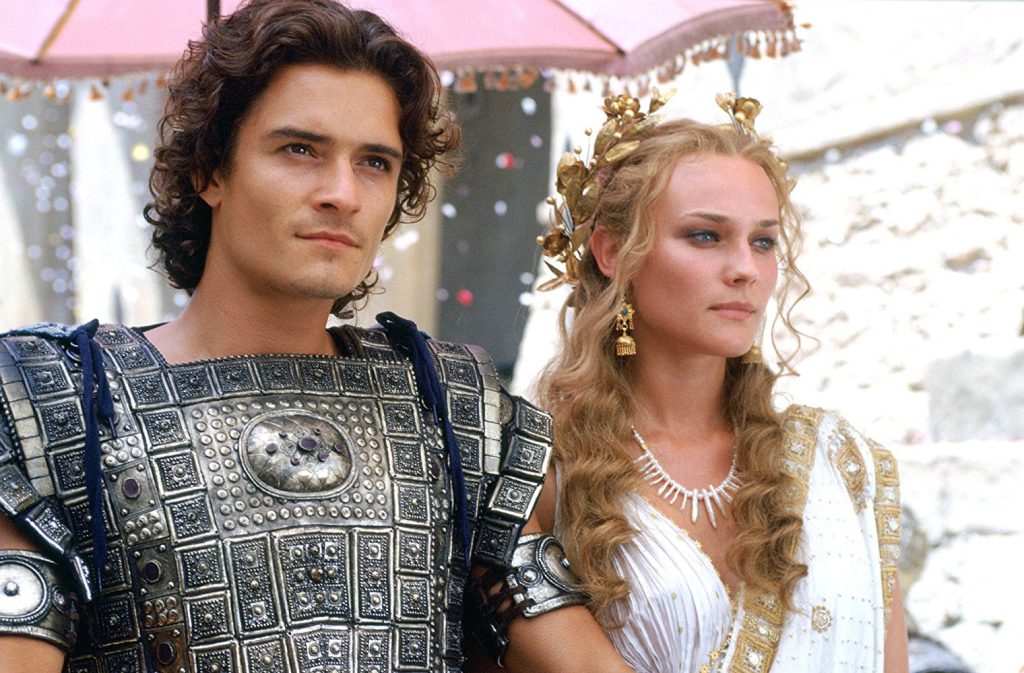
Helen and Paris are also simplified. Ancient writers couldn’t even agree whether Helen ran away willingly or was abducted, so the film simply picks one version and sticks with it.
Overall, most of the major characters feel like recognisable versions of their legendary counterparts, even if several have had their personalities or relationships adjusted for Hollywood.
Historical accuracy: 7/10
The Locations
This is probably where the film earns its highest marks.
Despite what many people assume, Troy wasn’t an entirely fictional place. Archaeologists have spent over a century excavating the ancient city at Hisarlık in modern-day Türkiye, and there is very little doubt that a wealthy Bronze Age city once stood there.
Is the city in the film exactly what the real Troy looked like?
Probably not.
Nobody knows for certain.
But the filmmakers do a brilliant job of creating somewhere that feels believable. The towering walls, the narrow streets and the sense that this is an important trading city all fit surprisingly well with what archaeologists think Late Bronze Age Troy may have been like.
The Greek world is handled reasonably well too. It isn’t perfect, but it avoids making everything look like the white marble temples most people associate with Ancient Greece, which actually belonged to a much later period.
Historical accuracy: 8.5/10
Life in the Bronze Age
This is where things become a bit of a mixed bag.
The film certainly feels ancient. The armour is heavy, the fighting is brutal and kings rule over powerful city states rather than unified countries. That all fits reasonably well with what we know about the Late Bronze Age.
But there are plenty of liberties.
The battles often look more like medieval warfare than Bronze Age warfare. The armour is designed to look cool on camera rather than faithfully recreate archaeological finds, and the famous one-on-one duels probably weren’t deciding entire wars.
The biggest omission, though, is religion.
If you’ve read The Iliad, you’ll know that the gods are practically main characters. Athena, Apollo, Aphrodite and Zeus are constantly interfering, choosing favourites and changing the course of events.
In Troy, they’re almost completely absent.
Now, I actually understand why the filmmakers did this. A realistic war film where Apollo suddenly appears to guide an arrow into Achilles’ heel probably wouldn’t have matched the tone they were going for.
But it does mean that the film isn’t really adapting Homer’s story anymore. It’s adapting a version where all the divine intervention has been stripped away.
Historical accuracy: 6/10
Overall
Troy has always had a slightly impossible job.
The Trojan War sits somewhere between history and mythology. We know Troy existed. We know the city was destroyed. We know the Greeks told stories about a great war there for centuries afterwards.
What we don’t know is whether Achilles, Hector or Helen ever existed at all.
So rather than judging Troy as a documentary, it’s probably fairer to judge it as a realistic interpretation of one of history’s greatest legends. It gets far more right than many historical epics, but it also changes enough that anyone hoping for a faithful retelling of The Iliad might come away a little disappointed.
Overall historical accuracy: 7/10