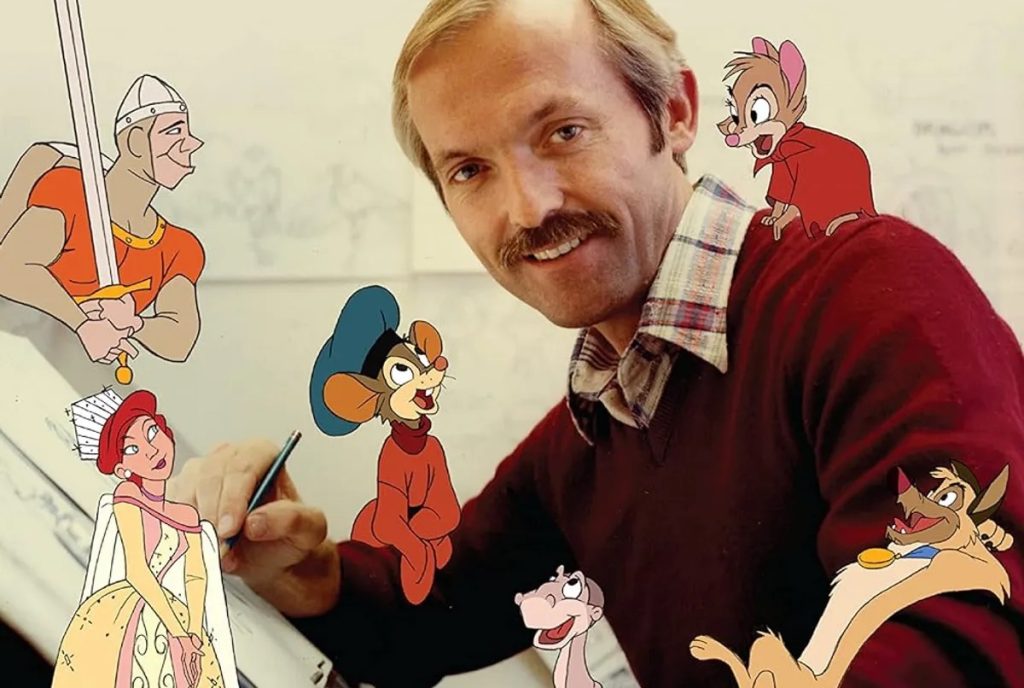
Welcome to the An American Tail Q&A hub — a deep dive into the real history, meaning, and legacy behind the beloved 1986 film..
Answering the most frequently asked questions about the legacy of Fievel Mousekewitz and his journey to America.
Jump to a question:
- Is An American Tail based on a true story?
- Who was Fievel Mousekewitz named after?
- What time period is the film set in?
- What is the meaning behind the film?
- What do the cats symbolize?
- Why do they say “there are no cats in America”?
- Was Fievel’s family Jewish?
- What are pogroms, and why do they matter?
- Why is Fievel separated from his family?
- What does “Somewhere Out There” mean?
- Is the film historically accurate?
- What city do they arrive in?
- Was Ellis Island in the film?
- Is the movie too sad for kids?
- Is it a religious movie?
- Who made the film?
- Why did Spielberg want to make it?
- Was it successful when released?
- Are there sequels?
- Why is it still important today?
1. Is An American Tail based on a true story?
Not exactly — but it draws heavily from real events. Fievel’s family mirrors the millions of Jewish families who fled pogroms (anti-Semitic attacks) in the Russian Empire in the late 1800s. While the story is fictional and told through animated mice, the emotional truth — fear, displacement, hope — is deeply rooted in immigrant history.
2. Who was Fievel Mousekewitz named after?
Fievel was named after Don Bluth’s grandfather, a Jewish immigrant. It’s a traditional Yiddish name and a tribute to family history — grounding the story in something very personal and culturally meaningful.
3. What time period is the film set in?
The story takes place in 1885, during a real wave of Jewish emigration from Eastern Europe. At the time, many were fleeing persecution and arriving at ports like Ellis Island, full of dreams — and fears — about their new lives in America.
4. What is the meaning behind the film?
At its core, the film is about immigration, family, and survival. It tackles identity, assimilation, and how hope can persist even in exile. For adults, it’s a powerful historical allegory; for children, it’s a tale of resilience and reunion.
5. What do the cats symbolize?
The cats represent oppression — from the Russian Cossacks to exploitative employers in America. They are metaphors for violence, power, and prejudice, making the story’s conflict deeply symbolic. The fact that cats are feared everywhere Fievel goes shows how oppression can take many forms, even in the “land of the free.”
6. Why do they say “there are no cats in America”?
This line is both hopeful and tragic. It reflects the naïve dream many immigrants had: that America was a paradise free from danger. But the line becomes ironic when they arrive and find that predators — figurative and literal — exist there too. It’s one of the film’s most poignant commentaries on broken promises.
7. Was Fievel’s family Jewish?
Yes — though it’s not overtly stated, everything about the Mousekewitz family signals Jewish identity: their names, their customs, the setting in 1880s Russia, and the reason for their emigration (a pogrom). The film quietly teaches children about Jewish diaspora history without ever labeling it too directly.
8. What are pogroms, and why do they matter?
Pogroms were violent attacks on Jewish communities, often state-sanctioned in the Russian Empire. In the film’s opening, the cats storming the village represent these real historical atrocities. That terror is what drives the Mousekewitz family to seek refuge in America — just like thousands of real families did.
9. Why is Fievel separated from his family?
Fievel is swept away in a storm at sea — a tragic accident that parallels how families were often separated at ports or lost during travel. It reflects the fear and chaos of migration, and the desperate hope that loved ones might one day be found again.
10. What does “Somewhere Out There” mean?
The song represents hope across distance. It’s about love surviving even when people are far apart — a perfect reflection of both the immigrant journey and the emotional core of the film. That children could feel this message, even without understanding immigration, is what makes the song so powerful.
11. Is the film historically accurate?
It’s historically informed, not strictly accurate. The film anthropomorphizes its characters, but the emotional and cultural backdrop is real: pogroms, overcrowded ships, tenement housing, labor struggles, and the illusion of a better life. It’s not a history lesson, but it’s steeped in truth.
12. What city do they arrive in?
They arrive in New York City, which was the primary destination for many immigrants in the late 19th century. The city is portrayed with overcrowded streets, poor housing, and political unrest — a surprisingly honest depiction of what greeted newcomers.
13. Was Ellis Island in the film?
Not by name, but the immigration sequence reflects an Ellis Island-like experience. Lines of newcomers, inspections, and processing mimic the real-life port of entry that millions passed through. The film condenses this into a few brief scenes, but the atmosphere is unmistakable.
14. Is the movie too sad for kids?
Because it’s emotionally intense — and unafraid to show fear, separation, and struggle. But that’s also what makes it honest. Many children relate deeply to Fievel’s loneliness, which is why the film still resonates across generations. It doesn’t talk down to children — it trusts them.
15. Is it a religious movie?
No — but it’s culturally grounded in Jewish experience. There are subtle signs of Jewish identity throughout, but the story is about universal emotions: love, loss, hope, survival. It connects across faiths, precisely because it’s rooted in something real.
16. Who made the film?
The film was directed by Don Bluth and produced by Steven Spielberg, through Amblin Entertainment. Bluth was known for darker, emotionally rich animated films (The Secret of NIMH, The Land Before Time), and Spielberg wanted to tell a story rooted in his own family’s immigration past.
17. Why did Spielberg want to make it?
Spielberg has spoken about his Jewish roots and his interest in telling stories of identity and survival. He wanted to show children what their ancestors might have experienced, without preaching or overwhelming them. An American Tail was a way to honor those stories while making them accessible.
18. Was it successful when released?
Yes — it was a surprise box office hit. In 1986, it even outperformed Disney’s The Great Mouse Detective. Its success helped launch a new era of non-Disney animation and paved the way for more serious, story-driven family films.
19. Are there sequels?
Yes — but none carry the same historical depth. The most well-known sequel is Fievel Goes West (1991), which shifts genres into a Wild West comedy. It’s fun, but far less emotionally layered. Other direct-to-video sequels followed, mostly aimed at younger audiences.
20. Why is it still important today?
Because it reminds us where many of our ancestors came from — and what they endured to get here. It shows how stories told with heart and honesty can transcend age. And in an age of renewed conversations about immigration, it still speaks volumes — softly, but powerfully.
21. Why is An American Tail considered relevant to Holocaust history?
While An American Tail is set in the 1880s and focuses on Jewish immigrants fleeing pogroms in Eastern Europe, its emotional themes deeply resonate with later historical tragedies, especially the Holocaust. The Mousekewitz family’s experience—facing violence, losing loved ones, and seeking safety in a distant land—echoes the broader history of Jewish persecution.
22. Is An American Tail about the Holocaust?
Although the film doesn’t directly reference the Holocaust, it reflects the long-standing struggles Jewish communities faced in Europe, struggles that ultimately culminated in the horrors of the 20th century. In this way, An American Tail serves not only as a story of hope and resilience but also as a poignant reminder of the hardships Jewish families endured across generations.
23. What was the Mouse of Minsk?
The Mouse of Minsk is a fictional, mouse-sized war machine featured in An American Tail. Inspired by the Russian battleship Potemkin, it’s a makeshift mechanical contraption built by the mice to scare off the cats in the climax of the film. Although it appears as a whimsical invention, it symbolizes the power of unity and ingenuity in the face of oppression. Its dramatic, steam-powered appearance—complete with glowing eyes and roaring sounds—plays on Eastern European folktale aesthetics and Fievel’s vivid imagination.
Discover the hidden history, real-life inspiration, and emotional depth behind this unforgettable film in my main post:
Sources & Further Reading
Click to view sources
- Library of Congress – Jewish Immigration to America, 1880–1924
- My Jewish Learning – The Jewish Immigrant Experience in America
- Jewish Telegraphic Agency – Spielberg’s Vision for An American Tail
- The New York Times (1986) – Review of An American Tail
- Wikipedia – An American Tail (for general film details)
- IMDb – An American Tail (1986)