I recently made a post about how I believe the new live-action Snow White signals the end of Disney magic, and perhaps the company itself as we know it—you can read that here if you haven’t already.
But to really emphasise my point, I wanted to write a follow up piece showcasing just how much the original animated version of the film meant to Walt and the Disney company as a whole. Stick around for a cheeky little FAQ at the end!
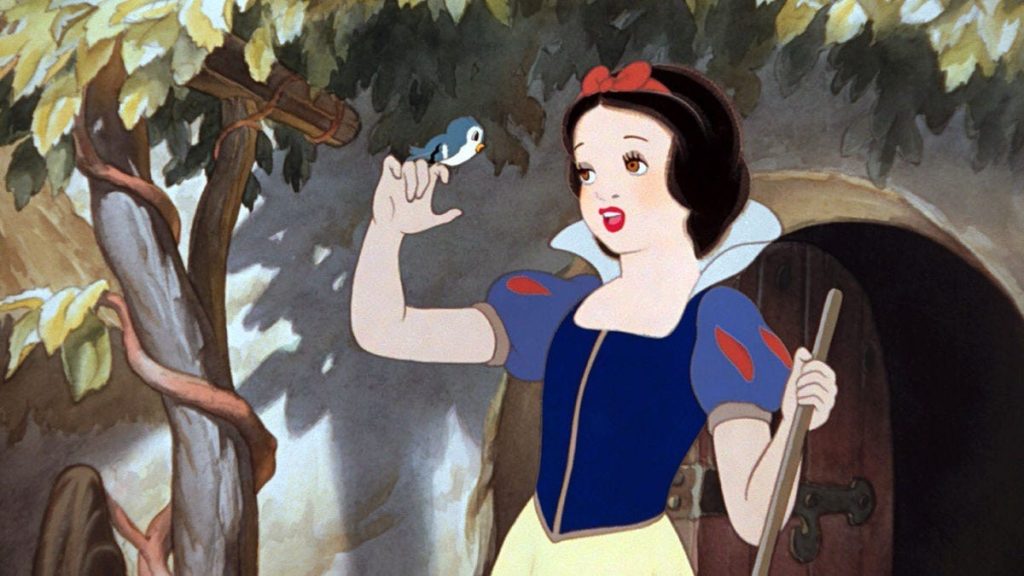
When Snow White and the Seven Dwarfs premiered in 1937, the film stunned audiences and changed cinema forever. Today it’s remembered as the first full-length animated feature, a fairytale milestone. But to Walt Disney, Snow White was much more than that. It was his gamble, his passion, and ultimately, the foundation of the Disney empire.
Without it, there may have been no Cinderella, no Disneyland, and no legacy of Disney as we know it today. It truly is “the one that started it all.”
A Folly in the Making
When Walt Disney announced his plan to produce a ninety-minute animated film, Hollywood laughed. Variety predicted failure, critics called it “Disney’s Folly,” and industry insiders were certain no audience would sit through a feature-length cartoon. Animated shorts were, until then, considered light entertainment, a way to fill gaps before the main feature. Nobody thought drawings could carry the same weight as a live-action drama.
But Walt wasn’t deterred. He believed in the emotional power of animation. “It’s not just drawings,” he famously said. “It’s personalities.” To him, Snow White was not a novelty — it was a chance to elevate animation into a respected art form. He was so determined that he screened early reels for his animators, encouraging them to act scenes out and push past comedy into drama, suspense, and romance.
The Gamble of a Lifetime
Snow White cost a staggering $1.49 million to make — an astronomical figure in the middle of the Great Depression, especially for a genre many dismissed as children’s entertainment. To fund the project, Walt mortgaged his own house, borrowed from his life insurance, and persuaded banks to back him. At one point, production halted completely when funds ran out. Desperate, Walt arranged a meeting with Bank of America, showing them unfinished reels. The bankers were so impressed by the artistry that they agreed to finance the rest of the project.
Every cent was on the line. If the film failed, Disney Studios would collapse. If it succeeded, it would prove to the world that animation was more than ink and paint. Walt later said that making Snow White nearly broke him — but he never stopped believing in the vision.
A New Art Form
Walt pushed his artists to achieve levels of realism and depth that had never been seen in animation before. Animators studied live actors to capture human movement. Snow White’s fluid gestures came from a live model named Marge Belcher (later Marge Champion), while rotoscoping techniques helped refine the prince’s movements. The studio invented the multi-plane camera, which allowed backgrounds to move at different speeds, creating a striking sense of depth. This was cinema, not just cartoons.
The film’s visual ambition extended to mood and tone. Snow White’s forest sequence combined shadow, sound, and frantic animation to terrify audiences, while the Evil Queen’s transformation showcased grotesque detail worthy of a horror film. And at its heart, the dwarfs were not generic sidekicks — they were individuals. Dopey, Grumpy, Bashful, and the rest each had their own expressions, walks, and personalities. This level of characterisation was revolutionary and remains one of the film’s greatest achievements.
The Studio the Dwarfs Built
The profits from Snow White allowed Walt to expand his small Hyperion studio into a brand new campus in Burbank, California. To symbolise how much he owed to his first feature, Walt commissioned architectural columns shaped like the seven dwarfs to hold up the main building. These massive sculptures — still visible today — literally show the dwarfs shouldering the weight of Disney’s empire. It was a whimsical but deeply symbolic tribute: Snow White didn’t just build a studio, it built a legacy.
Opening Night Magic
On December 21, 1937, Hollywood’s Carthay Circle Theatre glittered with celebrities: Shirley Temple, Charlie Chaplin, Clark Gable, and Carole Lombard all attended. The screening was electric. When Snow White fell into her glass coffin, hardened critics wept openly. At the prince’s kiss, the audience erupted in applause. Walt sat quietly in the back, tears in his eyes, knowing his gamble had paid off.
The film went on to earn more than $8 million in its initial release — equivalent to over $150 million today — making it the highest-grossing sound film of all time until Gone With the Wind (1939). It won an honorary Academy Award: one full-sized Oscar accompanied by seven miniature ones, presented to Walt by Shirley Temple in 1939.
The Legacy of a Dreamer
Snow White proved that animation could rival live-action films in emotion and artistry. It paved the way for Disney classics like Cinderella, Pinocchio, and Bambi, and it helped establish merchandising and soundtrack sales as key parts of the Disney business model. More importantly, it showed that one man’s dream, however impossible it seemed, could create an empire of imagination.
Today, the film is preserved in the United States National Film Registry as “culturally, historically, or aesthetically significant.” Its influence can be felt not only in animation but in the very concept of Disney as a cultural force. Without Snow White, there would be no castle at Disneyland, no Disney Princess franchise, and perhaps no global entertainment giant at all.
Frequently Asked Questions
- When was Snow White released?
- Who were the main voice actors?
- What is the prince called?
- What story is it based on?
- How does the original Snow White differ from Disney’s version?
- What is the legacy of Snow White today?
- Where can you watch Snow White now?
- Does Snow White Die in the 1937 Disney animation?
When was Snow White released?
The film premiered at Hollywood’s Carthay Circle Theatre on December 21, 1937, and was widely released in the United States on February 4, 1938. It became the highest-grossing film of its time until Gone With the Wind surpassed it two years later.
Who were the main voice actors?
Snow White was voiced by Adriana Caselotti, chosen for her youthful, operatic singing voice. Lucille La Verne provided the chilling voice of the Evil Queen and her cackling witch form. Harry Stockwell (father of actor Dean Stockwell) voiced the Prince. Other voices included Pinto Colvig (also the voice of Goofy) and Billy Gilbert.
What is the prince called?
In the original film, the character is referred to only as “The Prince.” Over time, fans and Disney publications began to call him Prince Florian, though this name never appears in the 1937 movie itself.
What story is it based on?
Disney’s Snow White is based on the German fairy tale “Schneewittchen,” collected by the Brothers Grimm and published in 1812. The Grimm tale was much darker, involving violence, jealousy, and cruel punishments, but Disney softened the story for family audiences.
How does the original Snow White differ from Disney’s version?
In the Brothers Grimm version, the Queen orders a huntsman to cut out Snow White’s lungs and liver, which she intends to eat. Snow White is poisoned multiple times — not just once — and is only awakened when servants jostle her coffin, dislodging the poisoned apple from her throat. In the end, the Queen is forced to wear red-hot iron shoes and dance until she dies. Disney’s version removed these grisly elements, replacing them with a single poisoned apple and a romantic “true love’s kiss.”
What is the legacy of Snow White today?
The film is considered one of the most important in cinema history. It established feature-length animation as a respected medium, earned Walt Disney an honorary Academy Award, and built the financial foundation for Disney Studios. Its influence can be seen in nearly every Disney princess film that followed, from Cinderella to Frozen. Snow White remains a central part of Disney’s identity, even serving as the inspiration for the iconic castle at Disneyland.
Where can you watch Snow White now?
Snow White and the Seven Dwarfs is available to stream on Disney+ and can also be purchased on DVD, Blu-ray, or digital platforms such as Amazon Prime Video and Apple TV. It is frequently re-released as part of Disney’s “vault” collection and continues to be restored for new generations.
Does Snow White die in the Disney film?
In the 1937 Disney version, Snow White does not permanently die — but she does fall into a deathlike sleep after eating the poisoned apple. The dwarfs believe she has died and build her a glass coffin. At the film’s end, the Prince awakens her with a kiss, and they ride together to his castle. Some viewers notice that the castle appears in the clouds, leading to fan theories (and my own personal belief!) that Snow White actually died and the ending is symbolic of her entering heaven. However, Disney’s official interpretation is that the Prince truly revives her and the castle represents there “happily ever after.”