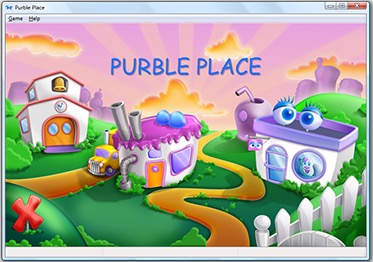
Before flashy online games, before app stores, there was Purble Place — a little purple-hatted icon tucked quietly into the Games folder of Windows Vista and Windows 7.
To some, it was nothing more than a childhood distraction; to others, it was the first time a computer felt friendly.
For a generation of kids, Purble Place wasn’t just software — it was comfort.
When It Arrived
Purble Place first appeared in 2005, bundled into a pre-release build of Windows Vista known as Build 5219. It wasn’t yet a household name, but those early testers had stumbled upon something special. By 2007, when Vista officially launched, Purble Place had become part of the standard game suite — sitting proudly alongside Solitaire, Minesweeper, and FreeCell.
Microsoft wanted something new for younger audiences: a cheerful, colourful, educational game that parents could feel good about. They turned to Oberon Media, a small but respected studio already creating casual games for MSN and Xbox Live Arcade. The result was a trio of mini-games designed to challenge logic, pattern recognition, and memory — all wrapped in bright pastel visuals and smiling cartoon faces.
When Windows 7 arrived in 2009, Purble Place came with it. For many, that’s when it truly hit its stride. Nearly every family computer and school IT suite had it, ready to click whenever lessons ended or homework was avoided.
What Exactly Was Purble Place?
Rather than a single game, Purble Place was actually a three-part collection:
Purble Pairs
The most familiar of the trio — a classic memory-matching game. Flip tiles to find matching images of cakes, faces, and objects. It started easy, but soon the grid expanded, the images blurred together, and your brain had to keep up. It was the digital equivalent of memory flashcards, disguised as play.
Comfy Cakes
This one tested focus and dexterity. Players operated a conveyor belt, assembling cakes according to orders — right base, correct layers, icing, and decoration. It sounds simple until the pace quickened and cakes backed up, each mistake stacking a little more chaos onto your virtual workbench. It was part logic puzzle, part stress test, and deeply satisfying when you got into the rhythm.
Purble Shop
The hardest of the three — and arguably the most ingenious. Players had to deduce the hidden features of a mystery Purble (hair, eyes, nose, mouth, clothes) using logic, trial, and error. It was basically Mastermind dressed up as a guessing game, gently teaching players about reasoning and elimination.
Each mini-game could be played by children but had enough escalating difficulty to keep adults hooked too. It was clever design masked as cuteness.
The People Behind It
According to a 2024 Guardian interview, Purble Place was developed under tight deadlines and surprisingly serious conditions. Microsoft wanted it to meet all of its accessibility and security standards, meaning the game had to run safely across every Windows machine.
The lead developer was Jane Jensen, known for her narrative design on Gabriel Knight, with Cara Ely as producer. Their team included Brendan Walker, Dan Thompson, and Tam Armstrong, who collectively built the game using Oberon’s own in-house “Flat Engine.” Their brief? Create the “Solitaire for kids.”
And they did — blending education and entertainment so seamlessly that most players never realised they were learning.
Enjoying the post? Join the newsletter!
How Big It Became
Because Purble Place was bundled directly with Windows, no one kept direct player statistics — but its potential reach was huge.
- By 2011, Windows 7 had sold over 400 million licences.
- By 2012, that number rose to around 630 million.
- Vista, despite its mixed reviews, still reached tens of millions of users.
If only a fraction of those people opened Purble Place even once, it still means hundreds of millions encountered it in some way.
Fast forward to today, and the nostalgia is unmistakable. Videos revisiting Purble Place have amassed over 50 million views across TikTok and YouTube, according to the Guardian. Some creators call it their “comfort game,” others a symbol of early 2000s innocence — that strange, calm pre-internet era where everything on your PC was self-contained and safe.
When It Went Away
When Windows 8 arrived in 2012, Microsoft quietly retired its suite of built-in games. Solitaire and Minesweeper were reborn as downloadable apps with ads and microtransactions, but Purble Place was left behind entirely.
The logic seemed simple: the company wanted a cleaner operating system and a new focus on the Microsoft Store. But for players, it felt like the end of an era. You could no longer click “Games” and find your old pastel bakery waiting.
Enthusiasts found workarounds — installing the Windows 7 Games Pack on modern machines, reviving Purble Place on Windows 10 and 11. Others rebuilt it entirely from scratch, uploading remakes to mobile stores and Steam. None quite captured the original’s mix of simplicity and warmth, but the spirit remains alive in small online communities.
Why It Still Matters
Looking back, Purble Place represents a time when computers were friendlier.
No sign-ins, no internet connection, no downloads — just you, a mouse, and a handful of joyful puzzles.
It quietly introduced children to pattern recognition, reasoning, and task management — all without any academic framing. It was learning through comfort, wrapped in digital frosting.
Today, in an age of endless apps and overstimulation, Purble Place feels like a relic from a gentler digital world — one where fun didn’t have to compete for attention.
It’s nostalgia not just for a game, but for a feeling:
the whir of an old computer, the glow of the Windows 7 start menu, and the calm certainty that play could still be simple.
Bonus FAQ
What is Purble Place?
Purble Place is a collection of three educational mini-games — Purble Pairs, Comfy Cakes, and Purble Shop — developed by Oberon Media for Microsoft. It was designed to teach logic, memory, and pattern recognition in a fun, child-friendly environment.
When did Purble Place come out?
It was first introduced in 2005 during early Windows Vista test builds and officially launched in 2007 with the full release of Windows Vista. It later came pre-installed with Windows 7.
Who created Purble Place?
Purble Place was developed by Oberon Media under contract with Microsoft.
Key developers included Jane Jensen (lead designer), Cara Ely (producer), Brendan Walker, Dan Thompson, and Tam Armstrong.
What are the three games in Purble Place?
- Purble Pairs – a memory-matching puzzle.
- Comfy Cakes – a pattern and coordination game about assembling cakes.
- Purble Shop – a logic deduction game inspired by Mastermind.
What was Purble Place designed to teach?
Although intended for entertainment, the games helped develop memory skills, logical reasoning, sequencing, and focus— particularly in younger players.
Why was Purble Place removed from Windows?
Microsoft removed all classic built-in games, including Purble Place, with the release of Windows 8 in 2012. The company shifted focus to downloadable apps through the Microsoft Store.
Can I still play Purble Place today?
Yes. The Windows 7 Games Pack (which includes Purble Place) can still be installed on modern systems like Windows 10and Windows 11 via reputable community downloads. There are also unofficial remakes available on mobile platforms and Steam, though they aren’t official Microsoft releases.
Is Purble Place on Steam or mobile?
There are several unofficial versions and inspired clones available on Google Play, iOS, and Steam, but none are developed or endorsed by Microsoft.
Why do people remember Purble Place so fondly?
It’s a symbol of early 2000s computer nostalgia — a time before ads and online accounts, when games came pre-installed and were simple, wholesome, and accessible to everyone.
How many times did I have to fight with autocorrect over Purble/Purple when writing this article?
A lot! Hope you enjoyed it, I appreciate you x