Long before social media or virtual reality, there was The Palace — a pixelated chat platform that allowed people to step into entire worlds of their own making.
For those who remember the early internet of dial-up tones, Geocities pages, and flashing cursors, The Palace was something magical: a digital kingdom where you could quite literally be your avatar.
What Was The Palace?
The Palace launched in 1995, developed by Jim Bumgardner at Time Warner Interactive. It was one of the earliest examples of a graphical chatroom — a downloadable client that let users enter themed “rooms,” chat in speech bubbles, and customise their on-screen character using tiny pixelated images called props.
Every Palace “room” had its own aesthetic. Some looked like futuristic cities; others resembled gothic castles, bedrooms, or cafés. What made it extraordinary was that users could build and host their own Palace servers, designing custom backgrounds, sounds, and even scripts. The Palace used its own PServer scripting language, letting creators design doors, animations, and interactive experiences years before virtual sandboxes were common.
The Culture It Created
More than a chatroom, The Palace was one of the first true online communities. People gathered not just to talk, but to create. Friend groups formed around shared aesthetics — fantasy, cyberpunk, goth, or fairy-core — and each Palace had its own rules, culture, and cliques. Some users became local celebrities for their art or their sense of humour, while others hosted massive events and dance parties complete with animated avatars.
Every prop and background was handmade. To appear in The Palace was to wear someone’s art — and that sense of individuality and visual identity became central to early digital culture. In a way, it was MySpace and Second Life rolled into one, but in pixel form.
The Rise of Dollz Culture
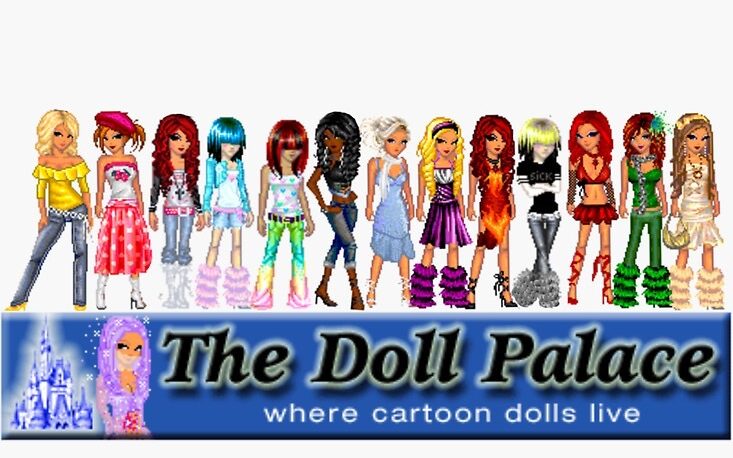
One of The Palace’s most fascinating legacies was its role in the rise of the “dollz” movement — the pixel-art avatars that would later take over websites like DollzMania and The Doll Palace. Palace users often created or modified props resembling fashion dolls, complete with changeable hair, clothes, and accessories. These were the ancestors of today’s digital dress-up games.
Artists such as Melicia Greenwood and other early base creators became quietly influential in this scene, producing templates and outfits shared among Palace communities and later across personal websites. The goth, punk, and fantasy aesthetics that dominated The Palace’s rooms directly inspired the pixel-art revival that swept through the early 2000s.
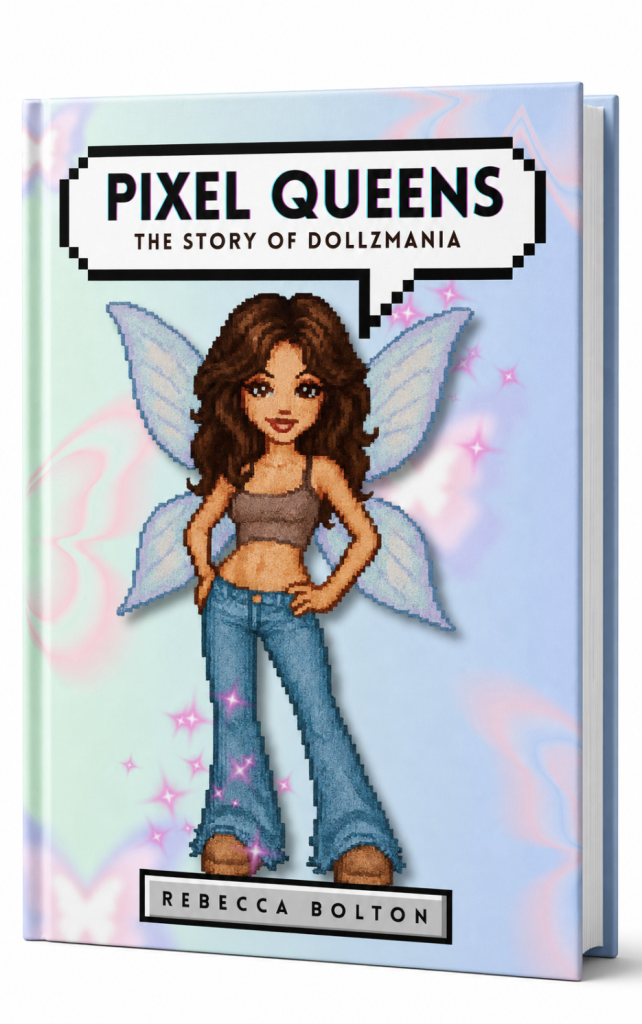
Pixel Queens: The Story of Dollzmania
Read the full story of Dollzmania in this chapbook, available to download for free in the Library.
The Decline
By the early 2000s, The Palace had started to fade. Its client-based setup made it harder to access than browser-based platforms, and maintaining private servers required technical know-how. As the internet grew slicker and faster, people moved on to spaces like Neopets, Habbo Hotel, and eventually MySpace — all of which carried echoes of what The Palace pioneered.
The official servers eventually went offline, but fan-run communities have kept the spirit alive. Even today, you can find nostalgic recreations and archives preserving old rooms, props, and scripts — like ghosts of an internet long past.
The Legacy
Though many have forgotten it, The Palace laid the foundation for how we present ourselves online. From avatar creation to virtual environments, from social customisation to creative self-expression, it predicted almost everything about our modern digital lives. The DNA of The Palace can be traced through Second Life, VRChat, Discord communities, and even how we use profile pictures and emojis to express identity.
In its own quiet way, The Palace proved that connection online didn’t have to mean anonymity — it could mean artistry. Every pixel, every prop, every room was a statement of self, drawn and coded by hand.
A Digital Kingdom Remembered
When we look back on the early internet, it’s easy to remember the noise — the pop-ups, the dial-up, the chaos. But The Palace was something softer: a community built on imagination. It wasn’t perfect, but it gave a generation of artists and dreamers a space to exist outside the rules of the real world.
Before social media made everything public, The Palace gave people the freedom to build their own worlds — and for a moment in time, they ruled them.