Before Bitmoji, before profile pictures, there were Dollz — tiny, pixelated fashion avatars that ruled the internet of the early 2000s.
They were more than a pastime; they were art, self-expression, and a way of finding community online. I’ve written two other posts on the Dollzmania trend that you can find here. But there were many different versions and styles. Among the many styles that emerged, one stood out for its dark charm and creativity: Goth Dollz.
The Rise of the Dollz Phenomenon
The Dollz movement began in the late 1990s as a spin-off from The Palace, the graphical chat program where users could wear “props” as avatars. Artists started drawing full-body characters inspired by those props, giving rise to a new genre of pixel art: customisable digital dolls with interchangeable hair, clothing, and accessories.
By the early 2000s, websites like DollzMania, The Doll Palace, and Dollz Underground had turned the trend into a global obsession. Users could mix and match outfits, drag-and-drop hairstyles, and even create their own web pages displaying collections of their Dollz. In a pre-social-media world, these tiny characters became a way to say “this is who I am.”
The Birth of Goth Dollz
As the Dollz scene exploded, artists began branching into subcultures — punk, fairy, vintage, and most memorably, goth. Goth Dollz captured everything that defined early-2000s alternative fashion: striped arm warmers, black corsets, fishnets, knee-high boots, and heavy eyeliner. They were moody, dramatic, and unapologetically expressive.
For many teens exploring identity in the early internet era, creating Goth Dollz was a quiet act of rebellion. You didn’t have to wear the clothes in real life to experiment with them online. The process of building and decorating these dolls — pixel by pixel — was a creative outlet and a form of digital self-portraiture.
Melicia Greenwood and the Base Artists
Behind every Doll was a base — a blank pixel body used as the foundation for outfits and hair designs. Artists who drew these bases were the backbone of the community, and one name that still circulates among nostalgic fans is Melicia Greenwood.
Melicia was part of a generation of independent digital artists who helped define the Dollz aesthetic. Her bases were easily recognisable: elegant proportions, expressive eyes, and subtle shading that made them perfect for customisation. Many Dollz creators built their entire collections on her bases, sometimes without realising who originally drew them.
Base creators like Melicia set standards for digital crediting and artistic etiquette. In a time when most art was shared freely across forums and Geocities pages, artists began adding “Do not edit or redistribute without credit” notices to their work — an early example of digital copyright culture forming in real time.
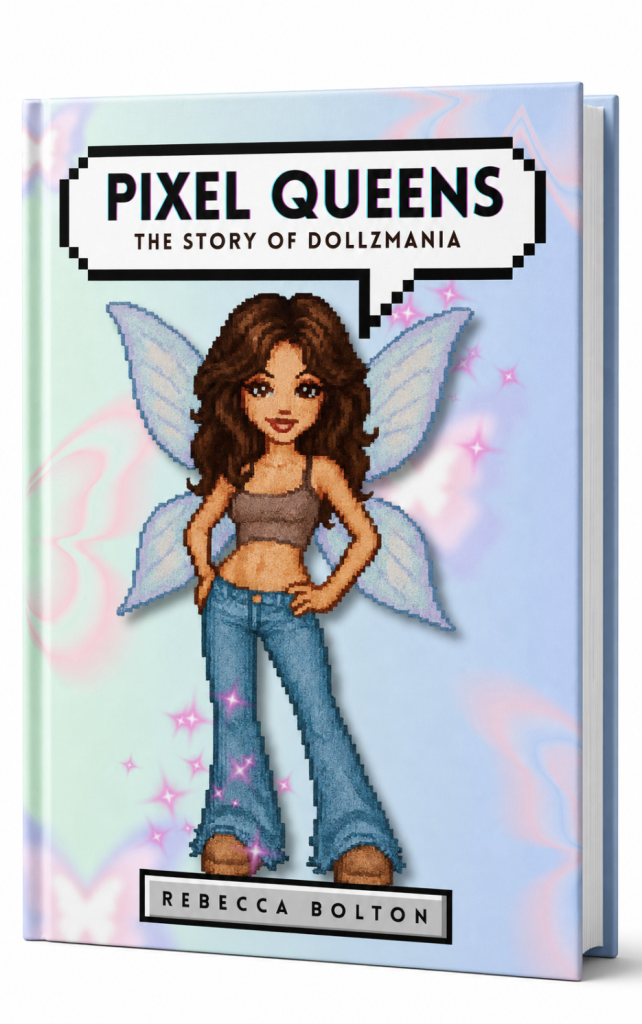
Pixel Queens: The Story of Dollzmania
Read the full story of Dollzmania in this chapbook, available to download for free in the Library.
Fashion, Subculture, and Digital Identity
What made Goth Dollz so compelling was how they bridged fantasy and authenticity. They reflected the growing popularity of alt fashion seen in magazines like Kerrang! and on early MySpace profiles, yet they existed in a hyper-stylised, idealised pixel form. Creating one wasn’t just about clothing; it was about emotion — about embodying a mood, a song, a feeling.
For many young creators, Dollz sites offered their first experiences of graphic design, HTML, and online publishing. You learned to crop, recolour, and code your own pages — skills that would later evolve into full creative careers for some of those early adopters.
The Decline and Digital Afterlife
By the late 2000s, the Dollz era began to fade. Flash games, social networks, and mobile apps offered newer ways to customise avatars. But the spirit of Dollz never truly disappeared. You can still find archives of Goth Dollz and original base sheets floating around on Tumblr, DeviantArt, and Pinterest — carefully tagged and preserved by nostalgia enthusiasts.
More recently, pixel artists have begun reviving the aesthetic under hashtags like #PixelDollz and #Webcore, celebrating the handmade charm and subcultural energy that defined that moment in internet history.
The Legacy of the Dollz Generation
Today’s avatar culture — from gaming skins to social media icons — owes much to those early pixel Dollz communities. They were a grassroots art movement led mostly by teenage girls, exploring identity and creativity in spaces they built for themselves. Artists like Melicia Greenwood deserve recognition as digital pioneers, long before “creator culture” had a name.
In their own way, the Goth Dollz and their creators taught a generation that online identity could be art — and that every pixel, no matter how small, could tell a story.