Only a handful of film endings leave audiences as unsettled and interpretively open as Terry Zwigoff’s Ghost World (2001).
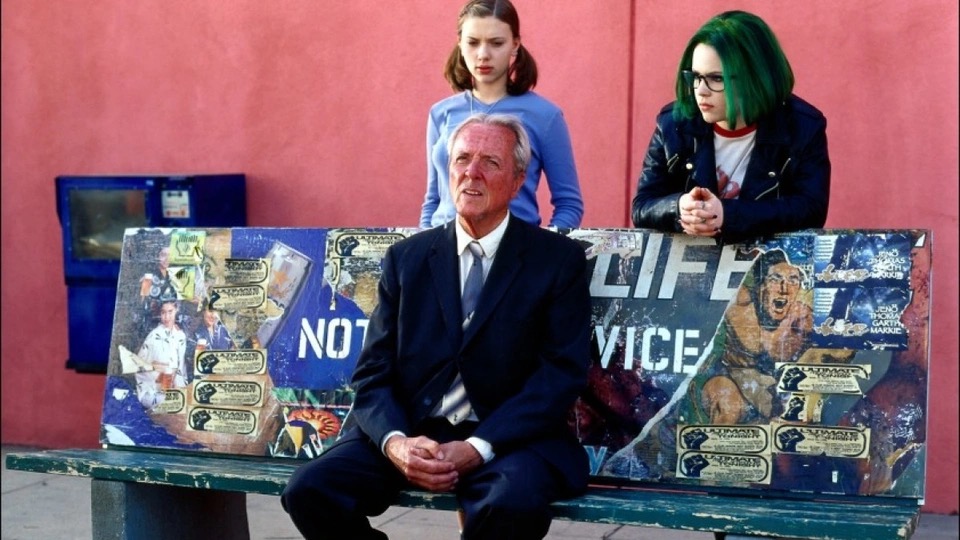
Based on Daniel Clowes’ cult comic, the film closes on an enigmatic image: Enid Coleslaw (Thora Birch) boarding a seemingly out-of-service bus that had earlier been dismissed as permanently cancelled.
She rides away in silence, never to return, while the world of childhood friends, failed relationships, and suburban emptiness fades behind her. But is this scene as simple as it looks, or does it hint at a darker ending for our main girl? Does Enid die?
The Cancelled Bus: A Symbol of Escape or Oblivion?
Throughout the film, Enid observes Norman, an old man who patiently waits for a bus that no longer runs. Locals mock him, dismissing the bus as cancelled years ago. But when Norman finally boards the phantom vehicle, the moment is treated with eerie reverence. Later, Enid follows in his footsteps, stepping onto the same empty bus with no destination marked. Could it be a hopeful sign that things aren’t always as bad as they seem, that life has new surprises all the time and Norman was right when he claimed that Enid knew nothing. Norman’s faith was simply repaid.
Or… is the bus a vessel of death. An empty, quiet vessel.
The Death Interpretation: Enid’s Final Exit
Many viewers believe Enid’s bus ride represents her suicide. By the end, she has lost her connection with Rebecca, pushed away Seymour, and rejected the world of adulthood laid out for her. The ghostly bus, cancelled and purposeless, becomes a hearse-like symbol. Her quiet, resigned body language contrasts with her sarcastic energy earlier in the film, suggesting she has given up.
From this perspective, Enid’s “death” is a tragic reflection of youth alienation: when society offers no place to belong, disappearing becomes the only option.
The Rebirth Interpretation: Leaving One World for Another
Others argue that the bus represents rebirth, not death. Ghost World is filled with thresholds—between adolescence and adulthood, cynicism and compromise, imagination and reality. If Norman’s faith in the bus was rewarded, then Enid’s decision to board it can be read as an act of hope. She refuses to stay in a stagnant, suffocating world, and instead chooses an undefined, even risky, future.
In this light, the ending is not nihilistic but liberating: Enid dies to her old life, but is reborn into possibility. Enid can finally fulfil her fantasy that we heard her discussing with Seymour earlier in the film—to quietly leave and disappear.
Seymour as Enid’s Mirror
Seymour (Steve Buscemi) represents the fate awaiting Enid if she stays: a life of clinging to nostalgia, bitterness, and failed connections. Yet Seymour eventually chooses to compromise, telling his therapist he is ready to “return to his old life.” Enid cannot. The bus, whether death or escape, is her refusal to accept a future of resignation. Where Seymour stays, Enid transcends.
The Comic vs. the Film: Two Very Different Endings
Daniel Clowes’ original Ghost World graphic novel (1997) ends quite differently from Terry Zwigoff’s 2001 film. In the comic, Enid also leaves town on a bus, but there’s nothing mysterious about it. It is simply a regular, scheduled bus service — a sign that she is moving away, possibly heading for college or some undefined next stage of life. The mood is bittersweet but grounded: Enid may be lost, but she is taking a tangible step into adulthood.
The film, however, transforms this scene into something far more haunting. The introduction of Norman, the old man waiting for a bus that supposedly no longer runs, turns the bus into a surreal and symbolic presence. By the time Enid boards it herself, the departure feels otherworldly — more like a journey into death or the unknown than a straightforward move.
This change shifts the entire weight of the story. While the comic leaves readers with melancholy realism, the film chooses ambiguity and myth. Enid’s departure in the film is not just about growing up, but about whether she can exist at all in the “real world” she so fiercely resists.
Ghosts, Worlds, and Endings
The title Ghost World itself hints at impermanence. Enid becomes ghostlike in the final scene—slipping away, untethered from the ordinary world. The unanswered question is whether she became a ghost in death, or simply ghosted her life in search of another. Both readings carry weight, and the film refuses to settle the debate.
Perhaps that’s the brilliance of the ending: Enid is both dead and reborn, both tragic and free. What lingers is not certainty, but a haunting reminder that some people cannot stay in the lives offered to them. They must take another route—even if it’s on a bus that shouldn’t exist.