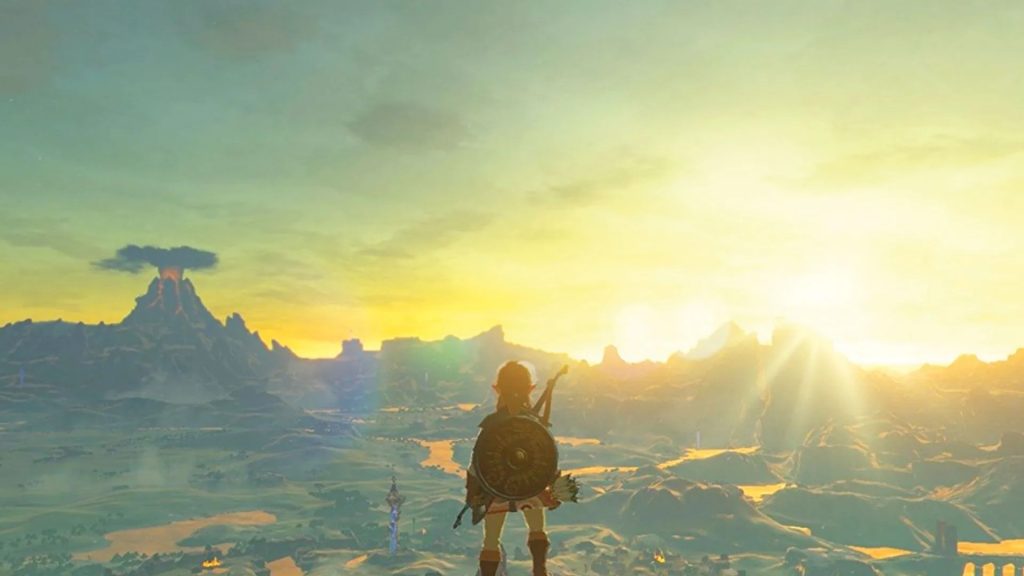
If you have ever spent a foggy evening wandering around the ruins of Hyrule Castle in Breath of the Wild, or felt a distinct chill walking into the Temple of Time, you have probably noticed that The Legend of Zeldafeels incredibly ancient. It has a mood that goes far beyond standard high fantasy. While a lot of writers have pointed out the obvious Celtic nods, like the horse goddess Epona sharing her name with a Gaulish deity, Nintendo actually went much deeper than just borrowing a few cool names. They quietly structured the entire geography of Hyrule around an ancient Celtic concept known as Thin Places.
What Are Thin Places? Understanding Zelda’s Spiritual Geography
In old Irish and Scottish folklore, a Thin Place is a physical spot on the earth where the distance between our mortal world and the spiritual Otherworld narrows to a razor-thin margin. If you step into a Thin Place, you cross over without even realizing it until the sky changes and the rules of physics stop making sense. These aren’t just mythical destinations you travel to on a map; they are hidden, overlapping layers of reality. When you look closely at how Nintendo designs its landscapes, you realize that Hyrule isn’t just a kingdom. It is a porous, fragile world completely governed by this exact Celtic metaphysics.
The Lost Woods: Hyrule’s Version of the Irish Fairy Realm
The ultimate example of this is the Lost Woods. In almost every single Zelda game, the woods aren’t just a place where you get turned around by dense trees. They function exactly like the fairy realms of Irish myth, such as Tír na nÓg. In Celtic lore, if a mortal wanders into an enchanted forest without a spiritual guide, time completely loses its meaning, and the intruder either vanishes forever or goes entirely mad. Nintendo took that folklore and turned it into a brilliant gameplay mechanic. If a child wanders into the Lost Woods without a fairy companion, they transform into a Skull Kid. If an adult does it, they become a Stalfos. The forest acts as a literal supernatural filter, punishing anyone who breaches the veil unprepared.
Megaliths and Monuments: How Zelda Gates the Otherworld
You can see this same logic woven into the very stones of the kingdom. Real-world Thin Places are almost always marked by megalithic structures like dolmens, stone circles, and passage tombs. Ancient cultures built these heavy stone monuments to anchor the spots where they felt the spirit world bleeding through. Hyrule treats its architecture the exact same way. Think about the Mirror Chamber in Twilight Princess or the Ring Ruins in Tears of the Kingdom. These massive, monolithic ruins are never just pretty scenery for a boss fight. They are heavy, physical doorways built directly over a tear in the fabric of reality, designed to keep a volatile spiritual dimension from spilling over into the countryside.
Sounding the Veil: Music as the Key to Shifting Reality
Even the way you activate these portals feels deeply rooted in the folklore of the British Isles. In Irish tales, travelers often report hearing beautiful, ethereal music coming from empty hillsides or deep mist right before they accidentally stumble into a fairy mound. Music is the universal language of the veil. In Zelda, you don’t open these ancient doors with mechanical keys or explosives. You use a song. Whether you are playing Saria’s Song to vibrate the shifting geometry of the Lost Woods into a straight path, or using the Goddess Harp to step through time itself, melody is the physical tool Link uses to thin the air until the doorway finally opens.
The Lasting Magic of Nintendo’s Mythological Worldbuilding
Ultimately, this is why the kingdom of Hyrule stays with us long after we power down our consoles. Nintendo didn’t just build a digital playground; they tapped into a deeply human way of viewing the landscape around us. By layering Celtic metaphysics over their game design, they created a world that feels heavy with history, secrets, and a lingering sense of the divine. It proves that the best fantasy worlds aren’t the ones built entirely from scratch, but the ones that leave a door open to the beautiful, haunting mythologies of our own past.
If you liked this post, you might enjoy reading my other Zelda deep dives FREE on Medium.