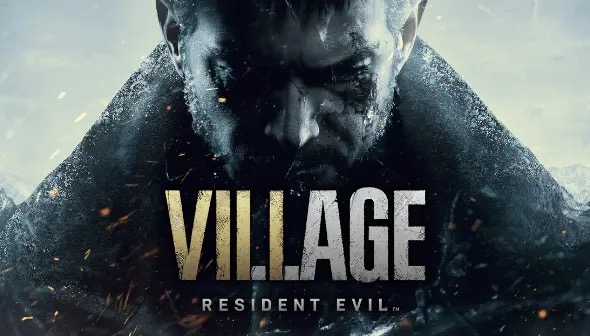
When I first watched a full playthrough of Resident Evil Village (because I cannot play survival horror games myself without dissolving into stress), I thought it was simply a gothic spin on the Resident Evil formula.
Vampires, a creepy doll house, a swamp monster and a mad scientist with magnet powers — it felt almost like the developers had decided to build a Resident Evil game out of classic horror movie tropes.
But the deeper you go into the notes scattered around the village, the stranger the story becomes. Village quietly does something much bigger for the franchise. It reveals that the roots of the entire Resident Evil world — including Umbrella itself — may trace back to one isolated mountain village and a bizarre fungal organism hidden beneath it.
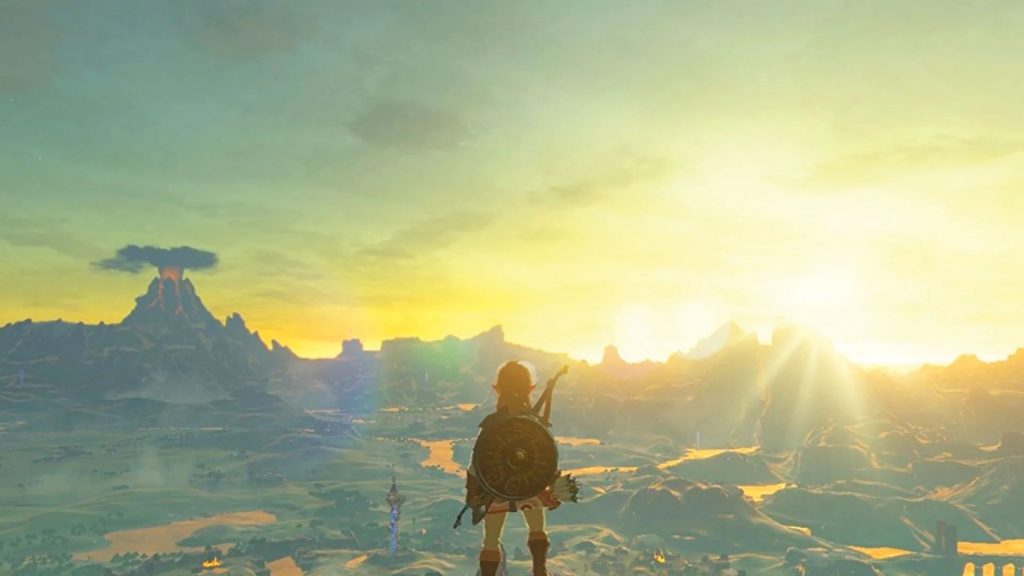
In a strange way, Village ends up functioning almost like the Skyward Sword of the Resident Evil series. Not because it is the earliest story chronologically, but because it reveals the mythic origins behind elements that shaped everything that came later.
Mother Miranda’s Origins
The heart of the story is Mother Miranda. Long before the events of the modern games, Miranda lived in the remote village where the game takes place. Her young daughter Eva died during the Spanish flu pandemic in the early twentieth century. In her grief, Miranda discovered something extraordinary beneath the village: an enormous fungal super-organism known as the Megamycete.
This organism is not just a fungus. It is something far stranger. The Megamycete can infect living beings, mutate them, and — most disturbingly — store the memories and consciousness of those connected to it. Miranda becomes convinced that Eva’s mind still exists within the Megamycete’s network, and from that moment her life becomes an obsessive attempt to bring her daughter back.
For decades she experiments on the villagers using a parasite derived from the Megamycete called the Cadou. Most people who receive the parasite die or mutate into feral monsters known as Lycans. But a rare few survive and gain extraordinary abilities. These survivors become the region’s ruling figures, known as the Four Lords: Alcina Dimitrescu, Donna Beneviento, Salvatore Moreau, and Karl Heisenberg.
To the villagers, these figures appear almost like supernatural aristocrats ruling the land under the protection of Mother Miranda. In reality, they are simply Miranda’s experiments that happened to survive.
The villagers themselves remain largely unaware of the truth. They pray to Miranda for protection even as their neighbours disappear and eventually return as monsters. The tragedy of the village is that its people continue to worship the very person responsible for the horrors surrounding them.
The Umbrella Logo
The most fascinating part of the lore appears in a letter found late in the game. Long before founding the infamous Umbrella Corporation, a young scientist named Oswell E. Spencer visited the village and studied Miranda’s research. During his visit he saw a strange symbol carved deep in the cave system beneath the village — a four-part emblem associated with the region’s ruling houses.
That emblem should look very familiar to Resident Evil fans.
It resembles the Umbrella logo.
The implication is extraordinary. The Umbrella Corporation did not invent its symbol out of nowhere. Spencer adopted it from this ancient design connected to the Megamycete and Miranda’s experiments. In other words, one of the most recognisable symbols in gaming history may have originated in a forgotten mountain village.
Resident Evil VII: Biohazard
Village also quietly reframes the events of Resident Evil 7: Biohazard. The Mold that appears in that game — the strange black fungus that infects the Baker family — is not a random new bio-weapon. It is essentially a descendant of the Megamycete’s biology. The E-series project that created Eveline used this Mold strain as the basis for a living weapon designed to infiltrate and control human hosts.
Even Eveline’s name begins to feel like an echo of Miranda’s daughter Eva. Both stories revolve around the disturbing concept of a child connected to the Mold and the desperate attempts of adults to create or restore family through unnatural means.
The connection becomes even stronger with Rose Winters, the daughter of Ethan Winters and Mia Winters. Because both of her parents were infected with Mold during the events of Resident Evil 7, Rose is born with abilities tied directly to the Megamycete. To Miranda, Rose appears to be the perfect vessel to finally resurrect Eva.
All of this is wrapped in the structure of a twisted fairy tale. The game even opens with Mia reading Rose a dark story about a girl who wanders through a village and encounters a series of monsters. Each of those monsters corresponds symbolically to the Four Lords Ethan must confront during the story. The castle vampire, the haunted doll house, the grotesque swamp creature and the industrial monster factory all feel like characters pulled straight from European folklore.
This fairy-tale framing makes the story feel less like a typical Resident Evil plot and more like a dark legend explaining how the horrors of the series began.
And that is what makes Village so fascinating. Beneath its gothic atmosphere and memorable villains, it quietly expands the lore of the franchise. It suggests that the biological nightmares that later spread across the world may have begun not in a high-tech laboratory, but in a forgotten village ruled by a grieving scientist and an ancient fungal organism beneath the earth.
Seen in that light, Resident Evil Village is not just another entry in the series. It is the strange, fairy-tale origin story lurking behind everything that came after.
Shadows of Rose Explained
The story becomes even stranger in the expansion Resident Evil Village: Shadows of Rose, which takes place many years later when Rose Winters is a teenager struggling with the strange powers she inherited from the Mold.
Hoping to remove those powers, Rose agrees to enter the consciousness of the Megamycete itself through a sample held by the organisation investigating it. This means the entire DLC actually takes place inside the Megamycete’s vast biological memory network. The places Rose explores are not the real village but distorted recreations formed from stored memories and emotions.
Because the Megamycete preserves the consciousness of people connected to it, Rose encounters “echoes” of individuals who died during the events of the game. The version of Ethan Winters she meets is essentially a lingering fragment of his mind preserved within the Mold after his sacrifice, while the sinister version of The Duke appears to be a twisted manifestation created by the Megamycete itself.
In this strange internal world, memories and identities blur together, which is why familiar characters behave differently and the environment feels dreamlike and unstable. Rather than being a literal return to the village, Shadows of Rose is really a journey through the Megamycete’s collective memory — a final confrontation with the lingering influence of Miranda’s experiments and the Mold that shaped Ethan’s family.
The Skyward Sword of it All
Remember when you first found out how the Master Sword became the Master Sword? Remember seeing the Umbrella logo in the village for the first time? Same feeling. Same lore serotonin.
In the end, Resident Evil Village turns out to be far more than a gothic detour for the series. Beneath the vampires, monsters and fairy-tale imagery lies a story that quietly reshapes the mythology of the franchise. By linking the Mold from Resident Evil 7 to the ancient Megamycete and revealing the unexpected origins of the Umbrella symbol, Village reframes decades of Resident Evil lore in a surprising way.
What once seemed like a story about rogue corporations and laboratory accidents now stretches back to a grieving scientist, an isolated village, and a strange organism buried deep beneath the earth. Like a dark fairy tale passed down through generations, the events of the village feel like the hidden legend behind everything that followed — a reminder that sometimes the most important stories in a franchise are not the ones that come first, but the ones that finally explain how it all began.
Bonus Question: Why is Ethan Winter’s face hidden?
If you’ve ever watched a playthrough of Resident Evil 7: Biohazard or Resident Evil Village, you’ve probably noticed something strange: you almost never see Ethan Winters’ face clearly. The camera constantly cuts away, objects block the view, or the angle conveniently hides it.
This wasn’t an accident. It was a deliberate design choice by Capcom. To the point where fans of the game got audibly annoyed by it.
When Ethan was introduced in RE7, the developers wanted him to feel like a player stand-in rather than a traditional Resident Evil hero. Earlier protagonists like Leon S. Kennedy or Chris Redfield are very defined characters with distinct personalities and faces. Ethan, by contrast, was designed to be intentionally more neutral so players could project themselves into his situation. Keeping his face mostly unseen reinforced the idea that the story was happening from your perspective.
The decision also worked well with the shift to first-person gameplay. Because the camera is almost always showing what Ethan sees, revealing his face too often would break that immersive perspective. Hiding his face helps maintain the illusion that the player is directly experiencing the horror rather than watching another character go through it.
Interestingly, Ethan does technically have a full character model with a visible face. It appears briefly in behind-the-scenes material and is shown more clearly in the expansion Resident Evil Village: Shadows of Rose, though even there the game still avoids lingering on it for long. By that point, the mystery had become part of Ethan’s identity as a character.
In a way it also fits the themes of his story. Ethan spends most of the two games discovering that he isn’t quite what he thought he was — especially once the truth about the Mold is revealed. Keeping his face hidden reinforces the idea that he’s less a traditional hero and more a vessel carrying the story forward, someone defined by what he does rather than how he looks.