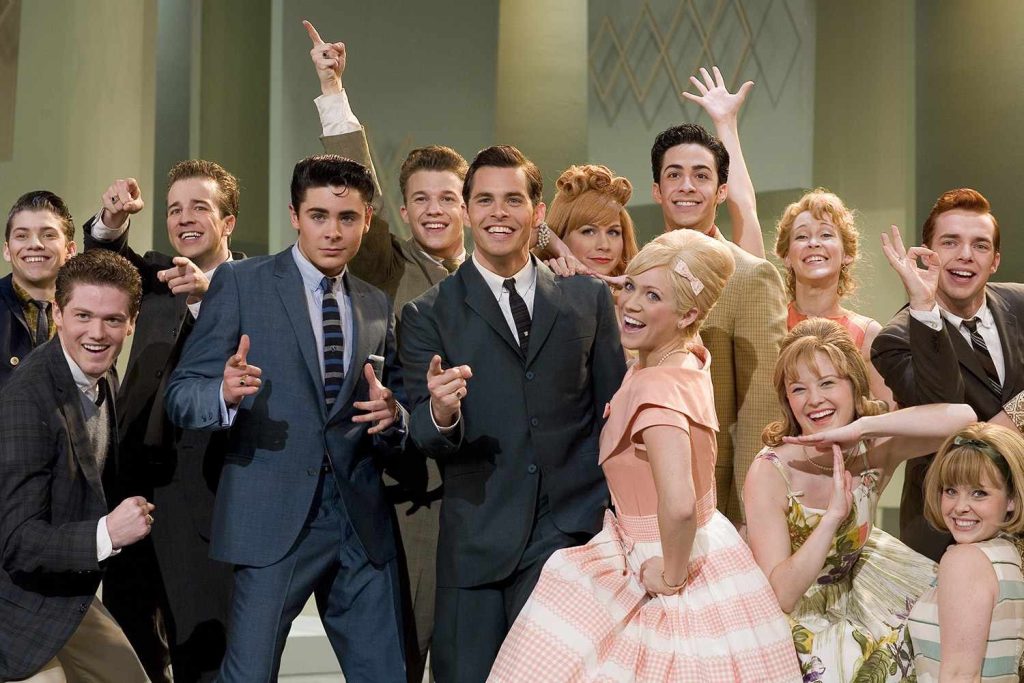
When people think of Hairspray, they probably picture giant beehive hairstyles, catchy songs, and Tracy Turnblad dancing her way onto television. But beneath the bright colours and upbeat soundtrack lies a story rooted in one of the most important periods in modern American history.
Set in Baltimore in 1962, Hairspray follows Tracy as she challenges beauty standards and campaigns for racial integration on a local television dance show. While the musical and film exaggerate events for dramatic effect, much of the story is inspired by real television programmes, genuine segregation in American media, and the Civil Rights Movement.
So, just how historically accurate is Hairspray?
Let’s find out.
Was The Corny Collins Show Real?
Accuracy: 9/10
One of the biggest inspirations for Hairspray was The Buddy Deane Show, a real television dance programme broadcast in Baltimore between 1957 and 1964.
Teenagers would dance to the latest music after school, much like those on The Corny Collins Show. It became hugely popular and launched the careers of several local celebrities.
The biggest historical difference is that The Buddy Deane Show had one designated “Negro Day” each month, when Black teenagers could appear on television. This reflects the segregation shown in Hairspray.
Rather than integrate the programme fully, the real show was cancelled in 1964 because its producers feared integration would drive away viewers.
That reality is considerably more tragic than the musical’s joyful ending.
Was Television Really Segregated?
Accuracy: 10/10
Yes.
During the early 1960s, segregation still existed across much of American society despite Supreme Court rulings against it.
Many television stations either refused to feature Black performers or only allowed them to appear on designated days or special programmes.
Hairspray accurately portrays how revolutionary it would have been for Black and white teenagers to dance together on local television.
Although the story simplifies events into a single campaign, it reflects genuine discrimination experienced across American broadcasting.
Did Teenagers Really Help Drive the Civil Rights Movement?
Accuracy: 9/10
Absolutely.
One of Hairspray’s greatest strengths is showing that young people were active participants in the Civil Rights Movement.
Across America, students organised sit-ins, freedom rides, marches and voter registration campaigns.
Many participants were Tracy’s age or only slightly older.
The musical understandably centres one fictional group of teenagers, but it captures the energy and determination of young activists remarkably well.
Was Baltimore Really Like This?
Accuracy: 8/10
Baltimore was undergoing enormous social change during the early 1960s.
Neighbourhoods remained heavily segregated, schools were still dealing with desegregation, and racial tensions were high.
The film captures the city’s optimistic youth culture while acknowledging the inequalities beneath the surface.
However, it softens many of the harsher realities. Violence, intimidation and political resistance receive far less attention than they did in real life.
Tracy Turnblad and Beauty Standards
Accuracy: 8/10
Although Tracy herself is fictional, society’s attitudes towards larger women were very real.
Early 1960s fashion magazines overwhelmingly promoted slim figures, elegance and conformity.
Having a plus-sized teenage heroine who becomes popular without changing her appearance would have been highly unusual.
The film takes a more modern approach to body positivity than audiences would likely have encountered in 1962, but that message is one of the story’s defining strengths.
Velma Von Tussle
Accuracy: 7/10
Velma is less a real historical figure and more a representation of institutional resistance.
Many television executives, politicians and business owners opposed integration because they feared losing audiences, advertisers or political support.
Her prejudice is exaggerated for the stage, but the attitudes she represents were widespread.
Motormouth Maybelle
Accuracy: 9/10
Motormouth Maybelle represents many Black entertainers whose talent was recognised while opportunities remained limited by segregation.
Her experiences reflect those of countless musicians who could perform to white audiences but were denied equal treatment elsewhere.
The character embodies both the joy of Black musical culture and the frustrations of systemic discrimination.
The Music
Accuracy: 9/10
The soundtrack is original rather than historical, but it brilliantly captures the sound of early 1960s American pop, rhythm and blues, and doo-wop.
Many songs feel as though they could genuinely have been heard on American radio during the period.
The Ending
Accuracy: 6/10
This is where Hollywood takes over.
In Hairspray, one televised event effectively changes public opinion and integrates the dance show.
Real history was much slower.
The Civil Rights Movement involved years of protests, court cases, arrests, violence and extraordinary courage from thousands of ordinary people.
While television did become integrated, there was no single triumphant dance number that solved the problem overnight.
The ending works beautifully as theatre, but history was far more complicated.
Final Score: 8.5/10
Unlike many historical musicals, Hairspray doesn’t invent a historical backdrop simply to tell a love story. Instead, it places fictional characters within genuine social issues and encourages audiences to learn more about the Civil Rights Movement.
Its greatest liberties come from condensing years of activism into one uplifting narrative and giving viewers a happy ending that history couldn’t provide so quickly. Yet the heart of the story—young people challenging injustice, television reflecting wider social divisions, and ordinary citizens demanding equality—is firmly grounded in reality.
For a feel-good musical, Hairspray does an impressive job of introducing audiences to a significant chapter of American history while reminding us that real change has always required far more than a single performance.