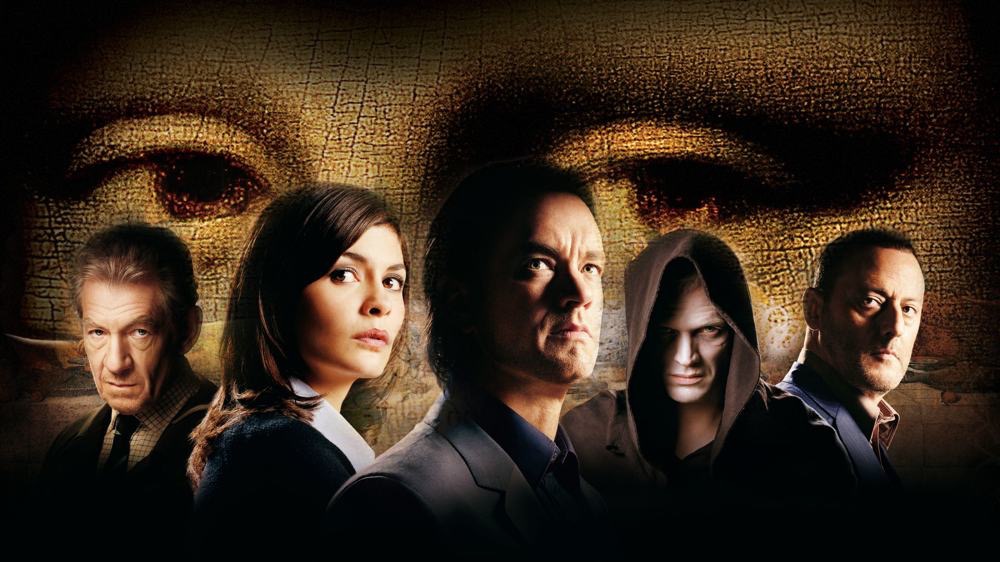
Dan Brown’s The Da Vinci Code became one of the biggest publishing sensations of the 21st century, selling millions of copies and inspiring a blockbuster film starring Tom Hanks.
While marketed as a work of fiction, the novel famously opens with the claim that descriptions of artwork, architecture, documents and secret rituals are “accurate.”
That opening statement sparked enormous debate.
How much of The Da Vinci Code is actually based on history? And how much is fiction woven around real people and places?
Let’s investigate.
Leonardo da Vinci
Accuracy: 7/10
What the film claims
Leonardo da Vinci hid secret messages about Jesus and Mary Magdalene inside his paintings, particularly The Last Supper.
What history says
Leonardo was a real Renaissance polymath whose paintings continue to fascinate historians and art lovers alike. The locations, artworks and many biographical details shown in the film are genuine.
However, there is no historical evidence that Leonardo belonged to a secret society dedicated to protecting the bloodline of Jesus or that he deliberately embedded coded messages about Mary Magdalene into his paintings.
Many of the supposed “clues” rely on modern interpretations rather than contemporary evidence. However, he is one of the most realistic parts of the story and so ranks the highest on accuracy.
Verdict: Leonardo was real. The conspiracy surrounding him almost certainly wasn’t.
The Last Supper
Accuracy: 3/10
What the film claims
The figure seated beside Jesus is Mary Magdalene rather than the Apostle John.
What history says
Art historians overwhelmingly identify the figure as John, the youngest of Jesus’ disciples.
To modern audiences John can appear feminine, but Renaissance artists regularly depicted him as youthful, beardless and delicate.
The famous “V” shape between Jesus and John almost certainly wasn’t intended as a hidden symbol of the sacred feminine.
Verdict: A fascinating interpretation, but not one supported by mainstream art history.
Mary Magdalene
Accuracy: 5/10
What the film claims
Mary Magdalene was Jesus’ wife and carried his child.
What history says
The New Testament never describes Jesus as being married.
Some non-canonical texts discovered at Nag Hammadi portray Mary Magdalene as one of Jesus’ closest followers and someone with special spiritual insight. These writings have led to centuries of speculation.
However, none of the surviving ancient texts state outright that Jesus and Mary Magdalene were husband and wife or had children.
Could it have been possible? Historians continue to debate aspects of Jesus’ personal life because the evidence is limited. But there is currently no historical proof that such a marriage existed. But she was a real person and there is enough evidence to at least speculate.
Verdict: An intriguing possibility explored in fiction, but not established history.
The Priory of Sion
Accuracy: 1/10
What the film claims
An ancient secret society has protected the descendants of Jesus for centuries.
What history says
This is one of the biggest myths in the novel.
The Priory of Sion was not founded during the Crusades. It was actually created in France in 1956 by Pierre Plantard, who later fabricated documents claiming the organisation had ancient origins and famous members such as Leonardo da Vinci and Isaac Newton.
Those forged documents fooled many people for a time but have since been thoroughly discredited. We will give 1 point for it at least being a real thing.
Verdict: Almost entirely fictional.
The Knights Templar
Accuracy: 7/10
What the film claims
The Knights Templar discovered explosive secrets beneath the Temple in Jerusalem and spent centuries protecting them.
What history says
The Knights Templar were absolutely real.
Founded in the early twelfth century, they became one of Europe’s most powerful military and financial organisations before being arrested on the orders of King Philip IV of France in 1307.
What they actually discovered in Jerusalem remains unknown.
The idea that they found proof of Jesus’ bloodline is pure speculation, but their dramatic downfall helped fuel centuries of conspiracy theories.
Verdict: Real order. Fictional secret.
Constantine and the Bible
Accuracy: 2/10
What the film claims
Emperor Constantine decided that Jesus was divine and selected the books of the Bible.
What history says
Constantine certainly played an important role in Christian history by supporting the Church and calling the Council of Nicaea in AD 325.
However, belief in Jesus’ divinity existed long before Constantine’s reign, appearing in first-century Christian writings. Likewise, the development of the biblical canon took place over centuries rather than being decided in a single meeting.
Verdict: Based on real historical events, but greatly simplified and exaggerated.
Opus Dei
Accuracy: 4/10
What the film claims
Opus Dei operates as a shadowy, secretive organisation willing to commit murder to protect Church secrets.
What history says
Opus Dei is a real Catholic institution founded in 1928.
The film exaggerates its secrecy, influence and behaviour for dramatic effect. While the organisation has attracted criticism over some of its practices, there is no evidence that it resembles the murderous conspiracy depicted in the story.
Verdict: A real organisation transformed into a fictional villain.
Overall Verdict
Overall score 4/10
One of The Da Vinci Code’s greatest strengths is that it mixes genuine history with imaginative fiction so seamlessly that it becomes difficult to tell where one ends and the other begins.
Real paintings.
Real churches.
Real historical figures.
Real religious debates.
Layered with fictional conspiracies.
That’s exactly what makes the story so compelling. As history, it should be approached with caution. As a work of fiction, it should be enjoyed for generations to come!