Disney’s heroine is iconic, but the original tale of Mulan is simpler, starker, and deeply rooted in duty and family honour. Here’s what the ballad actually says—and what both the animated and live-action films changed.
Contents
- Introduction
- The Disney Version (1998)
- The Real Ballad of Mulan
- Later Retellings & Darker Endings
- What Disney Changed (1998)
- The Live-Action Version (2020): Closer or Further?
- Why It Matters
- Conclusion
- Mini FAQ
- Sources & Further Reading
Introduction
When Mulan arrived during Disney’s Renaissance, it stood apart: a warrior heroine, a Chinese setting, and a story that foregrounded family, honour, and service over castles and crowns. Yet the film is based on a much older text, commonly known as The Ballad of Mulan—a brief, powerful poem likely dating to the Northern Wei era (5th–6th century CE). The original tale is spare and dignified: no dragon sidekick, no musical numbers, no romance. Just a daughter who takes her father’s place in the army, serves with distinction, and returns home.
The Disney Version (1998)
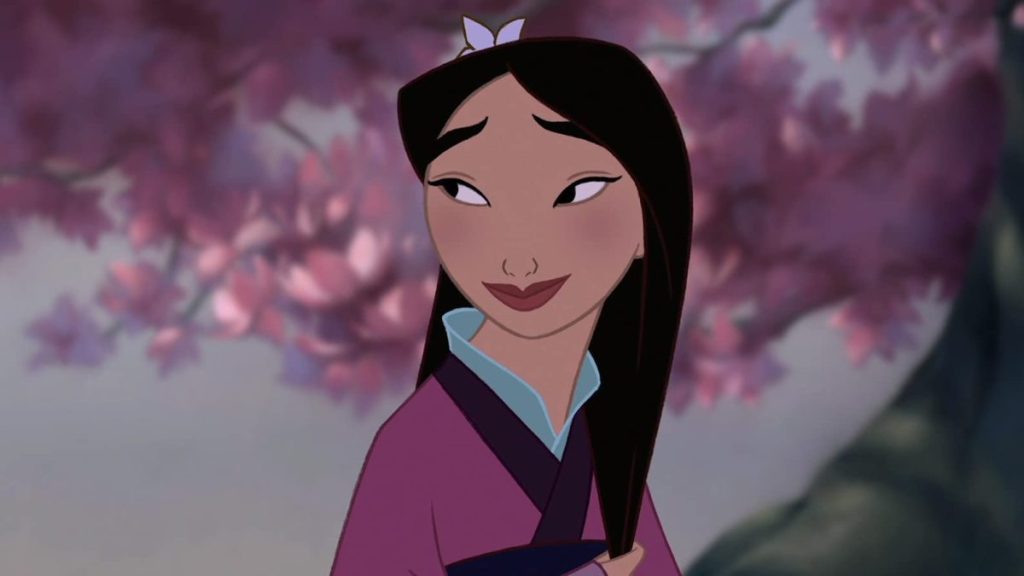
The 1998 animation follows Fa Mulan as she disguises herself to take her ageing father’s conscription notice, trains with an eccentric cohort, and—helped by the tiny dragon Mushu and a “lucky” cricket—saves the Emperor from invasion. It’s vibrant, funny, and heartfelt, balancing themes of family honour with a more modern message: be true to yourself.
The Real Ballad of Mulan
In the ballad, Mulan hears the draft being read and, without fanfare, buys a horse and equipment, and departs in her father’s stead. She fights for twelve years, rises through the ranks, and when the war ends she refuses high office, asking only for a swift horse to return home. Her comrades, stunned when she changes clothes, realise for the first time that the warrior who fought beside them was a woman. The poem centres filial piety and loyalty; its power lies in its restraint.
- Key motifs: duty to family, modesty in service, anonymity in merit, and the quiet return home.
- Not present: comic animal companions, a romance plot, an Emperor bowing to her, or a grand public unmasking.
Later Retellings & Darker Endings
Over centuries, Mulan’s story was adapted in plays and prose. Some versions add courtly intrigue; others lean tragic—one strand ends with Mulan’s suicide after being ordered to become a concubine. These evolutions reflect shifting moral, political, and gender expectations across dynasties: from celebrating filial service to policing female virtue or allegorising loyalty to the state.
What Disney Changed (1998)
- Comedy & companions: Mushu and Cri-Kee provide Western-style comic relief absent from the ballad.
- Modern individualism: The film reframes the tale as self-actualisation (“Reflection”) rather than primarily filial duty.
- Romance: Li Shang offers a gentle love-interest arc not found in the source.
- War’s brutality softened: While the animated film nods to devastation (e.g., the burned village), it keeps the tone family-friendly.
The Live-Action Version (2020): Closer or Further?
The 2020 remake removes the sing-along songs, Mushu, and overt comedy, aiming for a more serious, wuxia-influenced tone. At first glance, that feels closer to the ballad’s spirit of solemn service and honour. But it also introduces new fantasy and character dynamics that depart from the historical legend.
Closer to the ballad’s spirit
- Serious martial focus: Emphasis on Mulan as a disciplined warrior.
- No cartoon sidekicks or musical numbers: The tonal shift mirrors the ballad’s restraint.
- Dialled-back romance: Li Shang is replaced by a peer (Chen Honghui), with only light, ambiguous chemistry.
But also further from the original
- Magical qi as innate power: Portraying Mulan’s prowess as quasi-supernatural is a modern invention, not in the ballad.
- The witch (Xian Lang): A mirrored foil who explores power and ostracisation—compelling, but non-canonical.
- Invented villain & geopolitics: Böri Khan and certain plot mechanics are created for cinematic stakes.
Verdict: The live-action film feels tonally closer to the ballad (serious, honour-centred) while inventing new fantasy elements that make it textually further from the historical legend. It isn’t a return to the poem so much as a different modern myth built on the same foundation.
Why It Matters
Mulan’s core has always been courage grounded in duty. Disney’s versions gave global audiences a heroine to cheer for, but they also reframed the story through contemporary values—first via self-expression and humour, then via mythic super-ability and mirrored female antagonists. Knowing the ballad lets us appreciate what was added, what was softened, and what was lost.
Conclusion
The original Mulan does not seek glory; she seeks to spare her father, serves with excellence, and goes home. That quiet ending is the point. Disney’s versions—animated and live-action—are powerful in their own right, but the poem’s restraint offers a different kind of inspiration: service without spectacle, strength without applause.
Mini FAQ
Is Mulan a real historical person?
We don’t have definitive proof of a specific historical Mulan. The earliest source is a poem, not a chronicle. Over time, the legend was expanded and dramatized.
What are the biggest differences between the ballad and Disney’s 1998 film?
The ballad has no sidekicks, no romance, and ends with Mulan simply declining office and returning home. Disney adds comedy, songs, a romantic arc, and a public, heroic climax.
Is the 2020 live-action version more accurate?
It’s more restrained in tone and drops the comic sidekicks, which feels closer to the poem’s spirit, but it invents new fantasy elements (like heightened qi) and characters, so it isn’t a faithful retelling of the ballad either.
Why do later retellings sometimes end tragically?
Different eras used Mulan to explore changing ideas about loyalty, gender, and the state. Tragic versions often reflect moral anxieties or political allegory of their time.
Sources & Further Reading
Open the reading list
- The Ballad of Mulan (traditional text). Seek reputable translations in academic anthologies of Chinese poetry and folklore.
- Academic discussions of Mulan’s evolution in Chinese literature, drama, and film (university press chapters and journal articles).
- Studies on filial piety and gender in early medieval China for historical context.
- Production notes and interviews around Mulan (1998) and Mulan (2020) for insight into creative choices.
Tip: For readers who want the primary text, search for a scholarly translation of the “Ode/Ballad of Mulan” associated with the Northern Wei period.