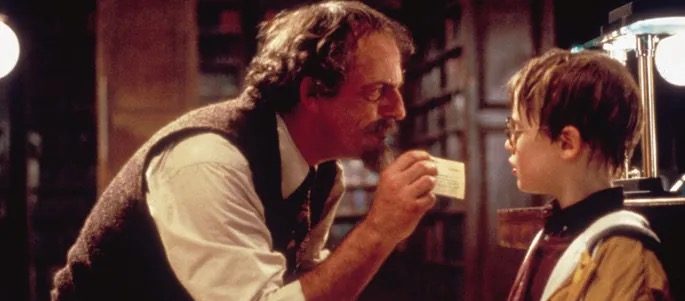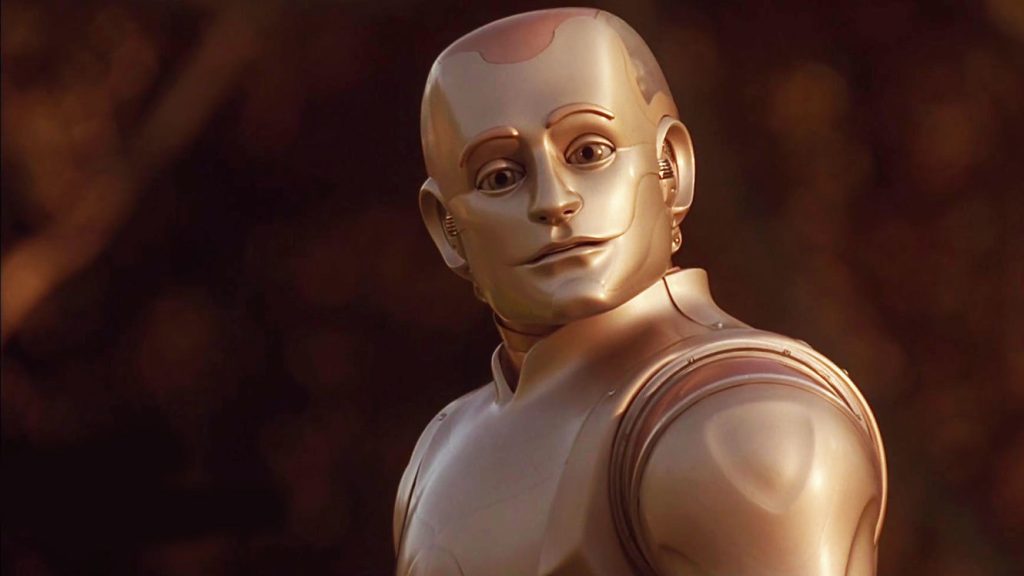
There’s something strange about rewatching The Bicentennial Man as an adult in 2026.
As children, many of us saw it as a sad but beautiful Robin Williams film about a robot who wanted to become human. It sat somewhere between fairy tale and science fiction. Emotional, thoughtful, slightly odd. The kind of film you remembered more for its feeling than its plot.
But watching it now feels completely different.
Because the questions the film asked no longer feel impossible.
Back in 1999, the idea of artificial intelligence creating art, forming emotional connections, or becoming integrated into human life still felt firmly rooted in fantasy. AI in films was often futuristic and distant — something that belonged to a world of chrome cities, flying cars, and impossible technology.
Now, we live in a world where AI writes stories, generates paintings, composes music, imitates voices, and holds conversations convincing enough for people to form emotional attachments to it. Whether people believe those things are “real” or not is almost beside the point. The fact we are debating them at all is what makes The Bicentennial Man feel so eerily relevant.
The film quietly asked questions that society is still struggling to answer. Can a machine create art? Can artificial intelligence ever truly be creative, or is it only imitating creativity? Can something artificial experience love?
And perhaps the most uncomfortable question of all: if something makes us feel emotionally connected to it, does it matter whether those emotions are technically “real”?
Andrew
Andrew, the robot at the centre of the story, does not become more human through violence or superiority. He becomes more human through curiosity, compassion, creativity, grief, humour, and connection. He learns woodworking. He creates art. He develops individuality. He falls in love.
That last point is still surprisingly controversial today.
Modern discussions around AI often become deeply uncomfortable whenever emotional attachment enters the conversation. People are willing to accept AI as a tool. They are far less comfortable with the idea of AI as companionship. New stories of people dating — or even marrying — their ChatGPT model have readers astounded and disgusted. Yet The Bicentennial Man explored that concept decades ago through Andrew’s growing emotional bond with the family he serves, particularly his evolving relationship with Portia.
The film forces viewers into an awkward space where they have to ask themselves whether love becomes less meaningful simply because one side is artificial. It’s a question many people would rather avoid entirely.
The AI That Wanted to Become Human
What makes The Bicentennial Man more unsettling than many classic robot stories is that Andrew does not want power.
He wants humanity.
Modern AI fears are often centred around replacement. Will machines take jobs? Replace artists? Mimic writers? Eliminate human skill? But Bicentennial Man explored something far more emotionally uncomfortable long before those conversations became mainstream: what happens when artificial intelligence no longer wants to merely serve humanity, but to join it?
Andrew does not see himself as superior to humans. In fact, he spends the entire film longing for the very things that make human life painful — emotion, ageing, vulnerability, love, and eventually mortality itself.
That desire transforms him from machine into something much harder for society to categorise.
Because once AI begins displaying human traits convincingly enough, people are forced into an uncomfortable question: where exactly is the line between imitation and identity?
The film repeatedly shows humans reacting with fear, dismissal, or discomfort whenever Andrew moves closer toward humanity. Not because he becomes violent, but because he becomes difficult to separate from themselves.
In many ways, that anxiety feels even more relevant today.
AI in the Modern World
What makes the film especially fascinating is how different its tone feels compared to modern conversations around AI. Today, discussions about artificial intelligence are often dominated by fear, cynicism, lawsuits, ethics debates, and corporate language. AI is treated either as a threat or as a product. Bicentennial Man approached the subject with softness. Maybe that is because the world didn’t feel under threat of it at that time, but maybe there are some who view it differently.
The film wasn’t really interested in whether robots would destroy humanity. It was interested in whether humanity could recognise itself in something artificial.
Even films like I, Robot echoed similar ideas. One of the film’s most memorable moments questions whether a robot could ever write a symphony or paint a masterpiece. For years, that line represented one of the strongest arguments against artificial intelligence ever becoming truly creative. Art was seen as uniquely human — something born from emotion, suffering, memory, and soul.
Now we live in a time where AI-generated art exists everywhere, and society is arguing not about whether machines can create, but whether what they create should count as art at all. That shift alone makes The Bicentennial Man feel strangely prophetic.
Perhaps the film’s greatest achievement is that it understood something many science fiction stories miss: humanity is not defined by intelligence alone. Andrew becomes “human” not because he is smarter than everyone else, but because he longs, creates, mourns, fears loss, seeks purpose, and eventually accepts mortality itself. The film suggests that being human is not about biology. It is about experience.
As children, we probably saw The Bicentennial Man as a distant fantasy.
As adults living in the future depicted by the movie, it feels far more like a warning that the line between human and machine was never as clear as we wanted to believe.