When every story was about rebellion — and then, suddenly, none of them were.
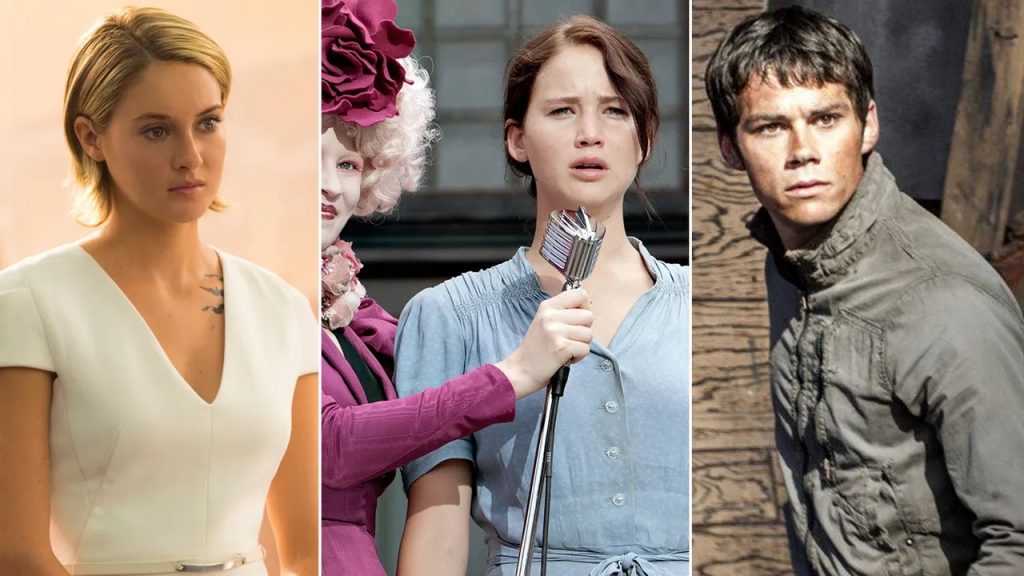
There was a time when every teen bookshop display looked the same: moody grey covers, haunting taglines, and heroines standing against crumbling regimes. It was the age of The Hunger Games, Divergent, and The Maze Runner — an entire generation raised on rebellion, revolution, and romantic resistance.
From roughly 2008 to 2016, dystopian YA was everywhere. You couldn’t scroll Tumblr without finding fan edits of Katniss Everdeen, Tris Prior, or Thomas sprinting through another ruined world. These weren’t just stories — they were the defining mythology of a generation caught between idealism and fear.
And then, almost overnight, the trend vanished.
The Perfect Storm That Created a Genre
To understand how dystopian teen fiction took over the world, you have to look at the cultural weather that birthed it.
The late 2000s and early 2010s were turbulent years. The global recession had shaken faith in systems. Surveillance and privacy concerns were suddenly part of daily life. Social media was growing, but so was a sense that our lives were being watched, rated, and recorded.
Teens were coming of age in a world that didn’t feel entirely safe — or fair. So when books appeared where young people stood up to authoritarian governments and won, it felt revolutionary. Dystopia became the perfect metaphor for being a teenager: powerless in a world run by adults who don’t listen, yet desperate to make change.
The Hunger Games (2008) was lightning in a bottle. It had the structure of a blockbuster and the moral clarity of a revolution. Once it hit, publishers went hunting for the next phenomenon.
And they found plenty.
The Boom: Hunger Games Fever
Within just a few years, YA shelves filled with trilogies about surveillance states, identity control, and forbidden love:
- Divergent split society into factions.
- The Maze Runner trapped boys in a deadly experiment.
- Matched paired people by algorithm.
- Delirium banned love altogether.
Each story promised the same thrill: one teenager against the system. And for a while, it worked. Readers devoured these worlds — not just for their politics, but for their emotion. These were high-stakes romances wrapped in rebellion, and the tension was irresistible.
The films followed fast. By 2014, you could go to the cinema every few months and watch another YA uprising. The fandoms thrived. Tumblr gifs, faction quizzes, symbolic tattoos — dystopia wasn’t just a genre; it was an identity.
The Oversaturation Problem
By the time Mockingjay – Part 2 arrived in 2015, something had shifted.
There were simply too many. Too many books, too many trilogies, too many identical posters featuring a determined girl with a weapon and a tagline about freedom. Every series promised to be “the next Hunger Games,” and in trying to replicate the formula, publishers drained it of surprise.
Readers began to notice the pattern: book one introduces a corrupt system, book two complicates the love triangle, book three ends in rebellion and loss. The characters changed names, but the rhythm stayed the same. The genre had eaten itself.
When Allegiant — the final film in the Divergent series — flopped so badly the studio cancelled its sequel, the message was clear. The public had had enough. Which is still devastating to me today, I would have loved to finish the story on-screen.
The Real World Became the Dystopia
By the mid-2010s, the headlines felt darker than fiction. Political division, environmental collapse, refugee crises, and mass surveillance weren’t speculative anymore — they were nightly news.
Readers no longer needed metaphors to understand totalitarianism or fear. The appeal of dystopia had been that it was safely distant; suddenly, it wasn’t.
The idea of watching teenagers fight back against cruel governments stopped feeling empowering and started feeling exhausting. The genre’s biggest strength — its proximity to real life — became its downfall.
The Quiet Fade-Out
What’s striking is that dystopian YA didn’t end with a bang. It simply faded.
Publishers moved on to fantasy and contemporary romance. Authors who once wrote about rebellions began writing about fae kingdoms or star-crossed magic. The film franchises ended. The fandom hashtags went silent.
By 2018, a new reader might never have guessed how dominant the genre once was. Dystopia had become passé — too grim, too repetitive, too 2010s.
But the impact lingered. The language of resistance, the questioning of systems, the distrust of propaganda — all of it embedded itself in the next wave of stories, even if those stories wore prettier clothes.
The Legacy of a Burned-Out Revolution
In hindsight, the teen dystopia trend was a perfect reflection of its time: restless, uncertain, idealistic, and bruised by reality. It gave us heroines who refused to obey, worlds that warned us of our own future, and a brief moment when we believed fiction could teach us how to fight back.
The genre didn’t fail. It fulfilled its purpose — and when the world caught up, it bowed out gracefully.
Maybe that’s why it still holds such nostalgic power. For a few intense years, we were all part of the rebellion. And when the fire burned out, we didn’t stop caring about the future — we just started dreaming about how to survive it.