There are internet theories, and then there are internet legends. The kind that never truly disappear, no matter how many times they’re debunked or laughed at.
They simply go dormant for a while, hiding in the shadows of Reddit threads and YouTube comments, waiting for the next person to say the fateful words:
“Wait… why is Ash still ten?”
And that’s exactly why the Ash coma theory has survived for so long. Not because it’s likely, or because it’s backed by canon, but because it scratches at one of the strangest little quirks in the entire Pokémon anime: Ash Ketchum’s complete inability to move forward in time like a normal human being.
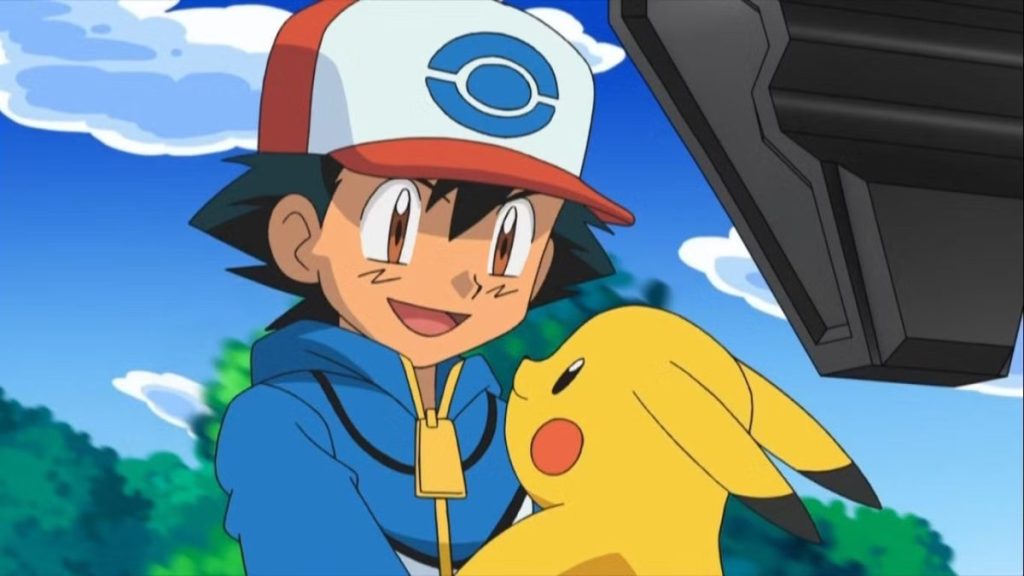
Ash has travelled through multiple regions, met countless companions, battled, failed, won, lost, and saved the world in various dramatic ways, and yet he remains exactly the same boy we met in the late 90s. No aging. No voice change. No awkward teenage phase. Not even a slightly taller character model. Just the same ten-year-old, permanently reset like a character trapped in a loop.
So of course the fandom did what fandoms do best. We took something innocent and made it disturbing.
What Is the Ash Coma Theory?
The theory is simple in concept, even if it gets elaborate once people start adding details. It suggests that Ash isn’t actually living out his adventures at all. Instead, after an event early in the series, Ash ends up severely injured and falls into a coma. Everything that happens afterwards is interpreted as a dream state: a fantasy created by Ash’s unconscious mind, where he can keep living the adventure he always wanted.
In other words, Pokémon isn’t a journey across the world.
It’s a child’s mind retreating into comfort.
And the reason the theory gained traction isn’t because it has strong evidence. It gained traction because it offers an emotionally satisfying explanation for something the anime has never properly addressed. Ash doesn’t change because he can’t. He isn’t growing because he isn’t awake.
It’s bleak, dramatic, and weirdly compelling.
Where the Theory Begins: The First Thunderbolt
Most versions of this theory point to the earliest possible moment, because that’s where the “shift” has to happen if it’s going to explain everything that comes after. People usually focus on the opening episode, when Ash first meets Pikachu and gets hit with electricity.
In the show, this is played for laughs the way early Pokémon often was. Ash goes flying, gets charred, and then pops back up again like it’s nothing. It’s cartoon logic, the kind of thing children accept immediately without question.
But adult viewers see that moment differently, especially with modern awareness of what electricity does to the human body. The first thunderbolt becomes more than slapstick when you view it through a darker lens. If this were the real world, that moment wouldn’t be a joke. It would be life-threatening.
So the coma theory takes that moment and says: Ash didn’t bounce back. Ash didn’t laugh it off. Ash collapsed.
And everything else is the dream he slipped into.
Why the Theory Feels Like It Fits
What makes the coma theory so sticky is that Pokémon does have an oddly dreamlike feel once you start looking at it that way. The anime operates on comfort logic. Consequences rarely last. Problems resolve conveniently. The world is endlessly open, endlessly safe, and endlessly full of new friends who accept Ash instantly. Even when danger happens, it rarely leaves a scar. Ash doesn’t carry trauma the way a real child would after everything he’s seen. He simply runs toward the next adventure, cheerful as ever.
That’s one of the reasons Pokémon feels so comforting to watch. There’s always a reset. There’s always a fresh start. There’s always another episode where everything is fine again.
And that is exactly the kind of pattern people associate with dreams. Especially comforting, repetitive dreams that the mind creates when reality is too hard.
If Ash were in a coma, the structure of Pokémon makes unsettling sense. His brain creates a world where he gets to be important. He gets to be brave. He gets to travel. He gets to be surrounded by love and loyalty, even when he loses. He gets to feel like he has purpose.
And most of all, he gets to stay ten.
Because if you never wake up, you never have to grow up.
The Team Rocket Problem (And Why They Strengthen the Theory)
One of the biggest reasons fans keep coming back to this theory is Team Rocket, because Team Rocket aren’t villains in a realistic sense. They’re more like recurring clowns of chaos. They show up, hatch a scheme, perform their little theatrical routine, then get launched into the sky like it’s a cosmic rule.
And then they return.
Again and again, endlessly repeating the same loop.
Their presence is so consistent and so formulaic that it resembles something out of a dream. They’re not evolving villains with a true end goal. They’re almost like an automated obstacle, like the dream has generated them because the adventure needs something to fight against.
If Ash’s mind is building the story, Team Rocket are the perfect antagonists. They’re safe enough to never truly hurt him. They create conflict without real stakes. They are danger, but in the way childhood imagination creates danger, in a way that’s still controlled.
They never kill anyone. They never win permanently. They exist to provide drama, comedy, movement, and then vanish.
That’s not how reality works.
But it is how dreams work.
The Dark Interpretation: Ash Gets Everything He Needs
This is the part where the theory stops being funny and starts being strangely sad.
Because if Pokémon is a dream world, it begins to look like a wish-fulfilment fantasy created by a lonely child. Ash gets friendship wherever he goes. He gets constant praise and validation. He gets a loyal companion in Pikachu, a little creature who can’t fully speak but understands him perfectly anyway. He gets mentors who guide him. He gets older figures who support him. He gets adventure and purpose and identity.
If the real world is dull or disappointing, Ash doesn’t have to face it. His coma-dream gives him an endless quest, a heroic journey with clear goals and simple morals. It gives him a world that makes sense.
And on a deeper level, it gives him what childhood often wants most desperately.
It gives him control.
Because in Pokémon, Ash can fail without being ruined by failure. He can lose without being abandoned. He can be reckless and impulsive and still be loved, still be rewarded, still be safe.
That’s not just storytelling.
That’s comfort.
So Why Does This Theory Exist at All?
The funniest thing about this theory is that it isn’t really about whether Ash is in a coma. That’s just the shape it takes.
What it’s actually about is ageing.
It’s about the awkward moment where you realise you’ve grown up but the show hasn’t. It’s about the reality that Pokémon was built to go on forever, even if the original audience didn’t stay children forever.
Ash staying ten creates a strange kind of emotional dissonance. The audience grows up, Ash doesn’t, and the brain starts trying to solve that puzzle.
So the fandom supplies an answer. A dark one, but an answer nonetheless.
Because sometimes it’s easier to believe that Ash is trapped in a coma dream than accept the truth: he’s trapped in a franchise.
The Reality Check: Why It Doesn’t Actually Work
Even though this theory is oddly compelling, it doesn’t hold up under scrutiny, because Pokémon was never written like a story with a hidden “real explanation.” It isn’t a mystery. It isn’t building toward a final twist. It’s a long-running episodic anime designed to reset itself so new children can join in without needing to watch everything that came before.
Ash stays ten because he’s a mascot. He stays ten because the show needs him to stay recognisable. He stays ten because marketing demands consistency. The character is built like a symbol, not like a person, and symbols don’t age.
There are also story arcs with continuity, character growth, emotional endings, and major turning points that don’t fit neatly into the idea of a coma dream. If the story were secretly building toward “Ash wakes up,” you’d expect stronger hints and tighter symbolism.
Instead, the truth is much more mundane.
Pokémon doesn’t end because it can’t.
And Ash doesn’t age because he’s the face of it.
So… Is Ash in a Coma?
No.
But also, there’s a reason this theory keeps returning. Not because it’s true, but because it matches the way Pokémon feels when you look back on it as an adult.
Pokémon is a dream. Not literally, but emotionally. It’s a childhood fantasy of freedom, adventure, friendship, safety, and endless possibility. It’s a world where you can walk away from home with nothing but a backpack and a creature who adores you, and everything will somehow work out.
Ash is ten forever because that’s the age the world still feels magical.
And maybe the coma theory survives because it articulates something sad and honest: most of us would love to go back there too.