Disney has always loved reshaping literature into something magical, musical, and consumable. Yet few transformations are as dramatic as Oliver & Company, which began life as Dickens’ Oliver Twist — one of the darkest social commentaries of the 19th century.
In 1988, the gutters and workhouses of Victorian London became New York streets, soot became synth-pop, and starving children became singing dogs who wear sunglasses.
The result is charming. But when you compare the film to the text it stems from, the contrast is startling. Dickens wrote to expose suffering and systemic cruelty. Disney rewrote it to warm hearts and sell plush toys. Both stories involve an abandoned child seeking belonging — but one is a warning, the other a comfort.
The Orphan
In Dickens, Oliver begins life in a workhouse system designed to break children down. He is neglected, underfed, abused. His crime is hunger. His request for more is a threat to the order of the world he was born into.
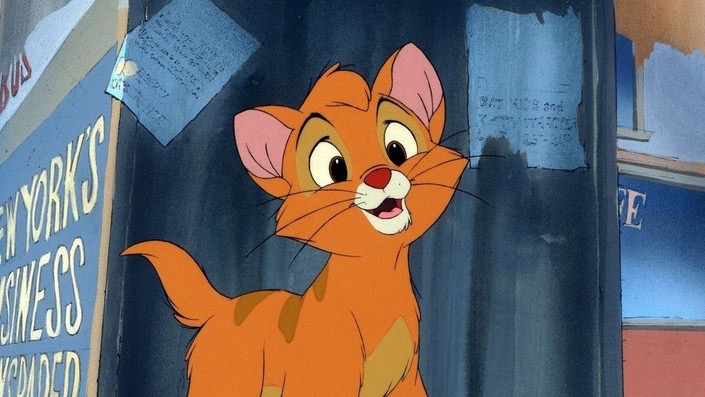
Disney preserves the loneliness, but not the brutality. Oliver is a tiny orange kitten in a box, left in the rain and overlooked by the world. It is sad, but soft. Painful, but manageable for a family audience.
| Dickens’ Oliver | Disney’s Oliver |
|---|---|
| Orphaned and institutionalised in poverty. | Abandoned on a New York pavement. |
| Punished for hunger and survival. | Ignored, but treated with sympathy. |
| A symbol of structural cruelty. | A symbol of loneliness and found family. |
The emotional function survives. The tone does not.
Fagin: Criminal or Caregiver?
Dickens’ Fagin is morally complex — a thief who recruits children, exploited by the world just as he exploits them. He is a product of system and circumstance, which makes him dangerous rather than cartoonish.
Disney’s Fagin, meanwhile, is softened into something almost grandfatherly. He isn’t using the dogs for crime; they’re his companions. He’s not malicious, just overwhelmed and deeply in debt to the far more frightening Sykes.
In Dickens, Fagin challenges us to consider how poverty shapes a man. In Disney, he is someone we are meant to love.
Dodger vs The Artful Dodger
The Artful Dodger in Dickens is electric — street-born, sharp, captivating. A boy forged by hunger and circumstance, perfectly adapted to survive at a moral cost.
Disney keeps the charisma but removes the danger. Billy Joel’s Dodger is streetwise, slick, and endlessly charming, but his thievery is fun rather than frightening. His swagger is cool, not criminal. He performs survival without fully needing it.
The character remains iconic, but declawed.
Sykes vs Bill Sikes
This is where the adaptation diverges most dramatically.
Bill Sikes in Oliver Twist is brutality incarnate — abusive, violent, terrifying. His murder of Nancy is one of Dickens’ most harrowing moments, and it shapes the moral climax of the novel. Sikes is what happens when poverty, rage, and power concentrate into a single man.
Disney’s Sykes is still a threat, but sanitised. A loan shark with Dobermans and a limo. Dangerous, but distant. There is no Nancy, no domestic abuse, no fatal violence — because this story is no longer built to scar children.
Sikes in Dickens destroys lives. Sykes in Disney escalates tension.
Brownlow Becomes Jenny
In Dickens, salvation arrives when Oliver is taken in by Mr Brownlow — a wealthy man who believes in the child’s innocence and chooses compassion over suspicion. It is the first time Oliver is treated as human rather than burden.
Disney merges Brownlow and Rose Maylie into Jenny: a little girl with money, a big house, and more love than she knows what to do with. Oliver doesn’t find safety through the justice system — he finds it through privilege. Kindness wrapped in wealth.
It reinforces the message that a better life is something you are chosen into, not something society must fix.
So is Oliver & Company still Oliver Twist?
Yes — but only in silhouette.
The plot skeleton survives: the orphan, the gang, the criminal underworld, the final rescue into safety. The tone is completely rebuilt. Dickens uses Oliver to condemn poverty and expose cruelty; Disney uses Oliver to soften loneliness and celebrate found family.
One story asks why children must survive such conditions. The other tells us that a home is waiting if you are lucky enough to be loved.
If Dickens is the wound, Disney is the bandage. Both matter — but they are not telling the same truth.