When Disney released Hercules in 1997, it was a riot of colour, gospel-inspired music, and comedy. The film was packed with sass, slapstick, and unforgettable one-liners (Hades alone could carry an entire movie). For many of us who grew up in the 90s, it’s a nostalgic classic that feels as much Broadway musical as animated adventure.
But beneath the neon glow and catchy soundtrack lies one of the darkest myths in Greek history — and Disney’s version barely scratches the surface. The real story of Heracles (the Greek name for Hercules) is full of betrayal, madness, and tragedy. So why did Disney decide to take one of mythology’s most tormented heroes and turn him into a wide-eyed golden boy who “went the distance”? So what was the real myth behind Hercules, and what is Disney polish?
This is your Fairytale Reality Check. Let’s peel back the layers on Heracles VS Hercules.
Disney’s Hercules: A 90s Classic
Released in June 1997, Hercules was Disney’s attempt to keep the Renaissance-era magic going after the successes of The Lion King, Aladdin, and Beauty and the Beast. Instead of European fairy tales, the studio turned to Greek mythology — though through a decidedly American lens.
The film was built on high energy and tongue-in-cheek humour. The gospel-style Muses narrated events with explosive musical numbers. Megara became the sharp, independent, and sarcastic love interest (a rare twist for Disney at the time). And Hades — voiced by James Woods — stole the show with his fast-talking villainy.
Disney’s Hercules was less about tragedy and more about destiny. A story of a boy who didn’t belong, who found his way home by becoming a true hero — not through brute strength, but through sacrifice and love.
Heart-warming? Absolutely. Accurate? Not even close.
The Real Heracles: Born of Betrayal
In Greek myth, Heracles’ life begins with deceit. According to Apollodorus’ Library (2.4.8), Zeus disguised himself as Alcmene’s husband, Amphitryon, and tricked her into bed. Their child, Heracles, was destined for greatness but also for Hera’s hatred.
Unlike Disney’s version, Hera wasn’t a doting mother. She despised Heracles from birth, sending serpents to kill him in his cradle — an episode preserved in Pindar’s Nemean Odes (1.35–38). The infant strangled them with his bare hands, a grim foreshadowing of the violence to come.
The Madness of Hera
Hera’s vengeance never relented. Euripides’ tragedy Heracles (c. 416 BCE) describes how she drove the hero into madness so severe that he murdered his wife, Megara, and their children.
This is the starkest break between myth and movie. In Disney’s world, Megara is witty, resilient, and very much alive. In the myth, she is one of tragedy’s most silenced women — remembered not for her personality, but for her death.
The Twelve Labours: Trial by Blood
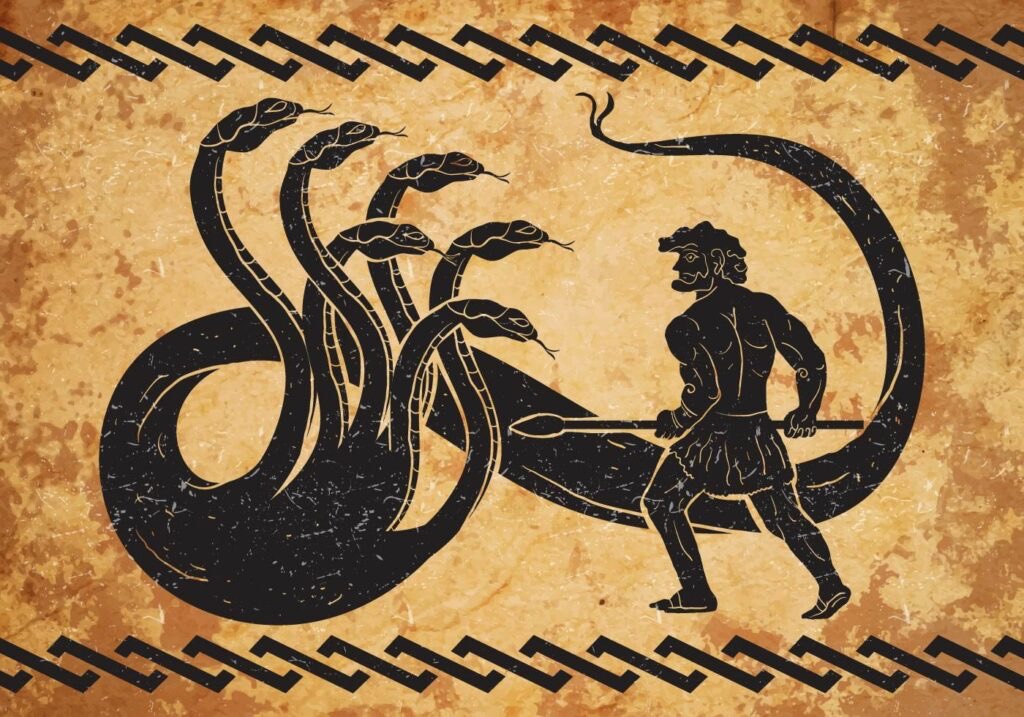
Disney shows Hercules facing a few monsters, like the Hydra, but leaves out the rest. In myth, the Twelve Labours were not adventures for glory but punishments for his crime.
As Apollodorus (2.5) records, these included slaying the Nemean Lion, cleaning the Augean stables, and capturing Cerberus from the Underworld. They were brutal, humiliating, and often degrading. Far from a cheerful musical montage, they were penance for unforgivable bloodshed.
Hades vs. Hera: The Villain Swap
One of Disney’s boldest changes was the villain. In myth, Hades was never Heracles’ enemy. As the ruler of the dead, he was stern but just, with no particular grudge against heroes. Hera, on the other hand, was the relentless force behind Heracles’ suffering.
Edith Hamilton, in her classic Mythology (1942), notes how Hera’s hatred defined every turn of Heracles’ life. By swapping her for Hades, Disney rewrote the story’s moral axis — turning the god of the Underworld into a wisecracking villain while sanitising Hera into a motherly figure.
Why Did Disney Change It?
So why transform one of mythology’s bleakest stories into a feel-good musical? The answer is partly creative, partly commercial.
- Tone: Greek tragedy doesn’t scream “family film.” Heracles’ madness and the murder of his children were too dark for Disney’s audience.
- Villain archetypes: Hades fit the mould of a Disney villain better than Hera. He was fiery, sarcastic, and marketable.
- Romance: Megara, in Disney’s hands, became a feminist-leaning heroine with edge and humour — a new kind of love interest.
- Music: The gospel-inspired soundtrack (penned by Alan Menken and David Zippel) leaned into American culture rather than European fairy-tale traditions, giving Hercules a distinct identity.
Disney wasn’t trying to honour Euripides or Apollodorus. They were making a blockbuster.
Legacy of Disney’s Hercules
At release, Hercules was a moderate success. Critics praised the energy but felt it lacked the emotional depth of The Lion King. Over time, though, it has gained cult status, especially among those who appreciate its humour, gospel soundtrack, and bold stylistic choices.
And Disney isn’t done. In 2020, reports emerged of a live-action remake produced by the Russo brothers (Avengers: Endgame), suggesting that Hercules’ tale is far from finished.
Fairytale Reality Check: The Real Hercules
Disney’s Hercules gave us a hero who saved the day with heart and humour. But the Heracles of myth — drawn in works from Pindar to Euripides to Apollodorus — was no golden boy. He was a man cursed from birth, punished for crimes born of divine cruelty, and remembered as much for his suffering as his strength.
Disney gave us a hero to cheer for. Myth gave us a man to pity. Both endure — one in our playlists, the other in the dusty echoes of classical literature.
Sources & Further Reading
If you’d like to dive deeper into the myths behind Disney’s Hercules, here are some of the key sources:
- Apollodorus, The Library – A systematic account of Heracles’ labours and family history.
- Euripides, Heracles – A tragedy exploring the madness sent by Hera and the death of Megara.
- Pindar, Nemean Odes – Includes the story of Heracles strangling the snakes in his cradle.
- Edith Hamilton, Mythology (1942) – A classic modern retelling, accessible and influential.
- Robert Graves, The Greek Myths (1955) – A comprehensive, if sometimes speculative, collection of mythological narratives.