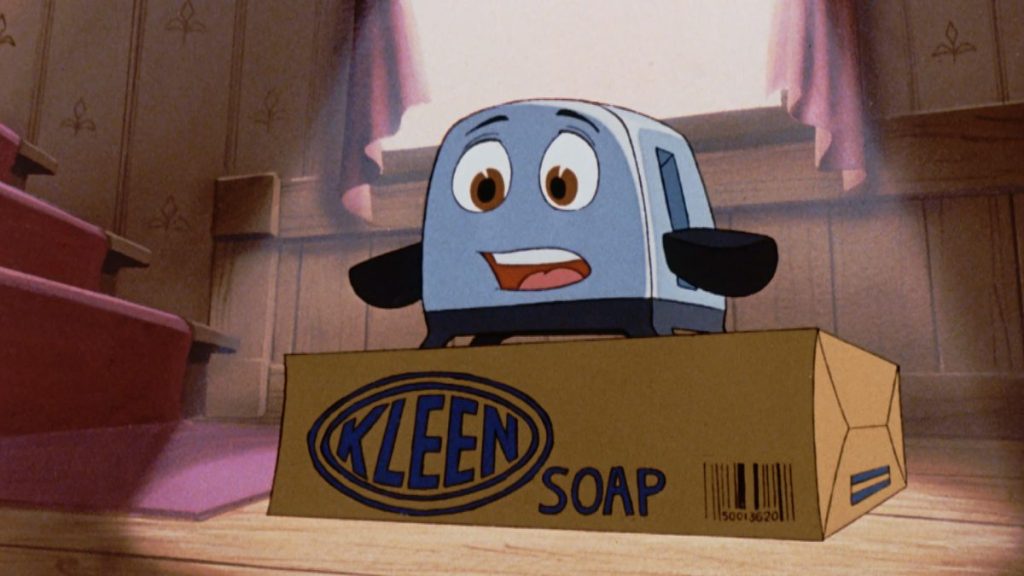
It’s easy to dismiss The Brave Little Toaster as a surreal oddity — a cult classic filled with jittery animation, talking household appliances, and more emotional damage than one might expect from a toaster.
But beneath its surface-level weirdness lies a surprisingly sharp environmental message. Long before Wall-E or Don’t Look Up, The Brave Little Toaster was quietly warning children (and their parents) about our wasteful habits, emotional detachment, and the creeping reality of throwaway culture. So what is the theme of the Brave Little Toaster?
More Than a Kids’ Movie
Released in 1987, this unassuming film tells the story of five abandoned appliances — a toaster, lamp, vacuum, radio, and electric blanket — who embark on a journey to find their “master.” But while it’s dressed up as a buddy road movie, The Brave Little Toaster is anything but lighthearted. The characters face scrapyard crushers, thunderstorms, and even a junkyard filled with singing broken appliances — all metaphors for obsolescence, abandonment, and the emotional cost of consumer culture.
Planned Obsolescence: The Real Villain
One of the film’s most memorable moments is the junkyard scene, where discarded cars sing heartbreaking laments about being thrown away despite once being cherished. It’s a clear jab at planned obsolescence — the idea that things are designed to break, be replaced, or become obsolete so that consumers will keep buying. The film doesn’t shy away from showing the cruelty of that system. These characters aren’t just objects; they have memories, personalities, and feelings. And they’re all terrified of being deemed useless.
Emotional Bonds in a Throwaway World
The brilliance of The Brave Little Toaster lies in how it plays with our sense of nostalgia. It dares to suggest that objects can matter — not just because they function, but because they hold pieces of our lives. Whether it’s the radio that played in the kitchen during breakfast or the lamp that lit up bedtime stories, these appliances represent emotional anchors in a rapidly changing world. The film critiques how quickly people discard not only possessions, but the memories tied to them.
Industrialism vs. Individualism
By the time our heroes reach the repair shop and later the junkyard, the message sharpens: in a world driven by consumption and profit, there’s little room for sentimentality. The repairman takes apart old gadgets for profit, and the junkyard reduces beloved items to scrap. It’s not just sad — it’s a chilling reflection of how society treats both people and things when they are no longer deemed “useful.”
It’s Not Just a Toaster
In the end, it’s the toaster — the simplest, most overlooked appliance — who makes the ultimate sacrifice to save the master. And that moment, wild as it seems, hits because it speaks to a deeper truth. We should care about the things we own. Not because they’re expensive or new, but because they’ve served us, stood by us, and shaped our daily lives. The Brave Little Toaster challenges us to look at our possessions — and our habits — with a little more heart and a little more conscience.
Want more hidden history behind beloved animated classics?
If you enjoyed exploring the deeper enviromental story behind The Brave Little Toaster, you might also love my post FernGully: The Last Rainforest, which unpacks another 90s animated film with a surprisingly bold message about nature, capitalism, and hope.