Welcome to the companion FAQ for my post on the historical horrors behind Watershed Down. Below are the most commonly asked questions about the book, the 1978 film, and its legacy.
Quick Navigation
- What is it about?
- Who are the main characters?
- Who’s in the cast?
- Where can I watch it?
- Who sang “Bright Eyes”?
- Is it based on a true story?
- Why is it considered so disturbing?
- What does Efrafa represent?
- Are there sequels or remakes?
- Is it political?
- What inspired the author?
- What does the ending mean?
- What company produced it?
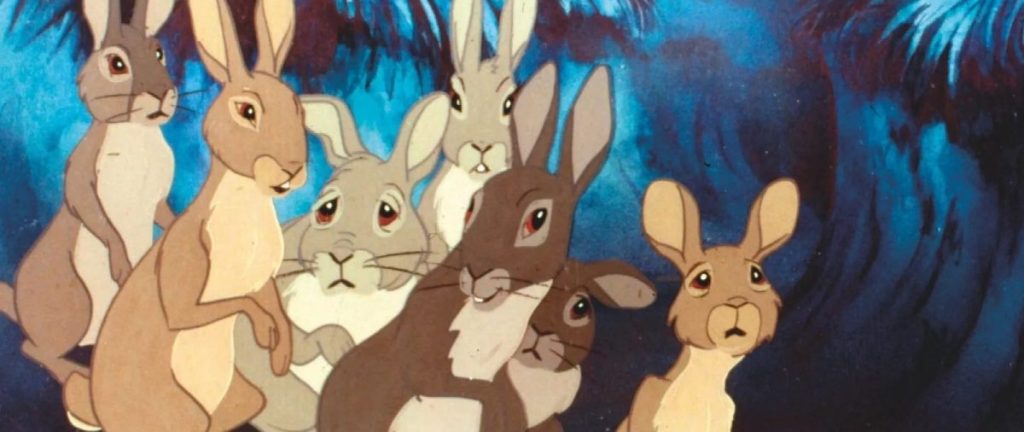
What is Watership Down about?
It tells the story of a group of rabbits who flee their warren after a prophetic vision warns of its destruction. Facing predators, hostile warrens, and human dangers, they search for a new home. It’s a powerful tale of survival, freedom, and leadership with deep real-world parallels.
Who are the main characters?
- Hazel – Brave, compassionate, and a natural leader.
- Fiver – Small and nervous, with prophetic visions.
- Bigwig – Strong and loyal, a former officer rabbit.
- Blackberry – The group’s clever problem-solver.
- General Woundwort – The ruthless dictator of Efrafa.
- El-ahrairah – A mythical rabbit trickster hero.
Who’s in the cast of the 1978 film?
- John Hurt as Hazel
- Richard Briers as Fiver
- Michael Graham Cox as Bigwig
- Harry Andrews as General Woundwort
- Ralph Richardson as the Chief Rabbit
- Zero Mostel as Kehaar (his final film role)
Where can I watch it?
- 1978 film: Available to rent or buy on Amazon Prime Video, Apple TV, Google Play Movies, and occasionally BBC iPlayer or BritBox (UK).
- 2018 miniseries: Available on Netflix worldwide.
Who sang “Bright Eyes”?
“Bright Eyes” was written by Mike Batt and performed by Art Garfunkel. It topped the UK charts for six weeks in 1979 and was the UK’s biggest-selling single of the year. Though absent from the US release at first, the song became iconic and is now associated with the film’s most emotional moment.
Is it based on a true story?
No, but it’s deeply inspired by real-world history. Author Richard Adams served in WWII, and the story mirrors the themes of war, fascism, and displacement. The rabbits represent ordinary people resisting destruction and seeking refuge.
Why is it considered so disturbing?
Because it doesn’t flinch from trauma. The film includes graphic scenes of violence, death, and emotional distress. Its animation style contrasts sharply with its grim themes, making the horror more jarring for unsuspecting viewers.
What does Efrafa represent?
Efrafa is a metaphor for a totalitarian regime. Under General Woundwort, the rabbits live in fear and strict control — echoing fascist and communist dictatorships where individual freedom is crushed in favour of order and power.
Are there sequels or remakes?
- 1999–2001 TV series: A tamer, more kid-friendly version aired on CITV and international networks.
- 2018 Netflix/BBC miniseries: A 4-part CGI adaptation with an all-star cast. Mixed reviews for visuals but praised for voice acting and narrative fidelity.
Is it political?
Yes — but not in a partisan way. It explores themes of freedom, leadership, resistance, and community. Different warrens represent different political systems, from democracy to authoritarianism, with strong cautionary undertones.
What inspired the author?
Richard Adams made up the story during car journeys for his daughters. As a war veteran and countryside lover, he poured those experiences into the tale, combining myth, nature, and historical trauma into one sweeping allegory.
What does the ending mean?
Hazel’s peaceful death and journey with El-ahrairah symbolise release, reward, and spiritual rest. After a life of struggle and leadership, he is honoured and taken to the afterlife, where peace finally replaces fear.
What company produced the 1978 film?
The 1978 film was produced by Nepenthe Productions and distributed by Avco Embassy Pictures in the United States and Cinema International Corporation internationally. The animation was created by the British company Watership Productions Ltd.
Check out more of my nostalgic FAQ posts here!