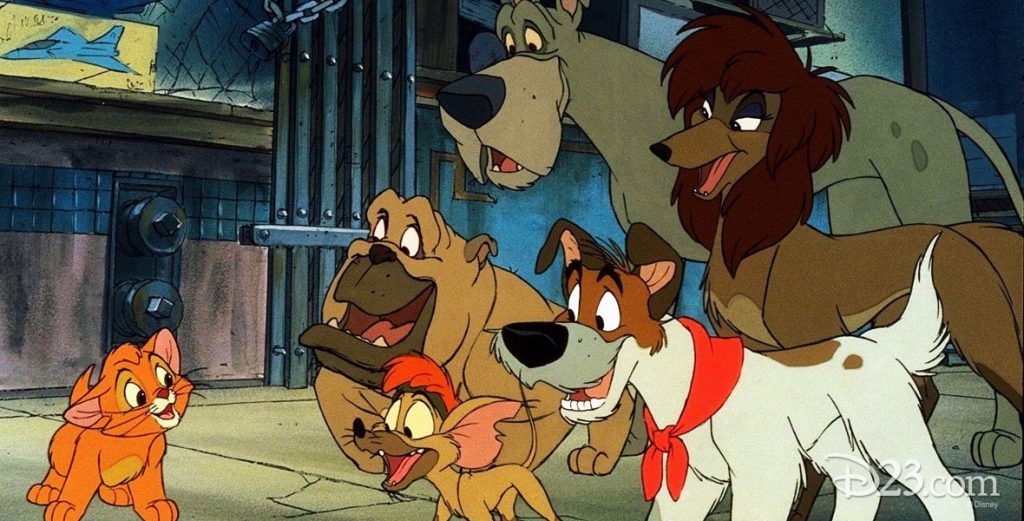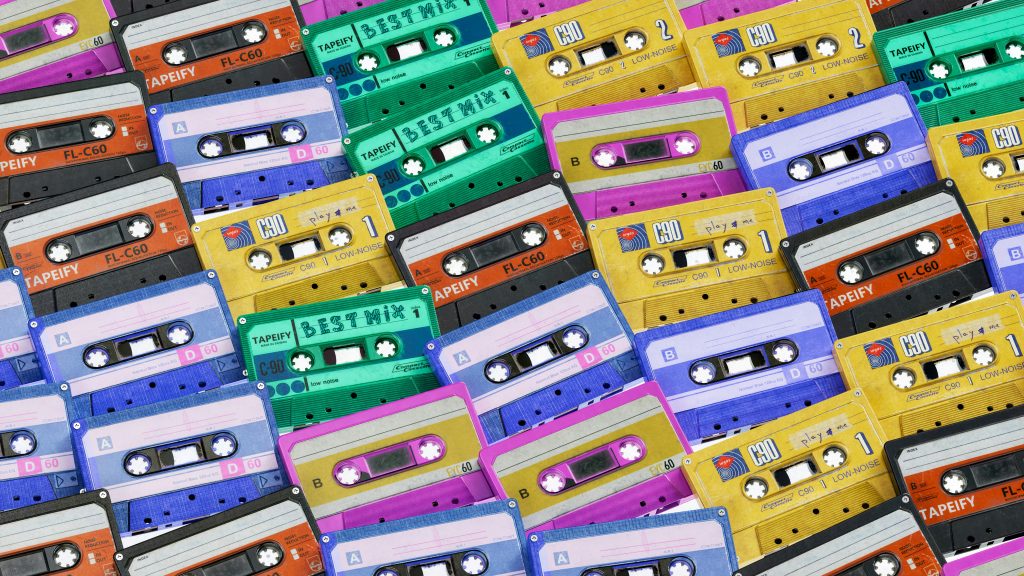
The 90s live in my memory like permanent golden hour. Everything is softer there. The colours are brighter, the summers are longer, the music is better, and the world feels smaller in the safest possible way.
It was the era of Polly Pocket villages spread across the kitchen table, of dial-up internet that announced itself like a robot orchestra, of Saturday mornings that belonged entirely to cartoons and Saturday nights belonged to the Gladiators and Stars in their Eyes. It is the last time I remember life feeling slow.
With the 30th anniversary of both the Spice Girls and Pokemon this year, its easy to reflect back on those childhood years.
But the older I get, the more I find myself asking an uncomfortable question. Were the 90s genuinely better — or is this just what every generation does when the present starts to feel heavier?
The Science of Why It Feels Better
There is a reason the 90s glow the way they do in our minds, and it isn’t just because they were objectively perfect. Most of us experienced that decade as children or teenagers, and memory is kinder to those years. Psychologists call it the “reminiscence bump” — the period of life where everything is new, emotional, and formative, which makes it feel more vivid and meaningful when we look back.
In the 90s we had fewer responsibilities, fewer bills, fewer fears about the future. Someone else handled the hard parts of life. Of course the world felt safer — we were being held inside it.
The 90s didn’t just give us better TV; they gave us parents who were still young, grandparents who were still alive, friendships that existed entirely offline, and the feeling that time was endless.
We aren’t just nostalgic for a decade.
We are nostalgic for who we were inside it.
The Pre-Digital Sweet Spot
And yet… it wasn’t only childhood.
The 90s really did sit in a strange, beautiful in-between moment. Technology existed, but it hadn’t taken over. We had the internet, but it lived in one room and made noises before it arrived. Phones were something you shared, not something that owned you. If someone wasn’t home, you simply didn’t speak to them — and that was normal.
There was boredom. Real boredom. The kind that forced you to build worlds out of nothing.
We didn’t document every second of our lives, which means we actually lived them.
You can’t separate 90s nostalgia from the fact that it was the last decade before everything became immediate, permanent, and online.
The Illusion of a Simpler World
But it would be a lie to say the 90s were perfect.
They were simpler for us because we were shielded from their complexity. Politics was still messy. Inequality still existed. Mental health was far less understood. Many voices were missing from the mainstream entirely. If you step outside the warm bubble of children’s television and pick-and-mix, the decade looks very different.
Every era feels like it is collapsing while you are living in it. The adults of the 90s were just as worried about the future as we are now.
We just didn’t know it.
When I think about the 90s, I don’t just remember the cartoons or the music — I remember the systems around my childhood feeling easier to move through.
School felt straightforward. Afternoons felt long. And if you woke up on a Saturday and decided you wanted to go swimming, you just… went.
No app. No pre-booking. No checking peak and off-peak pricing. No refreshing a website at midnight trying to secure a slot like you were buying concert tickets.
You put your costume in a plastic bag, found a pound for the locker, and that was that.
It wasn’t a luxury activity. It was just something you did.
And that difference — between what was ordinary then and what feels like a logistical operation now — says a lot about how childhood has changed.
Education in the 90s: Not Perfect, But Human
School in the 90s wasn’t some utopia. There were rigid curriculums, crowded classrooms, and all the usual childhood politics of friendships and playground hierarchies.
But it felt… lighter.
There was less testing, less data tracking, less sense that your entire future was being measured and recorded before you were ten years old.
Teachers knew you without needing a spreadsheet to explain who you were.
You weren’t constantly aware of your “level” or your targets or whether you were on track in a way that defined your worth. You just did your work, went out to play, and lived in the gaps between.
Learning had space to breathe. My history classes were full of a people being hired to shoot historical guns across out school field, or hold assemblies where I had someone put Roman style makeup on me that took days to wash off. It wasn’t all tied up in health and safety, money and it made me have such a passion for history that I have continued until this day.
Crucially, education in the 90s didn’t yet feel like it was permanently on the verge of crisis.
The Shift to Metrics, Monitoring, and Pressure
Now everything feels quantified.
Progress is tracked, performance is analysed, outcomes are predicted. Children are assessed constantly, and that pressure filters down into the classroom atmosphere whether we want it to or not.
Even the language has changed. It’s no longer just about learning — it’s about attainment, data, interventions, targets.
It feels less like an environment built for curiosity and more like one built for measurement.
And when you pair that with reduced funding, overstretched staff, shrinking resources, and the quiet disappearance of enrichment activities, it’s hard not to feel that something important has been lost.
Not the content of education.
The experience of it.
The Freedom of Unstructured Childhood
The same thing has happened outside school.
In the 90s, childhood existed largely offline and unscheduled. You knocked on someone’s door and asked if they could come out. You rode your bike around until you got hungry. You spent entire days at places that cost very little or nothing at all.
Leisure facilities were part of the fabric of everyday life.
Swimming pools weren’t “sessions.” They were open.
Libraries were busy. Parks were full. Youth clubs existed.
Now even the simplest activities come with layers of restriction — booking systems, reduced opening hours, rising costs, waiting lists.
Spontaneity has been priced out.
And that changes childhood in a way that is hard to quantify but easy to feel.
Was It Actually Better — or Just More Accessible?
This is where the nostalgia question becomes more complicated.
Because some of this is perspective. When you’re a child, you aren’t aware of council budgets, staffing shortages, safeguarding frameworks, or the economic structures that shape public services.
But some of it isn’t nostalgia.
Some of it is the very real reduction of accessible, affordable, everyday spaces for children and families.
When swimming becomes a pre-planned, limited activity instead of a casual one, that isn’t just a feeling — it’s a structural shift.
When schools are forced to operate in survival mode, that isn’t just us romanticising the past — it’s policy.
What We’re Really Missing
I don’t think most of us actually want to go back to the 90s.
What we want back is:
The sense that childhood wasn’t being constantly assessed.
The ability to do simple things without turning them into administrative tasks.
The presence of public spaces that belonged to everyone.
The feeling that learning and living were not both under pressure at the same time.
We miss the ease.
Not because everything was better — but because so many everyday things were possible without effort.
And when you are raising children now, or educating them now, that difference becomes impossible to ignore.
The Quiet Grief of It
Maybe this is why 90s nostalgia hits so hard when it comes to school and ordinary days out.
Because it isn’t really about jelly sandals or pencil cases.
It’s about remembering a time when systems felt like they were built to support your childhood rather than measure it.
A time when you could wake up, decide to go swimming, and be in the water an hour later. And you would stay in that pool until your stomach rumbled and you made your way to get a snack at the vending machines. My local pool now only has two family friendly time slots where you can literally just go and swim and have fun and one of them (the only one that is in the main large pool) is well into the evening?! Also, you get one hour and then you’re out.
When we decided to go swimming in the 90s there was no planning.
No scarcity.
No sense that something as simple as that was a privilege.
So Was It Actually the Best?
Maybe the truth is that the 90s were not the best time in history.
They were the best time in our history.
They were the intersection of youth, cultural optimism, analogue living, and the last years before the world sped up. A perfect storm that cannot be recreated — not because the decade was magical, but because we can never again be the people we were then.
And that’s the real reason it hurts in such a beautiful way to look back.
We aren’t trying to return to the 90s.
We’re trying to return to a version of ourselves that still believed everything was about to begin.
And with every second of life now documented, shared and judged, the 90s was a time when honestly — for better or worse — ignorance was bliss.