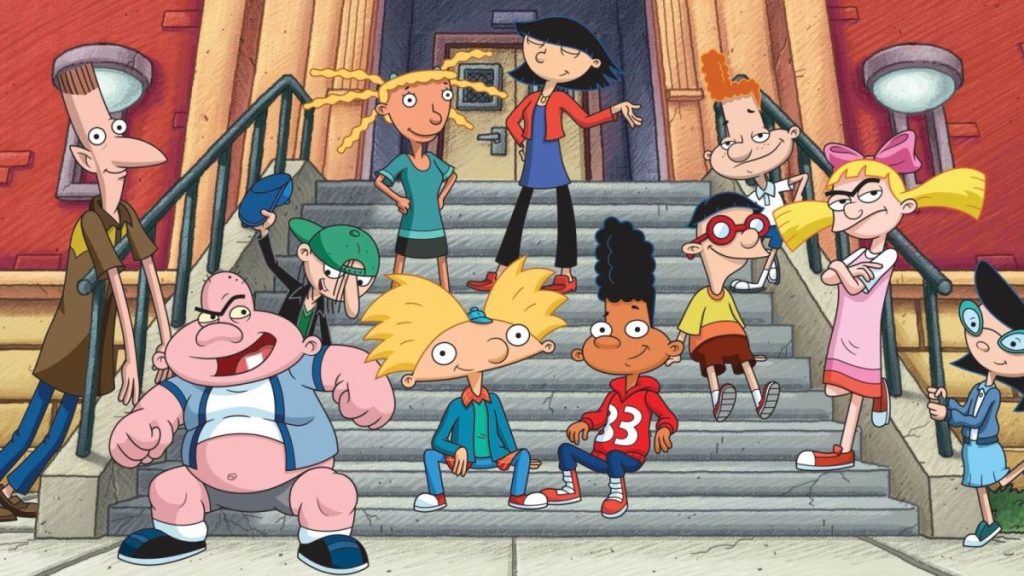
If you grew up in the 90s, there’s a good chance Hey Arnold! sits somewhere in your memory as one of the warmest cartoons Nickelodeon ever made.
A football-headed kid.
A city full of strange neighbours.
A girl secretly writing poetry about the boy she pretends to hate.
But if you rewatch it as an adult, something becomes very obvious very quickly.
Hey Arnold! was way darker than most children’s shows.
It dealt with abandonment, loneliness, poverty, alcoholism, broken families and the strange quiet sadness of growing up in a big city.
So what exactly was going on with this show — and why did it disappear when it was still so beloved?
The man behind the show
Hey Arnold! was created by Craig Bartlett and premiered on Nickelodeon in 1996.
Bartlett wanted to create something very different from the loud, chaotic cartoons that dominated the 90s. Instead of constant slapstick, Hey Arnold! focused on character, empathy and the messy reality of people’s lives.
The show is set in a fictional city clearly inspired by places like Seattle, Brooklyn, and Portland.
The result was a cartoon city that felt oddly real.
Why was Hey Arnold! so sad?
The show tackled themes that most children’s cartoons avoided completely.
Arnold himself lives with his grandparents in a boarding house because his parents disappeared while helping people overseas. Other characters face equally heavy realities:
Helga comes from a wealthy but emotionally neglectful family. Very Angelica Rugrats coded.
Gerald struggles with growing up in a tough neighbourhood.
Mr Hyunh’s story about losing his daughter during the Vietnam War is still considered one of the most emotional episodes ever aired on Nickelodeon.
The writers never treated these topics as jokes.
Instead, they approached them with a quiet sincerity that trusted children to understand complicated feelings.
It’s part of why the show aged so well.
Why did Hey Arnold! end?
The original run of Hey Arnold! ended in 2004 after five seasons.
Unlike many shows that get abruptly cancelled, this ending was partly tied to creator Craig Bartlett leaving Nickelodeon after disagreements about creative direction. Nickelodeon also shifted its focus toward newer properties at the time, which meant older series were gradually phased out. But the show didn’t truly disappear.
The missing ending (for years!)
For a long time, one of the biggest mysteries of Hey Arnold! was Arnold’s parents.
The series heavily hinted at their fate but never revealed the full story before the show ended. Fans waited more than a decade for closure.
Finally, in 2017, Nickelodeon released the TV film Hey Arnold!: The Jungle Movie, which concluded the storyline and answered the biggest question in the series. It gave the show the ending it had originally been building toward.
Why Hey Arnold! still matters
Looking back now, Hey Arnold! feels incredibly unusual for a children’s cartoon. It wasn’t loud. It wasn’t cynical. And it didn’t pretend that life was always simple.
Instead, it showed kids that the world could be confusing and sometimes sad — but also full of kindness, empathy and strange, wonderful people.
And maybe that’s why the show still resonates decades later.
Because underneath the football-shaped head and the city adventures, Hey Arnold! wasn’t really about childhood at all.
It was about learning how to be a decent human being in a complicated world.
Hey Arnold! FAQ
Football head shaped questions and answers!
Hey Arnold! originally ran for five seasons between 1996 and 2004. The show ended partly because creator Craig Bartlett left Nickelodeon after creative disagreements. Nickelodeon was also shifting its focus toward new shows at the time, so the series naturally concluded after its fifth season.
However, the story was not fully finished when the show ended.
Not exactly. The show completed its planned run, but several storylines — particularly the mystery of Arnold’s parents — were left unresolved for many years. This made it feel like a cancellation to fans, even though the series had technically wrapped up its main run.
Unlike most 90s cartoons, Hey Arnold! explored serious themes such as loneliness, poverty, neglect, immigration, and missing family members.
Many characters came from difficult backgrounds. Helga lived in an emotionally neglectful household, Arnold’s parents were missing, and several side characters struggled with isolation or past trauma. The show trusted its audience to understand these emotional stories rather than avoiding them.
Arnold’s parents disappeared while on a humanitarian mission in Central America. For years, the show only hinted at their fate.
Their story was finally resolved in the 2017 TV movie Hey Arnold!: The Jungle Movie, where Arnold travels to the jungle and discovers the truth about what happened to them.
Arnold lives with his grandparents because his parents disappeared during their mission abroad. His grandparents run the Sunset Arms boarding house, which becomes one of the central locations of the series.
The city in Hey Arnold! is fictional, but it was inspired by several real places, particularly Seattle, Portland, and Brooklyn. These influences helped create the show’s unique urban atmosphere.
The show never gives a literal explanation. The design was simply part of creator Craig Bartlett’s character style. Arnold’s unusual head shape quickly became one of the most recognisable character designs in Nickelodeon history.
Hey Arnold! was created by Craig Bartlett, an animator who previously worked on Rugrats before developing his own series.
Arnold was voiced by several child actors during the show’s run, including Lane Toran, Spencer Klein and Alex D. Linz.
Because the character was a child, the voice actor changed as the actors grew older.
Hey Arnold! premiered on Nickelodeon in 1996 and ran until 2004.
The show has five seasons and 100 episodes.
Hey Arnold!: The Jungle Movie is a television film released in 2017 that finally concludes the story of Arnold’s parents and provides closure for the series.
Helga secretly loves Arnold but hides her feelings behind bullying and sarcasm. Her home life is extremely difficult, and Arnold is one of the only people who has ever shown her genuine kindness.
Her behaviour is partly a defence mechanism.
The show remains popular because of its emotional depth, memorable characters and realistic themes. It treated children as capable of understanding complex emotions, which helped it stand out from other cartoons of the time.