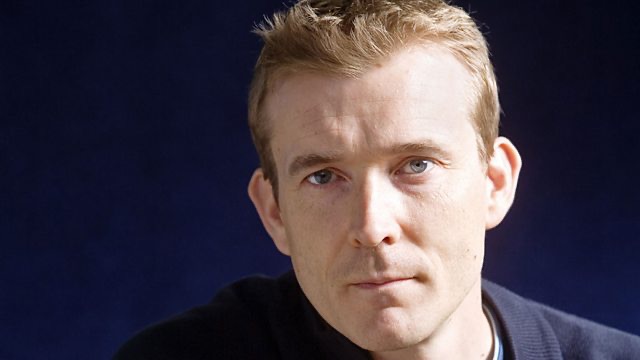
When you pick up a David Mitchell novel, you might think you’re starting fresh — a new story, a new time period, a new set of characters. But if you’ve ever felt an uncanny echo between his books, you’re not imagining things.
Mitchell isn’t writing stand-alone stories; he’s building a single, sprawling shared universe — a literary multiverse where souls, histories, and timelines bleed into one another.
The “Macronovel” Idea
Mitchell has said he’s really writing one enormous book made up of interlinked stories — a macronovel.
Each of his works is a chapter in that greater whole. Characters recur under new names, souls reincarnate, and events in one century ripple forward into the next. It’s a puzzle that rewards the curious reader: every time you recognise a name, a location, or a strange déjà vu, you’ve found a thread in his vast web.
Where It All Began: Cloud Atlas
Cloud Atlas (2004) was the first time most readers noticed something bigger happening. Its six nested stories stretch from the 1800s to a distant, post-apocalyptic future, all linked by the idea of souls reborn and humanity repeating its mistakes.
That belief in cyclical life — in echoes of the same essence passing through time — becomes the metaphysical backbone of Mitchell’s later work.
The Bone Clocks: The Hidden Architecture Revealed
A decade later, The Bone Clocks pulled back the curtain.
Here we meet Holly Sykes, who stumbles into a war between two immortal factions: the reincarnating Horologists and the parasitic Anchorites.
Suddenly, what once felt like metaphor in Cloud Atlas becomes literal. Souls do migrate. Time is porous. Death is just another doorway.
And Mitchell rewards the attentive:
- Hugo Lamb, the charmer from Black Swan Green, returns — only now he’s something much darker.
- Dr Marinus, a reincarnating physician, first appeared in The Thousand Autumns of Jacob de Zoet centuries earlier.
- Even the futuristic “orison” recordings from Cloud Atlas resurface here as psychic devices.
Reading Mitchell chronologically is like watching his universe wake up.
The Web Expands
Each book plays its part in the mythos:
- The Thousand Autumns of Jacob de Zoet (2010) plants Marinus in 18th-century Japan.
- Black Swan Green (2006) quietly introduces Hugo Lamb before his supernatural turn.
- Slade House (2015) narrows the focus to a haunted-house tale within The Bone Clocks’ mythology.
- Utopia Avenue (2020) carries the thread into the swinging sixties — complete with Marinus once again, and a descendant of Jacob de Zoet on guitar.
It’s not a franchise; it’s reincarnation through literature.
Why It Works
Mitchell’s universe feels both intimate and infinite. You can read each book alone, but the moment you spot a connection — a name, a phrase, a remembered dream — you’re part of the conspiracy.
He invites readers to act as archaeologists of his imagination, digging up clues that show how humanity, across centuries, keeps searching for meaning, redemption, and connection.
The Big Picture
The “Mitchellverse” isn’t just clever intertextual play; it’s a philosophy.
Every story, every life, every timeline matters because they’re all part of the same long pulse. The Bone Clocks may end in a ruined future, Cloud Atlas may start in the past, but both remind us that history is circular — that the stories we tell are how we reincarnate.