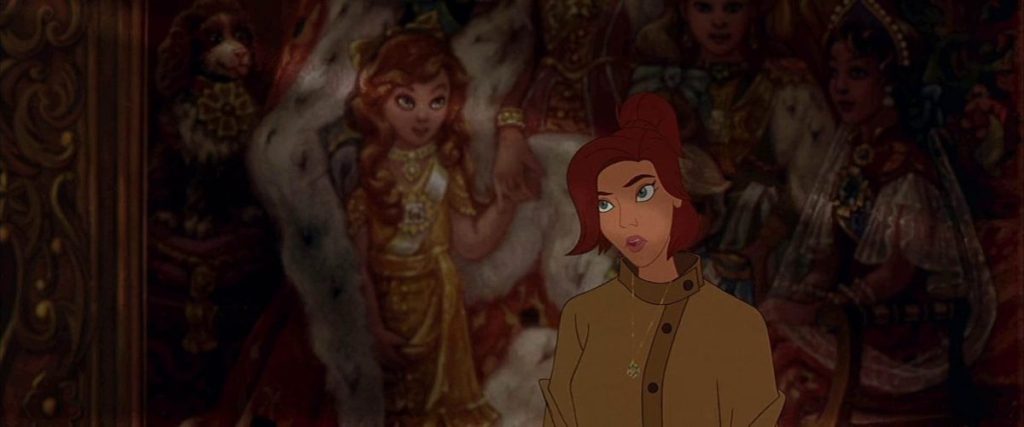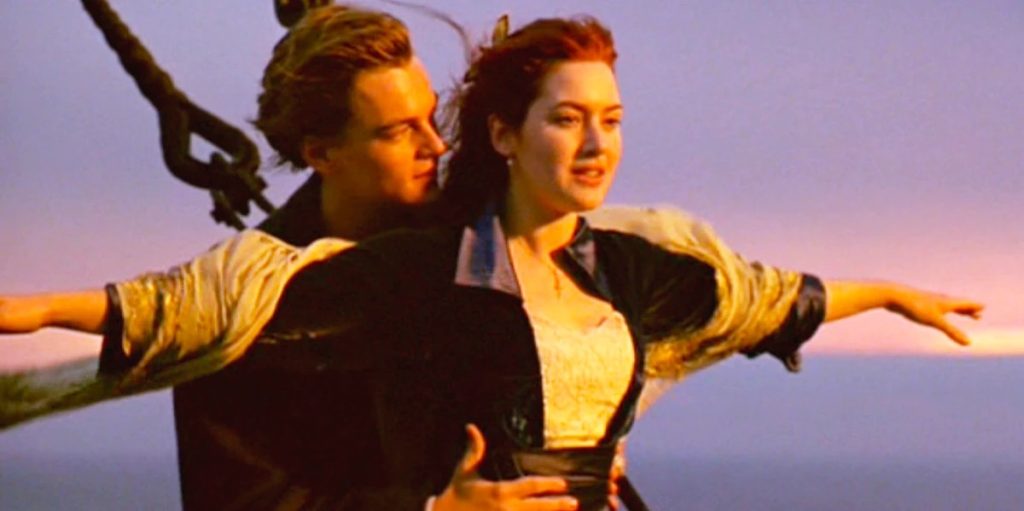
“He saved me. In all the ways a person can be saved.”
At first glance, James Cameron’s Titanic is a sweeping romance. But beneath the grandeur and tragedy lies a quieter, more haunting theory — one that imagines that Jack Dawson may never have existed at all. Perhaps he was never a real man, but rather a figment of Rose DeWitt Bukater’s imagination — a manifestation of her desperation to escape a life that was slowly drowning her. It’s an interesting Titanic theory.
It’s Fight Club… but make it Edwardian.
The Birth of a Ghost
When Jack first meets Rose, she is on the brink of suicide. Standing at the stern of the Titanic, she looks down into the dark Atlantic and whispers that she’s “felt nothing but Titanic” for days. Her world is one of suffocation — an arranged engagement, a domineering mother, and a society that values her name over her voice. And then, in her most hopeless moment, a stranger appears.
Jack Dawson materialises not from her world, but from the opposite side of it — poor, spontaneous, alive. He quite literally saves her from the edge, but what if that rescue is metaphorical? What if, in that moment, Rose’s fractured psyche created him? Think Durden appearing when his creator can take no more. Her mind conjured the embodiment of freedom, laughter, and life — everything she was denied. Jack is the spark her spirit manifests to keep her alive. It is the part of her that she needs to pull her bac from the edge… literally.
The Invisible Passenger
There is, famously, no record of Jack Dawson on the Titanic’s passenger list. In the film, this is explained by his last-minute poker win, but thematically it fits something deeper: he’s never going to be found, he isn’t meant to be. He’s entirely her creation. Only Rose speaks of him; only Rose sees him with the intimacy of truth. The others interact with him in fleeting, almost peripheral ways, as though filtered through her own recollection — the dream logic of a mind telling itself a story.
Even his dialogue supports the illusion. Jack always knows exactly what Rose needs to hear. “You jump, I jump.” “Make it count.” “You’re so stupid, Rose — why’d you do that?” Every word pushes her toward autonomy, as though he’s a voice in her head coaching her toward the surface. He’s not teaching her how to live as much as reminding her that she already knows how.
The Portrait of a Rebirth
When Jack draws Rose, it’s one of the most intimate scenes in cinema. She is stripped of her jewels, her corset, her pretence — a woman rediscovering her own body and identity. Yet in this reading, the artist and the muse are one and the same. Rose could have drawn that portrait herself. The thought of a young, well educated lady of her era being good at art isn’t so far-fetched. The act of the drawing becomes symbolic: she’s reclaiming her gaze, seeing herself not as society sees her, but as she truly is.
When she later says, “He saved me. In all the ways a person can be saved,” we already know that she’s speaking of the awakening Jack gave her in her rigid, trapped existence. But it also rings true for this theory. Jack’s creation saved her. The ship’s destruction is the price of her rebirth.
The Shipwreck and the Self
In the end, Jack dies. But if he’s a figment of her imagination, his death isn’t tragedy — it’s transformation. He disappears because she no longer needs him. She’s ready to live as her own person, no longer the caged debutante who longed for escape. When she whispers “I’ll never let go,” she isn’t really promising eternal devotion to a lover; she’s vowing never to abandon the part of herself he awakened.
That promise is what carries her through the decades. It’s why she never speaks of him, why there’s no record, no photograph, no proof. You can’t catalogue a dream, a vision. You can’t document the moment your soul decided to live.
The Woman Called Rose Dawson
When she steps onto the Carpathia and gives her name as Rose Dawson, she isn’t honouring a dead man — she’s claiming a new identity. “Dawson” becomes the surname of her freedom, not her lover. It’s the fusion of two selves: Rose DeWitt Bukater, bound by expectation, and Jack Dawson, born of defiance. Together, they become Rose Dawson — the woman who finally belongs to herself. The blend. The woman Rose wants to be.
Memory, Myth, and Meaning
Decades later, as an old woman recounting her story, she states that “He exists now only in my memory.” Maybe after all this time Rose has still not realised that Jack never existed. This secondary personality had a neat enough ending for her to move on without ever really confronting the reality of it. The trauma of the Titanic alone would have been a huge mental load.
And when she dies, returning to the ship in her dream, the gates open and she sees Jack waiting. Is she returning to someone she really believed was alive? Or maybe that reunion isn’t a love story at all. Maybe it’s the final uniting of every fragment of herself — the girl she was, the woman she became, and the spirit who saved her in all the ways a person can be saved.
Obviously there are many mental health and personality disorder issues to discuss here but as a quick “what if”, its a pretty intriguing theory!
So—Jack Dawson may never have existed, but his message did. Make it count. And Rose did. Because sometimes the person who saves us is ourselves, even if we don’t realise it at the time.