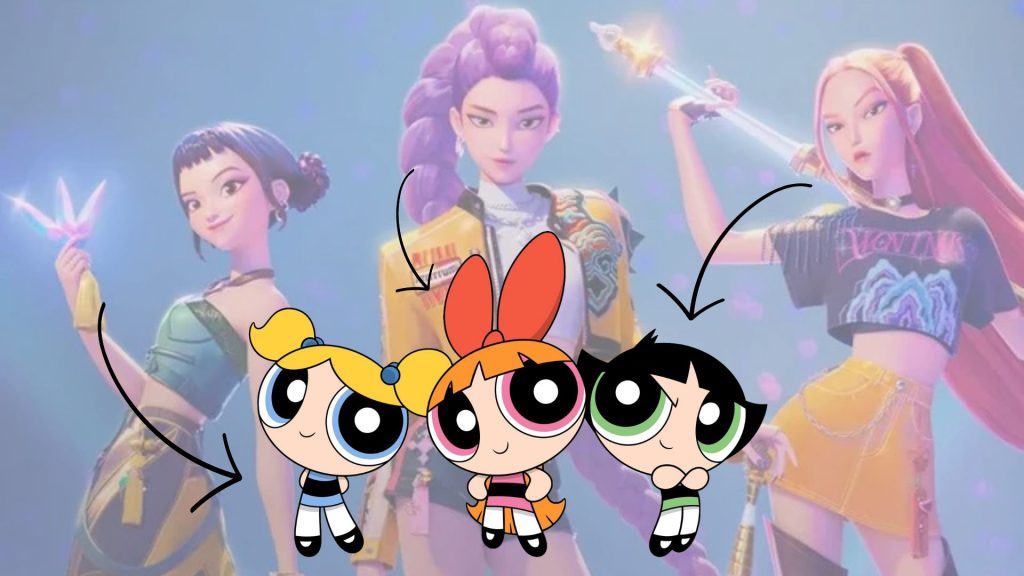
You know that girl group with the fun hair colours, that could destroy you with a giggle, a glare, or a roundhouse kick? No, we don’t mean Huntrx, we’re talking Powerpuff Girls!
Trio dynamics in pop culture have always been fierce—especially in girl groups. You’ve got the cute one, the moody one, the badass one. They’ll kick ass in different ways. And while today’s demon-hunting K-pop idols are out here slaying (literally and metaphorically), we need to pay our respects to the pastel OGs.
Before choreographed exorcisms and weaponised eyeliner, we had The Powerpuff Girls—the original three-girl lineup that taught us power isn’t just in how you fight, but why you fight (and what shoes you wear while doing it).
Sugar, spice, and everything nice? Sure. But also lasers, fists, and no tolerance for misogynistic monkey overlords. Here’s a look at why the Demon Hunters feels so familiar.
A Lesson in Duality
The brilliance of The Powerpuff Girls was in the contrast. They were soft and deadly. Cute and capable. They liked dolls and beat up criminals. And they never had to choose. In a world that often tells little girls they have to tone it down—either the rage or the ribbons—they were a cartoon rebellion wrapped in glitter and punch combos.
Blossom led with intelligence and grace.
Bubbles had the kindness of a healer and the fury of a siren.
Buttercup? Buttercup was every girl who got called “too much” and leaned into it anyway.
Huntrx vs. Millennial Mayhem
Today, we’ve got Huntrx and every other edgy femme-coded franchise teaching girls they can do anything they want and still look cute as heck. But before the polish, the darkness, the sleek aesthetics, we had a Day-Glo, unapologetically chaotic, and deeply joyful show telling us that we’ve always been powerful.
All you needed to win the day were your sisters, a dad who made you from science goo, and a theme tune that slapped.
Trio dynamics in pop culture have always been fierce—especially in girl groups. You’ve got the cute one, the moody one, the badass one. They’ll kick ass in different ways. And while today’s demon-hunting K-pop idols are out here slaying (literally and metaphorically), we need to pay our respects to the pastel OGs.
Before choreographed exorcisms and weaponised eyeliner, we had The Powerpuff Girls—the original three-girl lineup that taught us power isn’t just in how you fight, but why you fight (and what shoes you wear while doing it).
The Modern Trio: K-Pop Demon Slayers
Enter stage left: today’s version.
They’re gorgeous. They’ve got lore. They all have some kind of backstory that would even the toughest therapist cry.
We all know the formula:
- The Cute One: Soft voice, soft aesthetic, definitely a deadly secret. She’s sunshine, but it’s radioactive.
- The Everygirl: She cries. She doubts. She has layers.
- The Brooding One: Deep voice. Sharp eyeliner. Will absolutely die for you but never say it aloud. She is the moment.
Sound familiar?
The Glow-Up
Netflix’s Huntrx takes that same energy and dresses it in leather and eyeliner. The formula hasn’t changed — just the visuals. The cute one is still deceptively lethal. The brooding one still carries the team’s shadows.
The everygirl still gives us someone to root for. But this time, the choreography comes with daggers, lore, and soundtracks you’ll loop on Spotify. It’s the Powerpuff formula, remixed for the TikTok generation.
The Blueprint: The Powerpuff Girls
Because back in the early 2000s, we already had:
- Bubbles: Baby-voiced chaos gremlin with the power of a god and the aesthetic of a sticker book. She was sunshine, but you never crossed her. Now, she is Zoey.
- Blossom: Perfectionist girl-next-door energy. Smart, strategic, still the one carrying the team’s emotional damage. Welcome to the stage, Rumi.
- Buttercup: Icon. Menace. The blueprint for every “tough girl with a heart of gold” trope that came after. Mira, we’re looking at you girl.
They didn’t sing. They didn’t dance… often.
But they did save the world.
Why The Powerpuff Girls Made an Impact
When The Powerpuff Girls first aired in 1998, they weren’t just another Saturday morning cartoon. They were pink, pastel, and dangerous. They beat up monsters, toppled villains, and still came home for bedtime stories. For a generation of girls, they sent a radical message: you didn’t have to choose between being sweet and being strong.
You could wear ribbons, love toys, and still punch misogynistic monkey overlords into next week. That’s not just girl power — that’s girl supremacy in pigtails.
So… the Glow-Up or the Blueprint?
We all stan Huntrx.
We love the angst, the secret love drama, the killer tunes.
But deep down?
We know Buttercup walked so that Mira could scowl.
We know Bubbles was the first bubblegum girl to steal our hearts and rock a cute pigtail look.
And we know Blossom invented quiet leadership while also serving fierce looks.
So yes, maybe your modern trio has matching daggers and dance routines.
But ours had pigtails and plutonium.
Bonus Section: Other Iconic Cartoon Trios
The Powerpuff Girls didn’t exist in a vacuum — the “power of three” is one of the most enduring tropes in cartoons. Alvin and the Chipmunks gave us the cheeky leader, the brainy one, and the soft-hearted one. Totally Spies! in the early 2000s ran with the same formula: Sam, Clover, and Alex balancing brains, style, and brawn while saving the world in platform boots. And of course, Ed, Edd n Eddy built an entire childhood around three misfits whose personalities clashed as much as they complemented each other.
Even outside Western animation, the trio format thrives. Anime like Sailor Moon leaned heavily on trios within its larger cast, while Cardcaptor Sakura often centred on the bond between Sakura, Tomoyo, and Syaoran. Whether pastel and sparkly or dark and dramatic, the recipe stays the same: the cute one, the moody one, the badass one.
Cartoon history proves one thing: trios just work. They’re balanced, recognisable, and endlessly remixable — which is exactly why today’s demon-hunting idols feel both fresh and familiar.