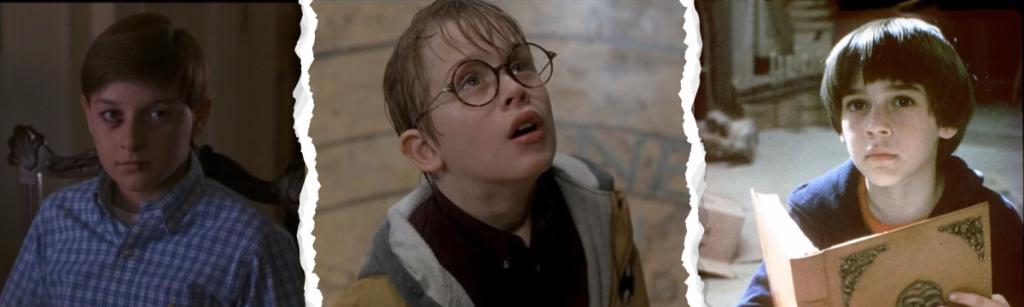
Somewhere in the attic of our collective childhoods lives a soft-spoken boy with too-big glasses and too-loud fear, cowering at the edge of a playground or burying himself in books to avoid the cruelty of the world.
But in 90s (and 80s) children’s cinema, that boy always found something else — magic, mystery, and a moment of power. He wasn’t just saved — he transformed.
This recurring narrative — the bullied or anxious boy who enters a magical realm and returns braver — runs like a golden thread through some of the most nostalgic films of the late 20th century. The Pagemaster. The NeverEnding Story. Jumanji.
Different in tone, setting, and magic system… but united in theme.
Why This Trope Mattered
For many 90s kids, these films weren’t just entertainment — they were validation. If you were shy, imaginative, or a little “different,” these stories told you that wasn’t a weakness. It was a sign that you were on the brink of something bigger. They didn’t offer immediate rescue from bullying — but they gave something more lasting: the belief that your mind could save you.
The Pattern: Ordinary Boy, Extraordinary Trial
Each of these films begins with a boy who’s disconnected from the world around him:
- In The Pagemaster, Richard is scared of everything — germs, storms, ladders — and mocked for it.
- In The NeverEnding Story, Bastian is chased into a school attic by bullies and finds solace in a book.
- In Jumanji, young Alan Parrish is beaten up and dismissed by his father as cowardly.
But then comes the shift — a portal, a game, a library — where the real trial begins. And unlike schoolyards and family dinner tables, these worlds value courage, heart, and cleverness over popularity or brute strength.
Power Through Imagination
What makes these films stand out isn’t just the magic — it’s how the child’s internal world becomes their weapon:
- Richard must literally walk through the genres of storytelling to find courage in The Pagemaster.
- Bastian doesn’t just read The NeverEnding Story — he starts to affect it, to shape it, as if imagination itself responds to his belief.
- Alan must face the very game that once trapped him — Jumanji becomes both his trauma and his redemption.
It’s not wish fulfillment — it’s growth. These stories say: “You don’t need to become someone else to be brave. You already are.”
A Trope That Still Resonates
This trope endures not because of its fantasy trappings, but because it reflects a universal childhood fear — of not being enough — and pairs it with the wish that who you are is exactly what’s needed to survive the storm.
Whether through pages, portals, or perilous board games, these boys return changed. Not because the bullies vanished, but because they did what so many young viewers longed to do:
They stepped into another world and discovered that they were powerful all along.