Let’s discuss the Gothic, Industrial era of cinema.
There was something wonderfully distinctive about cinema in the late 1990s and early 2000s. Everything was dark, everyone wore leather, the cinematography was blue or green, and the soundtracks were so loud that you practically needed ear protection.
I’m talking about films like Resident Evil (2002), Underworld (2003), Blade (1998) and Queen of the Damned (2002).
If you grew up watching these films, you’ll know exactly what I mean. They had a particular atmosphere that is difficult to replicate today. The action was exaggerated, the camera angles were dramatic, and the soundtracks were full of industrial rock, alternative metal and gothic influences.
And they were loud. Ridiculously loud.
I remember going to the cinema with my sister to see one of the Underworld films. The sound was so overwhelming that we actually ended up sitting with our coats over our heads to try to muffle it.
That’s how loud it was.
But looking back, I’ve started wondering why films from that particular era were so obsessed with being loud. Was it simply the music? Was cinema technology changing? Or was there something about the culture of the early 2000s that encouraged filmmakers to turn absolutely everything up to eleven?
As it turns out, it was a combination of all three.
The Early 2000s Had Their Own Cinematic Identity
One of the things I love most about films like Resident Evil and Underworld is how immediately recognisable they are.
You don’t necessarily need to see the characters or hear the dialogue to know what you’re watching. The cinematography alone gives them away.
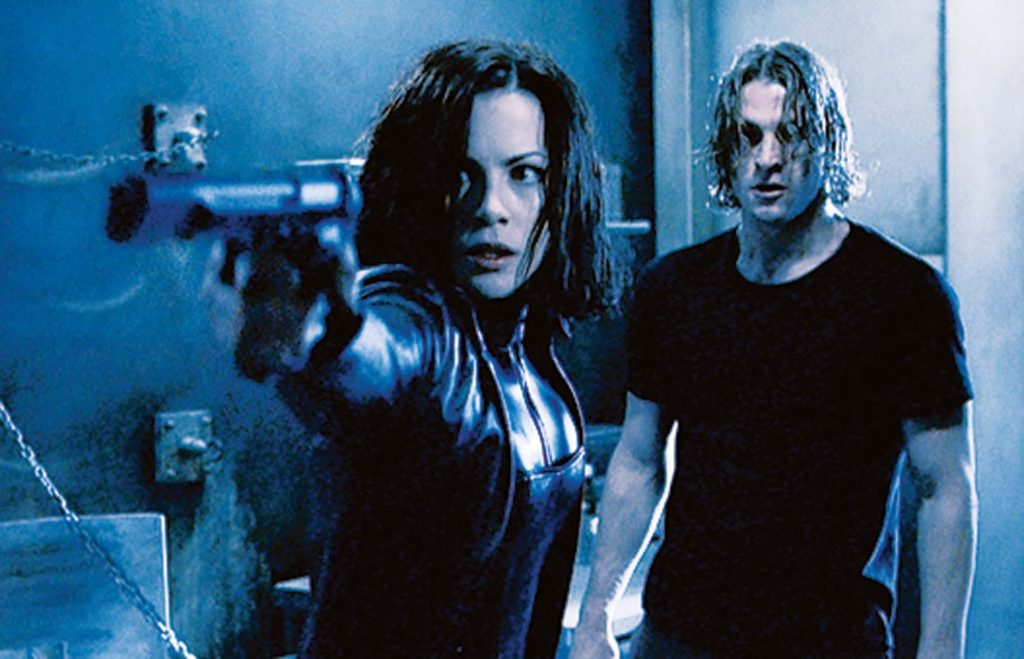
Underworld is practically drenched in cold blue tones. Everything feels damp, metallic and permanently trapped somewhere between midnight and dawn.
Resident Evil, meanwhile, uses a mixture of sterile laboratory environments, industrial architecture, harsh lighting and dark, claustrophobic corridors.
Then there’s Blade, with its leather coats, nightclub environments, dramatic lighting and electronic music.
These films belonged to a particular visual movement that combined gothic imagery with futuristic technology and contemporary alternative culture.
And the aesthetic wasn’t limited to horror.
Films like The Matrix (1999), Equilibrium (2002) and Ultraviolet (2006) embraced similar visual techniques, including heavily stylised colour grading, dramatic slow motion and elaborate action choreography.
It was an era when films seemed determined to look cool, even if that meant abandoning any pretence of realism.
And frankly, I rather miss it.
The Matrix Changed the Way Action Films Looked
It’s difficult to discuss early-2000s cinema without acknowledging the enormous influence of The Matrix.
Released in 1999, the Wachowskis’ science-fiction film helped popularise a visual style that would influence action cinema for years.
Black leather clothing, dark sunglasses, slow-motion combat, dramatic camera movements and stylised colour grading became enormously fashionable.
Of course, The Matrix didn’t invent these techniques. Its visual identity drew from several existing traditions, including Hong Kong action cinema, Japanese animation, cyberpunk fiction and comic books.
However, its commercial success helped establish those techniques within mainstream Hollywood filmmaking.
Suddenly, everyone seemed to want characters who could leap through the air in slow motion while wearing impractical amounts of leather.
Underworld is perhaps one of the clearest examples of this influence.
Kate Beckinsale’s Selene could almost be mistaken for a gothic cousin of Trinity. The long black coat, tight leather clothing, elaborate gunfights and cold colour palette all evoke the visual language that The Matrix helped popularise.
But Underworld combined those influences with vampires, werewolves and centuries of supernatural conflict.
The result was something that felt simultaneously futuristic and gothic.
And the soundtrack was just as important as the visuals.
When Every Film Sounded Like an Industrial Rock Concert
If the early 2000s had a soundtrack, it would probably involve distorted guitars, electronic percussion, industrial synthesizers and someone singing about existential despair.
Alternative metal, nu-metal, gothic rock and industrial music were hugely influential during this period.
Artists such as Marilyn Manson, Korn, Evanescence, Nine Inch Nails and A Perfect Circle helped define the darker musical culture of the era.
And filmmakers were more than happy to incorporate that sound into their productions.
The original Resident Evil film featured a score composed by Marco Beltrami and Marilyn Manson, creating a distinctive mixture of industrial electronics and horror instrumentation.
Its accompanying soundtrack also featured artists associated with the alternative metal and industrial scenes.
Meanwhile, Underworld featured music from artists including A Perfect Circle, Skinny Puppy and David Bowie.
These weren’t simply collections of songs chosen to accompany the films.
They helped establish the films’ identities.
The music reinforced the dark, aggressive and deliberately theatrical atmosphere of the stories.
It also connected the films to the wider youth culture of the time.
The early 2000s were a period when gothic fashion, alternative music and darker aesthetics were particularly visible in mainstream entertainment.
You could see similar influences in music videos, television programmes, video games and even advertising.
The films were reflecting the culture surrounding them.
And perhaps more importantly, they were deliberately appealing to audiences who identified with that culture.
Watching Underworld wasn’t simply about watching vampires fight werewolves.
It was about immersing yourself in an entire aesthetic.
MTV and the Rise of Music Video Cinematography
Another important influence on early-2000s filmmaking was the music video.
During the 1980s and 1990s, MTV helped establish music videos as a major creative medium, encouraging increasingly elaborate visual experimentation.
By the late 1990s and early 2000s, the influence of music video editing had become particularly noticeable in mainstream cinema.
Rapid cuts, dramatic close-ups, unconventional camera angles, exaggerated lighting and action sequences synchronised with music became increasingly common.
Filmmakers such as David Fincher and Michael Bay had backgrounds in music videos and commercials, demonstrating how techniques developed in shorter visual formats could translate into feature films.
Of course, not every film using these techniques was directed by someone with a music video background.
The influence was much broader than that.
The visual language of music videos had become part of mainstream popular culture.
And action-horror films were particularly well suited to it.
A fight scene could be edited almost like a music video, with dramatic movements emphasised by percussion, electronic effects and sudden changes in camera speed.
The result was cinema designed to be experienced as much through sound and movement as through storytelling.
Sometimes, the spectacle was more important than the narrative.
And when you look back at films like Resident Evil and Underworld, that influence is difficult to miss.
But Why Were They Actually So Loud?
This brings me back to sitting in the cinema with my sister, both of us trying to protect our ears with our coats.
Because while the musical style of these films certainly contributed to their aggressive sound, there were also technological factors involved.
By the early 2000s, digital surround-sound systems had become well established in cinemas.
Technologies such as Dolby Digital, DTS and Sony Dynamic Digital Sound allowed filmmakers to create increasingly sophisticated soundscapes.
These systems could distribute sound across multiple speakers, creating a much more immersive experience than traditional stereo presentations.
They also supported dedicated low-frequency effects channels, allowing explosions, gunfire, machinery and music to produce powerful bass.
That didn’t mean digital sound automatically made films louder.
However, it gave sound designers greater control over the intensity and physical impact of particular effects.
And action films made enthusiastic use of those possibilities.
Gunfire could sound explosive. Monsters could produce deep, resonating growls. Music could fill the auditorium.
The aim was often to make audiences feel as though they were physically surrounded by the action.
In a film like Underworld, which combines prolonged gunfights with aggressive music and supernatural combat, that approach could become overwhelming.
But there is another important factor to consider.
Cinema sound levels aren’t determined exclusively by the filmmakers.
The volume at which a film is played depends partly on the cinema’s equipment, calibration and playback settings.
Consequently, two screenings of the same film might not necessarily sound identical.
It’s entirely possible that the particular screening my sister and I attended was simply being played at an excessively high volume.
Still, the film’s sound design certainly wasn’t helping.
The Difference Between Loudness and Dynamic Range
There’s another technical distinction worth making when discussing cinema sound.
A film can have an extremely loud soundtrack without every moment being equally loud.
Sound designers often use something called dynamic range, which describes the difference between quieter and louder sounds.
A film might move from a quiet conversation to an enormous explosion, creating a dramatic contrast.
In theory, that contrast can make action sequences feel more powerful.
However, films featuring constant gunfire, aggressive music and frequent explosions can create the impression of almost continuous loudness.
And that’s where the early-2000s action-horror aesthetic becomes particularly relevant.
These films often combined several intense sound elements simultaneously.
You might have electronic music playing beneath automatic gunfire, characters shouting over the action and explosions occurring in the background.
Even when the individual sounds were carefully mixed, the overall experience could be exhausting.
It’s not difficult to imagine why two people sitting in a cinema might eventually decide that putting their coats over their heads was a perfectly reasonable solution.
Why Did Everything Have to Be So Gothic?
Of course, the loudness was only one part of the experience.
The early 2000s also seemed unusually enthusiastic about gothic imagery.
Vampires, demons, supernatural creatures, secret societies and mysterious corporations were everywhere.
But unlike traditional gothic horror, which often relied on historical settings and supernatural mystery, these films frequently combined gothic themes with contemporary technology.
Vampires carried automatic weapons.
Ancient supernatural conflicts unfolded inside modern cities.
Secret laboratories existed beneath ordinary buildings.
Characters wore leather instead of Victorian clothing.
It was a fascinating mixture of old-fashioned gothic storytelling and modern science-fiction aesthetics.
The influence of cyberpunk was particularly important.
Cyberpunk fiction had long explored the relationship between technology, corporate power, human identity and dystopian societies.
Those themes translated remarkably well into films involving sinister corporations and biological experimentation.
Resident Evil is an obvious example.
Umbrella Corporation represents a nightmare version of corporate scientific power, where technological advancement becomes inseparable from exploitation and destruction.
Meanwhile, Underworld blends ancient supernatural mythology with modern weaponry, genetic research and scientific explanations for vampirism and lycanthropy.
Both films occupy a strange space between gothic fantasy and technological horror.
And both look absolutely determined to make that combination as stylish as possible.
When Films Were Unashamedly Excessive
I think one of the reasons I remember this era so fondly is that the films were completely unapologetic about their own excesses.
They weren’t necessarily subtle.
They weren’t always particularly well written.
And they certainly weren’t concerned about whether their protagonists looked ridiculous performing elaborate acrobatics in leather clothing.
Everything was exaggerated.
The lighting was dramatic. The action was theatrical. The music was aggressive.
And the characters treated even the most absurd situations with extraordinary seriousness.
There was something rather wonderful about that commitment.
Underworld could present an ancient vampire war with the emotional intensity of a Shakespearean tragedy, despite much of the conflict involving people shooting one another in underground tunnels.
Resident Evil could combine corporate conspiracies, genetically engineered monsters and increasingly impossible action sequences while maintaining an almost relentlessly serious tone.
Neither franchise was particularly interested in acknowledging how ridiculous it had become.
And perhaps that was part of the appeal.
These films weren’t embarrassed by their own identities.
They embraced them.
Have We Lost That Distinctive Cinematic Style?
I don’t think modern cinema is necessarily quieter, less stylised or less ambitious.
Contemporary films can still feature extraordinarily loud sound design, elaborate action sequences and distinctive visual aesthetics.
In fact, complaints about excessive cinema volume and dialogue being difficult to hear remain common today.
However, I do think something has changed about the way certain genres present themselves.
The early-2000s gothic action film belonged to a particularly recognisable cultural moment.
Its visual identity was closely connected to the alternative music scene, the popularity of cyberpunk aesthetics and the enormous influence of films like The Matrix.
It was a style that extended beyond cinema into fashion, music videos, video games and popular culture more generally.
And because those influences were so closely associated with a particular period, watching these films today can feel like opening a time capsule.
The blue lighting, the leather clothing, the industrial music and the exaggerated slow-motion action immediately transport me back to the early 2000s.
It’s nostalgia, certainly.
But it’s also an appreciation for how distinctive those films were.
You could recognise Underworld almost instantly from its colour palette.
You could recognise Resident Evil from its industrial environments and particular approach to action cinematography.
And you could often recognise the era itself from the soundtrack alone.
The 2000s Just Felt Dirty
There’s another thing I remember about the 2000s, and it’s difficult to explain unless you experienced it.
Everything just felt slightly dirty.
Not necessarily unhygienic, but grimy. Damp. Muddy. As though the entire decade had been left outside in the rain.
The films were loud and grungy, everyone was going through their emo or gothic phase, and the fashion seemed determined to make everybody look as though they’d just emerged from a particularly depressing underground nightclub.
Makeup was heavy, often badly applied, and everything seemed to involve dark eyeliner, mousse foundation, concealer lips or some questionable combination of them all.
And then there were the clothes.
Cheap polyester, synthetic fabrics and plastic shoes seemed to be everywhere. I particularly remember those horrible little dolly shoes that developed their own distinctive smell after being worn for approximately five minutes.
Everything smelled vaguely damp.
The clothes, the shoes, the buildings. It was as though the entire decade existed in a permanent state of mild condensation.
And the films somehow reflected exactly that atmosphere.
Underworld looked permanently wet. Resident Evil was full of grimy industrial environments, dark corridors and characters who always seemed to be covered in sweat, dirt or blood.
Even when the characters were supposed to look glamorous, there was something deliberately dishevelled about them.
The colours were muted, the lighting was cold, and everything seemed to exist beneath a layer of grime.
It wasn’t just a cinematic aesthetic. It felt like an extension of the world outside the cinema.
The fashion, the music, the makeup and the films all seemed to share this same dark, slightly unwashed identity.
And perhaps that’s why those films feel so distinctly of their time.
They didn’t just look like the 2000s.
They sounded, looked and practically smelled like the 2000s.
And I say all of this with genuine affection, because despite remembering the entire decade as vaguely damp and smelling of cheap plastic shoes, I absolutely loved it.
Bring Back the Ridiculous Gothic Action Film
Looking back, I don’t think the films of the early 2000s were necessarily better than the films being made today.
Some were genuinely excellent. Others were spectacularly silly.
But they had personality.
They were loud, theatrical, excessively gothic and completely committed to their own visual identities.
And while I can appreciate why audiences might find some of those stylistic choices dated now, I still have an enormous affection for them.
There’s something wonderfully nostalgic about a film where every character wears black leather, every building is illuminated by blue light, and every action sequence sounds as though it’s taking place inside an industrial rock concert.
Perhaps the films weren’t always trying to be louder than everything else.
Perhaps they were simply products of a cultural moment when cinema, music and alternative fashion were influencing one another in particularly obvious ways.
Whatever the explanation, I still remember sitting in that cinema with my sister, desperately trying to muffle the sound of Underworld with our coats.
And despite how uncomfortable it apparently was, it’s one of those cinema memories that has stayed with me.
The early 2000s might have been excessively loud, ridiculously gothic and completely over the top. But they certainly knew how to make an impression.