If you’ve watched Disney’s The Black Cauldron since The Lord of the Rings films were released, you may have noticed that something feels very familiar.There’s a small, hunched fantasy creature lurking around our heroes.
He speaks in a strange, high-pitched, throaty voice. He talks about himself in the third person. He calls our protagonist “master”.
He creeps, crawls, begs and becomes completely consumed by the things he wants.Hang on.Is Gurgi basically Sméagol?Once you notice the similarities between Gurgi and Andy Serkis’s performance as Gollum, they become remarkably difficult to un-notice.And it turns out the timeline makes the whole thing considerably more interesting.
That Voice
The voice is probably the first thing that does it.Gurgi was voiced by comedian John Byner in Disney’s 1985 The Black Cauldron, and at times his high, throaty, spluttering delivery sounds remarkably similar to the voice Andy Serkis would later use for Gollum.Importantly, though, the comparison isn’t really between Gurgi and Gollum in general.It’s specifically between Gurgi and Andy Serkis’s Gollum.That distinction matters.The Black Cauldron arrived in cinemas in 1985. Peter Jackson’s The Fellowship of the Ring wouldn’t appear until 2001, with Serkis’s performance as Gollum becoming much more prominent in The Two Towers in 2002.That gives us well over a decade between the two performances.Even more interestingly, Byner didn’t apparently create the voice specifically for Gurgi.In a 1985 interview, Byner explained that the voice had originated with his older brother Mike, who used it when they were children. Byner had been imitating it himself since he was around six years old. When he eventually saw Gurgi, he decided that the strange little voice he had been doing since childhood fitted the character.So the voice we associate with Gurgi actually predates Disney’s Gurgi too.
It’s Not Just The Voice
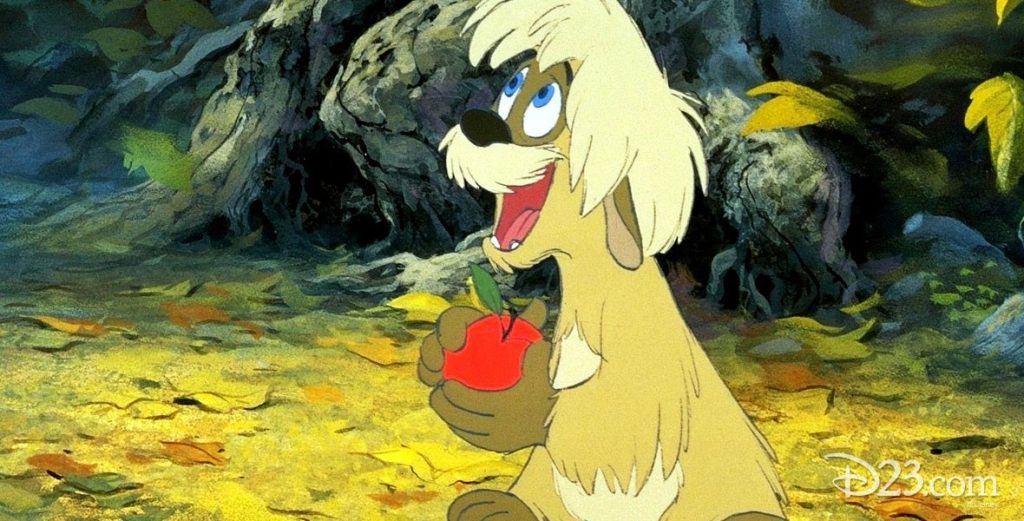
The similarities become much stranger when you stop listening and start watching.Both Gurgi and Serkis’s Gollum frequently crouch and hunch rather than standing upright. Their movements can appear almost animal-like. They creep around other characters, make themselves physically small and shift between nervous submission and sudden bursts of confidence.Then there are their speech patterns.Gurgi frequently refers to himself by name. He calls Taran “master”. He begs and grovels. He talks about “poor Gurgi”.It is very difficult to hear “poor Gurgi” after watching The Lord of the Rings without your brain immediately supplying “poor Sméagol”.Both characters also exist somewhere between human and animal in their physical performances. They understand and communicate with the human characters perfectly well, but their movements, sounds and reactions are exaggerated into something much more creature-like.Watching Gurgi now, through post-Lord of the Rings eyes, can feel bizarrely like watching a distant relative of Serkis’s Sméagol.
Gurgi’s Precious Munchings and Crunchings
There’s another similarity in the way both characters become fixated upon the objects of their desire.For Gollum, obviously, that obsession is the One Ring.Gurgi’s desires are considerably less apocalyptic.He wants food.When Taran first encounters Gurgi, food quickly becomes a way of getting his attention. His beloved “munchings and crunchings” are enormously important to him, and he becomes completely captivated by the prospect of getting something to eat.The comparison isn’t that an apple carries anything remotely like the significance of the One Ring.It’s the performance of wanting it.Gurgi stares. He creeps closer. He bargains. He begs. His entire attention becomes centred on the object in somebody else’s possession.Food becomes precious to Gurgi in much the same way that the Ring becomes precious to Gollum: once he sees something he desperately wants, everything else briefly becomes secondary.It creates yet another moment where the visual language of Gurgi feels strangely familiar to anyone who grew up with Serkis’s Gollum.
But Gollum Came First
This is where things get historically interesting, because Gurgi absolutely cannot be described as the original Gollum.Gollum is much older.J.R.R. Tolkien introduced Gollum in The Hobbit, published in 1937.Gurgi comes from Lloyd Alexander’s Chronicles of Prydain and first appeared in The Book of Three in 1964.Disney then adapted elements of Alexander’s first two Prydain novels for The Black Cauldron, released in 1985.Peter Jackson’s Lord of the Rings trilogy followed at the beginning of the 2000s.So the chronology looks something like this:
Tolkien’s Gollum — 1937Lloyd Alexander’s Gurgi — 1964John Byner’s Disney Gurgi — 1985Andy Serkis’s Gollum — 2001/2002
Which means nobody can reasonably look at Gurgi and declare that Disney invented Gollum before Peter Jackson did.Gollum had already been sitting underneath the Misty Mountains worrying about his birthday present for decades before Gurgi appeared.But there is a much more interesting question hiding inside that timeline.
Could John Byner’s performance as Gurgi have influenced Andy Serkis’s performance as Gollum?
Did Andy Serkis Take Inspiration From Gurgi?
There doesn’t appear to be any acknowledgement from Andy Serkis that Gurgi influenced his Gollum.In fact, Serkis has explained the development of the character on numerous occasions, and the story he tells is very different.Serkis approached Gollum through the idea of addiction. He considered what years of dependence upon the Ring had done to the character physically and psychologically, imagining his pain and guilt almost becoming trapped within his throat.Then came one of the strangest pieces of Lord of the Rings trivia.A cat coughing up a furball helped create Gollum.Serkis has described watching his cat convulse while trying to cough up a furball and becoming fascinated by the way the movement involved the animal’s entire body. That helped him connect Gollum’s strange voice to something physical rather than treating it simply as a character voice.The sound and the body became part of the same performance.Serkis has also spoken about avoiding other actors’ interpretations when developing characters because he finds them distracting.There is therefore no evidence that he deliberately watched The Black Cauldron, studied Gurgi and used Byner’s performance to construct Gollum.That doesn’t prove Serkis had never seen the film. It doesn’t prove that Gurgi couldn’t have existed somewhere in the enormous library of things he had watched during his lifetime.But without Serkis ever identifying Gurgi as an influence, claiming a direct connection would be speculation.
Perhaps The Weirdest Explanation Is That It’s A Coincidence
Which might actually make the similarities more interesting.John Byner said Gurgi’s voice originated with a silly voice his brother used when they were children.Andy Serkis has described Gollum’s voice emerging from his interpretation of Tolkien’s character, the physical and psychological effects of addiction and, somewhat magnificently, his cat trying to cough up a furball.Two different actors.Two different creative processes.More than a decade apart.And somehow we ended up with two hunched little fantasy creatures who creep around calling people “master”, refer to themselves by name, grovel when they want something, move with an animal-like physicality and speak in strangely similar voices.Gurgi isn’t Gollum.Gollum isn’t Gurgi.
But if you return to The Black Cauldron after growing up with Peter Jackson’s Lord of the Rings trilogy and spend half the film wondering why Sméagol has suddenly become fluffy and developed an overwhelming desire for apples, you are certainly not the only one.