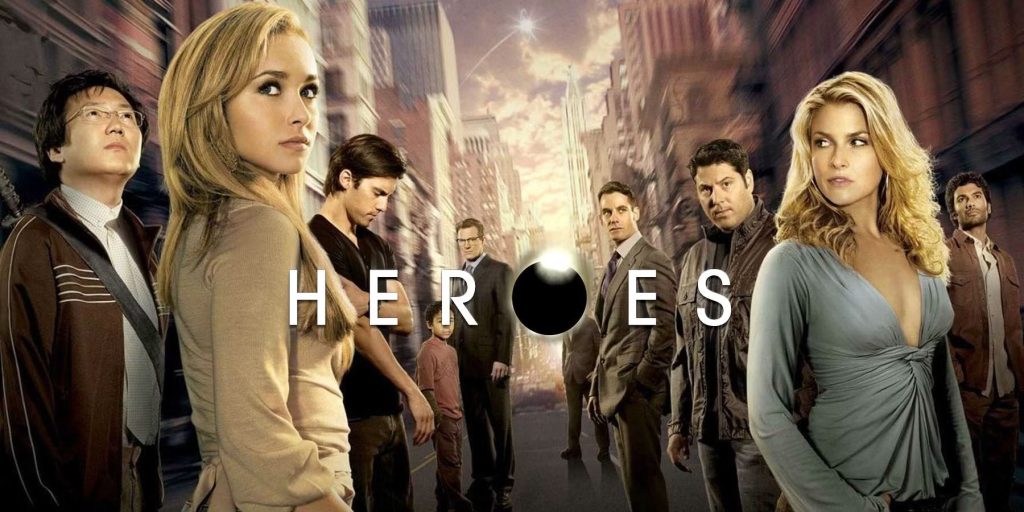
Every time I rewatch Heroes, I am grabbed by how clearly the main characters represent different sides of humanity. Every time I am reminded how the show, for me, isn’t really about becoming superhuman — it’s just about being human.
If you search the internet, there are lots of people who see different things in the show. Some viewers argue the show is about marginalised groups. Others see it as a reflection of post-9/11 anxieties. I’ve even come across interpretations claiming it represents the struggle between Generation Y and the Baby Boomers.
And while I can see pieces of those arguments, none of them ever felt quite right to me.
Recently, while rewatching the first season, I found myself paying less attention to the powers and more attention to Mohinder’s narration. That’s when something clicked. What if Heroes isn’t really about one group of people at all?
What if it’s about humanity itself?
Mohinder’s Question
Throughout the series, Mohinder keeps returning to the same ideas.
What makes us human? How are we connected? Are we alone? Are we evolving? What responsibility comes with power?
His narration isn’t focused on one social issue or one generation. It’s focused on people. Humanity. The species as a whole. Once I started viewing the show through that lens, the powers began to feel less like superhero abilities and more like different aspects of human nature given physical form.
Almost every major character represents something fundamental about the human experience.
Peter Petrelli: Empathy
Peter’s ability allows him to absorb the powers of everyone around him.
On paper, it’s one of the strongest abilities in the entire show. Symbolically, though, it feels remarkably simple. Peter absorbs people. Their abilities. Their emotions. Their struggles. Their pain. Peter constantly takes on responsibilities that don’t belong to him because he genuinely wants to help.
His greatest strength is also his greatest weakness. He cares too much. Peter represents empathy. His power is even named as such in the show by Christopher Eccleston’s character.
The ability to connect deeply with others. But also the danger of losing yourself in everyone else’s needs.
Nathan Petrelli: Ambition
Nathan can fly.
Simple enough. But why flight? Nathan spends the entire first season trying to rise. He wants political success. Status. Recognition. Respect.
He wants to be above his rivals. Above his circumstances. Above failure. His power allows him to do exactly that. He literally rises above everyone else. Nathan embodies ambition. The drive that pushes humanity forward but can also distance us from the people around us.
The higher Nathan flies, the more disconnected he often becomes from those below.
Claire Bennet: Youth
Most people describe Claire’s ability as healing. I think that’s only half the story. Claire doesn’t simply heal. She returns to perfection. She doesn’t scar. She doesn’t remain damaged. No matter what happens, she returns to the ideal version of herself.
Viewed symbolically, Claire feels less like a superhero and more like society’s obsession with youth made literal. The beauty industry spends billions promising restoration. Anti-ageing creams. Cosmetic procedures. Miracle treatments.
The promise is always the same. Return to what you were. Claire doesn’t need any of that. She simply heals.
And yet she isn’t happy. The show repeatedly demonstrates that physical perfection solves almost nothing. Claire still feels lonely. Confused, afraid and lost. Her power may represent the beauty and resilience of youth, but it also exposes the illusion that eternal youth would somehow solve our problems.
Hiro Nakamura: Hope
If Peter represents empathy, Hiro represents hope.
His ability to manipulate time reflects one of humanity’s oldest dreams. What if we could change things? What if we could stop disasters? What if we could fix our mistakes? What if we got another chance?
Hiro approaches his power with wonder rather than fear. He believes in heroes and doing the right thing. That the future can be better.
In many ways, Hiro is the heart of the show. He represents optimism in a world increasingly defined by cynicism and negativity. In many ways, Hiro is the most human trait of them all.
Ando Masahashi: Loyalty
Ando has no power. At least not initially. And yet he remains one of the most important characters in the series. While everyone else discovers extraordinary abilities, Ando chooses to stay.
He supports Hiro. Protects him and follows him into danger.
He reminds us that extraordinary abilities aren’t what make someone heroic. Character is. Ando represents loyalty.
The ordinary people who stand beside us when life becomes extraordinary.
Matt Parkman: The Burden of Knowing
At first glance, Matt’s power appears to be understanding. He can hear people’s thoughts. He can know what they truly mean and see through lies.
But the reality quickly becomes far darker. Matt hears things he doesn’t want to hear. Cruel and embarrassing thoughts. Judgements, secrets and fears.
But while many would choose that power if ever asked, the truth turns out to be overwhelming. Matt’s power reflects something deeply human. The desire to understand others.
But also the danger of understanding too much. Sometimes we think more information will make us happier. Sometimes we think if we just knew what people really thought about us, everything would make sense. Matt discovers the opposite.
Not every truth is comforting. Not every thought needs to be heard. His story becomes one about boundaries.
The need to protect yourself from carrying everyone else’s emotional weight. Sometimes it’s turning off the news, or blocking out a toxic person. Matt is a warning to maintain those boundaries.
Niki And Jessica: The Battle Within
Niki’s storyline is often discussed through the lens of mental illness.
While that’s certainly one interpretation that hits you hard in the face, I think she also belongs to a much older tradition. Dr Jekyll and Mr Hyde. The beast within. The self we fear becoming. Jessica is stronger than Niki.
More confident. More aggressive. More capable.
She’s everything Niki wishes she could be in one breath. And everything she fears in another.
Together they represent an internal struggle familiar to almost everyone. The battle between our better selves and our darker instincts. The conflict between restraint and rage. Between fear and power.
Between who we are and who we could become.
Isaac Mendez: Creativity
Isaac sees the future. But unlike Hiro, who wants to change it, Isaac’s relationship with foresight is complicated. His gift often feels less like prophecy and more like artistic inspiration.
Ideas arrive suddenly. Visions appear before he understands them. He creates things others cannot see. Yet those creations come at a cost.
Isaac represents creativity itself. The blessing and burden of seeing possibilities invisible to everyone else.
Sylar: Envy
If Peter represents empathy, Sylar represents its opposite. Peter gains power through connection. Sylar gains power through taking.
His ability is rooted in understanding how things work. But understanding is never enough. He always wants more. Another power. Another ability. Another piece of someone else’s greatness. Nothing satisfies him.
Sylar embodies envy. The endless human hunger for more. More success, talent and recognition. No matter how much he gains, it never fills the void.
But while Sylar can be viewed as the embodiment of envy, there is another side to his character that often gets overlooked.
Before becoming a killer, Gabriel Gray was a watchmaker. When he realises what his abilities are turning him into, he desperately seeks permission to step away from them. He returns to his mother hoping she will tell him that it is acceptable to be ordinary, to live a simple life repairing watches. Instead, she reminds him that he was meant for greater things.
In that moment, Sylar represents something painfully human: the burden of expectation. The feeling that simply being yourself is not enough. The pressure to achieve, excel, and become extraordinary even when all you want is your peace back.
Mohinder Suresh: Curiosity
Appropriately, Mohinder may be the most human character of all.
He spends much of the series without powers. Instead, he asks questions. He studies and searches for answers.
Mohinder represents curiosity.
The drive that built civilisations. The force that sent ships across oceans and people into space. The need to understand who we are and why we’re here. It’s fitting that he narrates the story because he’s really narrating humanity’s search for meaning.
The Real Meaning Of Heroes
Perhaps that’s why the first season remains so beloved. It isn’t really a superhero show. At least not in the traditional sense. It’s a show about people.
About hope. Fear. Ambition. Youth. Curiosity. Envy. Empathy. Loyalty. Creativity. Identity. Burdens.
Every character embodies something recognisably human. Their powers simply make those traits visible. Maybe that’s why Mohinder’s narration feels so important. He isn’t asking whether these people are heroes. He’s asking what makes us human.
And perhaps the answer is that all of these traits exist within every one of us.
The heroes were never really superheroes.
They were humanity looking back at itself.