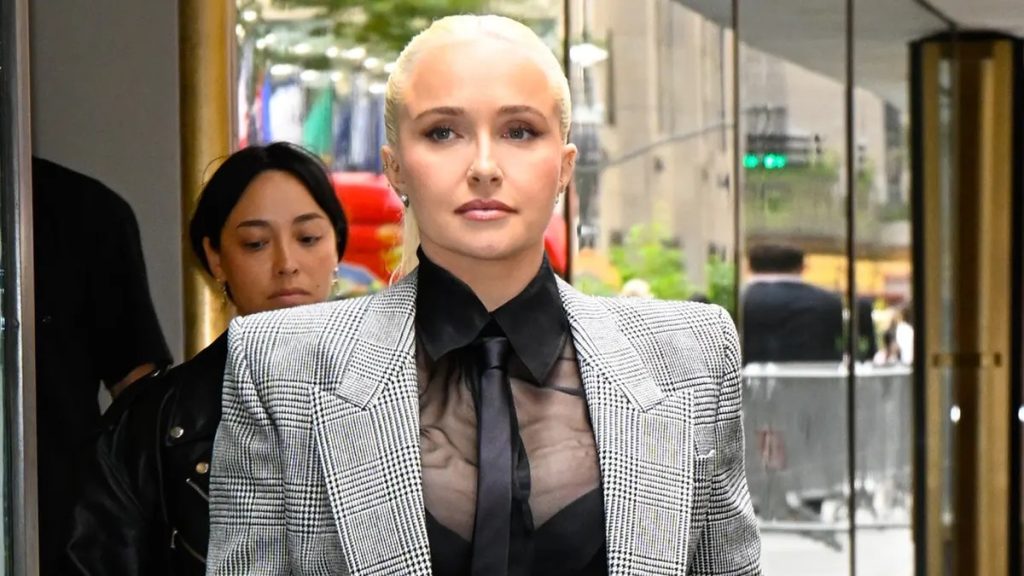
If you were a millennial girl in the 2000s, chances are Hayden Panettiere was just… there.
She was one of those faces that seemed to pop up everywhere.
She was the sarcastic younger sister in Bring It On: All or Nothing, holding her own in a film that many of us absolutely watched repeatedly while pretending only the original Bring It On counted.
Then came Heroes, where she became Claire Bennet — the indestructible cheerleader with the immortal line:
Save the cheerleader, save the world.
And honestly? It felt like Hayden was unstoppable.
She had that all-American blonde teen star thing Hollywood absolutely loved in that era. Pretty, talented, camera-friendly, commercially safe. The kind of actress who looked like she’d transition seamlessly into adulthood while the rest of us just quietly got older and developed lower back pain.
But Hayden Panettiere’s real life turned out to be far messier, sadder, and more painful than many people realised.
And I don’t think enough people know her story.
Hayden Panettiere was famous young
Before Heroes, Hayden had already been acting for years.
This wasn’t one of those overnight success stories where someone appears fully formed in their twenties.
She was working as a child.
Soap operas. Voice acting. Disney-adjacent projects. TV appearances.
Which means, like so many child and teen actors, her formative years weren’t exactly… normal.
And yes, I know “normal” is a slippery word.
But there is something undeniably strange about growing up in an industry built around appearance, scrutiny, and performance before your brain has even finished assembling itself.
We’ve seen enough former child stars at this point to know fame doesn’t exactly come with a built-in emotional safety net.
Some people survive it relatively intact.
Some don’t.
Some survive it but carry scars nobody sees until years later.
Nashville— and things became more complicated
After Heroes, Hayden didn’t vanish.
In fact, she landed one of the biggest roles of her adult career.
From 2012 to 2018, she starred in Nashville as Juliette Barnes — a troubled country music star who was ambitious, sharp-edged, chaotic, vulnerable, and often self-destructive.
And if you watched Nashville, you’ll know Juliette was not exactly written as a breezy, uncomplicated character.
She battled fame, addiction, emotional instability, destructive relationships, and intense personal struggles.
Which makes what was happening in Hayden’s real life feel almost unbearably poignant in hindsight.
Because while audiences watched her portray a woman quietly unravelling, Hayden herself was going through some incredibly difficult experiences away from the cameras.
That strange overlap between fiction and reality makes her story hit even harder.
Because Nashville wasn’t some forgotten footnote.
It was six years of her life.
A major career chapter.
And it happened during some of her most painful personal years.
Then came motherhood — and postpartum depression
This is the part of Hayden’s story that genuinely deserves more discussion because it was brave, raw, and horribly misunderstood.
After having her daughter in 2014, Hayden spoke publicly about experiencing severe postpartum depression.
And at the time, that kind of honesty still felt rarer than it should have been.
I gave birth to my twins in 2017 and found it really hard to talk about my own depression following their birth. I think that’s why I took such notice of Hayden’s story. It felt so relevant to me.
We talk about pregnancy a lot.
We talk about babies a lot.
We talk about motherhood as though it should naturally unfold into glowing fulfilment and soft-focus bonding moments where everyone smells faintly of lavender.
We do not talk enough about what happens when your brain and body completely betray that narrative.
Postpartum depression is not “baby blues.”
It is not being tired.
It is not “just hormones.”
It can be terrifying, destabilising, isolating, and deeply dangerous.
Hayden sought treatment and even entered professional care, openly discussing what she was experiencing.
That took courage.
Because motherhood still comes with this horrible unspoken expectation that if you admit you’re struggling, people quietly question whether you’re a good mother.
That’s cruel, frankly.
Seeking help is good parenting.
The custody story was far more painful than headlines suggested
This is where public narratives got ugly.
At one point, Hayden’s daughter began living in Ukraine with her father, former boxer Wladimir Klitschko.
And because the internet is the internet, the simplified version quickly became something along the lines of:
“She gave up her child.”
Which is such a brutally reductive way to frame an incredibly painful, complex family situation.
Hayden later spoke about how the custody arrangement became far more emotionally devastating than she had anticipated.
What may have initially been framed in practical terms became something that left her feeling deeply hurt and separated from her child.
Imagine going through severe mental health struggles, trying to recover, and then having strangers flatten one of the most painful chapters of your life into clickbait judgement.
That kind of public cruelty is hard to even comprehend.
There’s a world of difference between a parent making painful decisions during crisis and the internet deciding it knows the whole story.
Addiction and trauma often don’t arrive alone
One of the uncomfortable truths we’re getting better at understanding is that pain rarely travels alone.
Hayden has also spoken openly about addiction struggles involving alcohol and opioids.
And while celebrity coverage loves to frame addiction as scandal, real life is usually far less glamorous and far more heartbreaking.
Addiction is often about coping.
Escaping.
Numbing.
Surviving feelings that feel too large to sit with sober.
That doesn’t excuse harmful behaviour if it affects others, but it does make the conversation more human.
And when you layer childhood fame, public scrutiny, postpartum depression, separation from your child, and later reports of abusive relationship trauma?
The picture becomes less “celebrity downfall” and more “someone trying desperately to stay afloat.”
The domestic abuse allegations added another devastating layer
Later, Hayden was involved in a relationship that led to domestic violence allegations and legal intervention.
And honestly, this is where her story becomes less “sad celebrity timeline” and more a very human example of how vulnerable periods can leave people exposed to further harm.
Because life doesn’t politely space out trauma for your convenience.
Sometimes one hard chapter bleeds straight into the next.
That doesn’t mean someone is weak.
It means they’re human.
And abuse does not discriminate based on fame, wealth, beauty, or public recognition.
Why this story hits differently for millennials
Part of what makes Hayden’s story feel especially emotional is that so many of us remember her from such specific cultural moments.
She’s frozen in memory as this bright, fast-talking, blonde 2000s fixture.
Teen films.
Cheer uniforms.
Red carpet appearances.
That era where everyone wore too much lip gloss and low-rise jeans committed crimes against humanity.
And because of that, there’s a strange emotional disconnect when reality catches up.
The invincible cheerleader wasn’t invincible.
The funny side character wasn’t carefree.
The polished celebrity image was never the full story.
That’s true for a lot of famous people, of course.
But there’s something especially jarring about it when it’s attached to nostalgic comfort figures.
Because nostalgia has a way of preserving people in amber.
We remember who they were in our story.
Not what came after.
Where is Hayden Panettiere now?
Thankfully, this is not a story without hope.
Hayden has returned to acting, including her appearance in the newer Scream films, and has spoken with striking honesty about her struggles.
That honesty matters.
Because stories like hers help dismantle the fantasy that fame protects people.
It doesn’t.
Money doesn’t immunise you against depression.
Beauty doesn’t protect you from abuse.
Recognition doesn’t make addiction impossible.
And motherhood certainly doesn’t magically fix mental health struggles because society thinks it should.
If anything, Hayden Panettiere’s story is a reminder that some of the people we thought had the dream were quietly surviving nightmares we never saw.
And honestly?
That deserves far more compassion than gossip ever gave it.