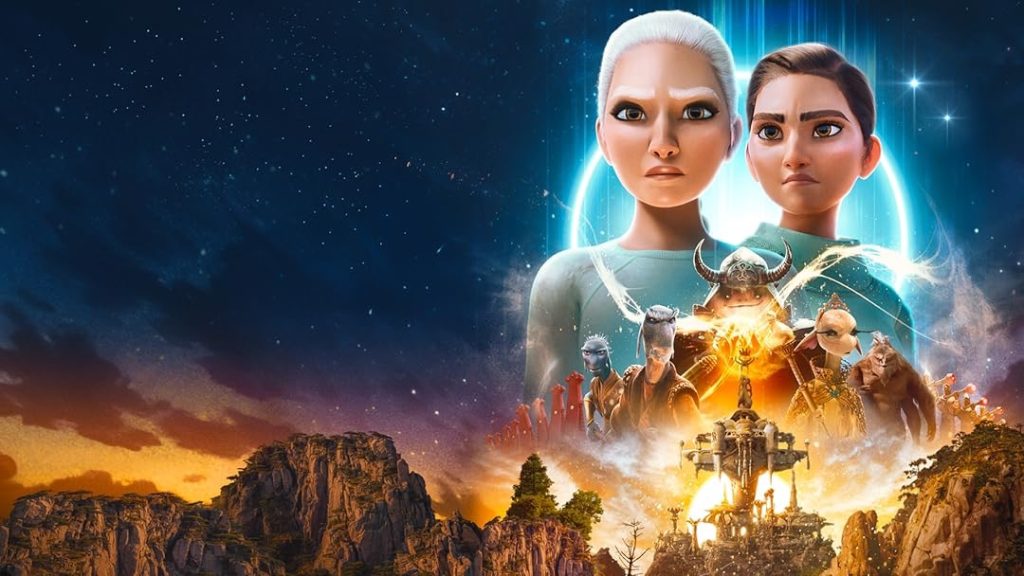
Season 3 of WondLa should have been an epic conclusion to Eva’s journey — a trilogy finale with emotional weight, thematic payoff, and a sense that every moment had been building to this.
Instead, with only six episodes to wrap up an already densely-layered story, the pacing collapses under its own ambition.
Complicating matters further is the behind-the-scenes reality: Skydance Animation’s partnership with Apple ended before the final season even aired, and John Lasseter — still a controversial figure since leaving Disney — has become someone studios quietly distance themselves from. It isn’t surprising that WondLa ends here; all signs point to this being the final instalment, with no intention (or possibility) of more.
What we’re left with is a season that tries to finish everything and ends up feeling like a speedrun. Key moments happen without build-up, emotional beats don’t get time to breathe, and major reveals land with the weight of a feather.
Here’s where it all falls apart.
This review contains spoilers!
Coincidences Everywhere
A massive issue with Season 3 is just how many events rely on perfect luck. Characters don’t earn discoveries — they simply bump into the exact people they need at precisely the right moment.
Within the first episode and a half:
Eva Nine wanders off, saves a bird, and just happens to stumble across Arius — a literal future-seer who immediately gives her the information she needs. Moments later, she sees smoke in the distance and it conveniently turns out to be her alien best friend waiting for her.
Later, we see our characters venture into the forest where they immediately encounter Otto, again without any tension, search, or struggle.
It’s convenience piled on convenience.
The early seasons already had storytelling shortcuts — like the chewing gum that translates languages — but there was enough narrative room for those conveniences to feel charming rather than structural. In Season 3, with only six episodes and huge plotlines to resolve, there’s no breathing space between the shortcuts. Events don’t unfold; they occur because the story doesn’t have time to do it any other way.
Sibling Rivalries That Come Out of Nowhere
Season 3 introduces a bizarre new pattern: suddenly, everyone has a sibling. And not just any sibling — a morally “good” counterpart to the antagonists Eva has met along the way.
It is almost comical.
These siblings appear one after the other in exactly the same way. Eva stumbles upon them, assumes they are the people she has met before but then is instantly corrected that they are actually the bad guy’s sibling and are there to help. What are the odds?!
The intention is obvious: to foreshadow the duality between Eva Eight and Eva Nine, reinforcing the idea that even villains have mirror versions of themselves who could have made different choices. That with the same problems to face, a simple choice can make either a hero or a villain.
The problem?
There’s simply no time to explore any of this.
Instead of feeling like clever symbolism, it reads as, “Oh… they have a surprise sibling too?” The emotional weight evaporates because the season is sprinting to the finish line. Characters who should matter feel like exposition dumps.
Major Events With Zero Impact
Nothing in Season 3 has the time to land properly. Huge, dramatic developments happen — Eva Eight’s transformation into a pseudo–Darth Vader figure, for one — and the show barely pauses long enough for the audience to process it.
Instead of becoming a devastating turn for a character we’ve followed, her descent becomes just another bullet point in a long list of Things That Happen Quickly.
Plot twists trip over one another. Emotional moments don’t resonate. Climactic scenes dissolve before tension can build.
The season feels less like a carefully structured finale and more like a checklist of events that needed to be included regardless of whether the story had room for them.
The Constant Saviours
We all love a big Avengers: Endgame moment — that perfect cinematic beat where the heroes are cornered, all hope is lost, and suddenly a beloved character steps in to turn the tide. Used well, it’s thrilling. It’s earned.
But imagine if that happened every few minutes.
That’s Season 3.
The last-second rescue trope is used so relentlessly that it stops feeling heroic and becomes almost comedic. There’s no time for tension because each dangerous moment is immediately undercut by another conveniently timed saviour.
There’s a moment where Eva Nine is genuinely in peril and I found myself silently begging the writers to let her save herself, because the constant rescuing was becoming absurd. And she does — briefly. It’s one of the only times the season pauses long enough to let her show her own strength and ingenuity.
But a few minutes later, a friend (who had left the group literally ten minutes earlier in the same episode) returns to save her from a different danger. It’s framed like a triumphant return, but the emotional impact is gone. We’ve seen this beat repeatedly, and it lands with a dull thud.
Instead of feeling heroic, it feels predictable, lazy, and strangely emotionless.
Eva’s Connection to the Source
Eva’s bond with the Source has been a defining mystery throughout the series. Her ability to speak to animals, her glowing moments of power, her almost spiritual transformation — all of it implied a significant destiny.
And yet in Season 3, it means almost nothing.
She wakes up, finds her friends by pure coincidence, and goes on to save the day without ever actually using her connection to the Source in a meaningful way. The one thing that was meant to make her unique becomes irrelevant.
She even needs an animal to guide her to the Source because she cannot find it herself.
Then, in the final moments, when she is meant to sacrifice herself and regrow the planet… someone else goes in her place. Someone with no connection to the Source at all.
It undermines two seasons worth of build-up and leaves one lingering question: what was the point?
The Ending Moments
And speaking of the end, we finally arrive at the climax of twenty episodes. All the friends we’ve met are busy fighting for their lives in a suddenly erupting all-out war, and Eva must make the final approach on her own.
Falling rocks conveniently create the classic “you must walk alone now” moment — another overused trope — signalling that her friends can help her get close, but only she can make the final journey.
Except… she doesn’t.
Once again, just as all seems lost, she is saved by alien animals she befriended earlier in the story. They push aside the avalanche to aid her. It should feel like emotional payoff and full circle moment — her kindness to the very thing everyone else fears is what saves her — but because Season 3 has relied so heavily on rescue moments, it barely registers.
Then comes the final blow: Eva loses someone dear to her, only for them to be resurrected a few scenes later. It is unintentionally symbolic of the whole season.
Clichéd, luck-laden puff.
Conclusion
Would I say not to watch it? No. If you’ve come this far in the WondLa story, you deserve to see how it ends. Season 3 is at least a conclusion.
But do not expect remarkable storytelling or satisfying emotional arcs. It borrows tropes we’ve all seen countless times before, and doesn’t do them better than its predecessors. The pacing is frantic, the conveniences relentless, and the resolutions hollow.
John Lasseter has been behind some genuinely brilliant productions, both before and during his time at Skydance. Spellbound was a major success for Netflix. Let’s hope their next project delivers the heart, depth, and coherence that Season 3 of WondLa simply couldn’t manage.