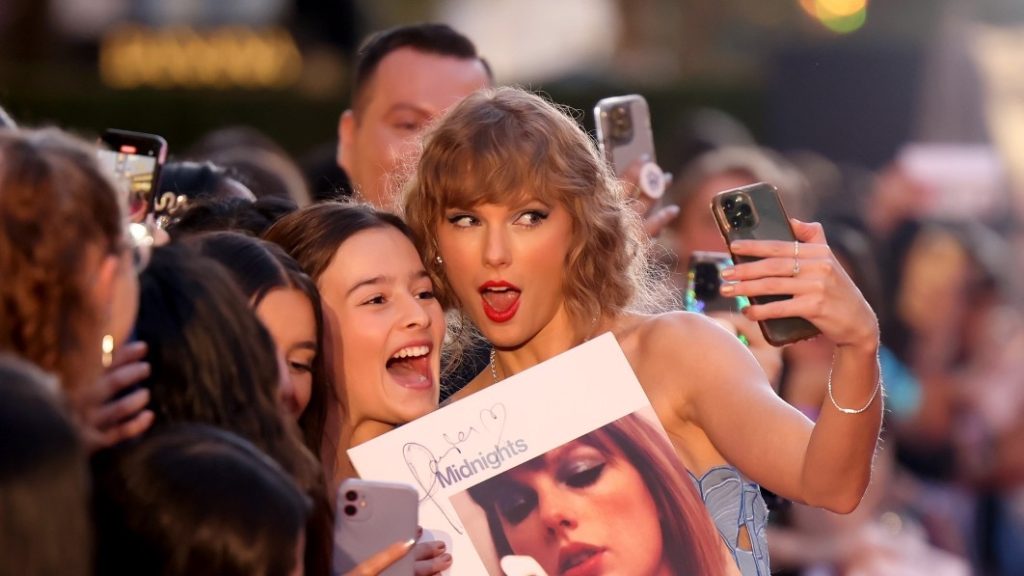
Taylor Swift has spent nearly two decades crafting something that goes far beyond music.
What began as a teenager’s diary set to melody has evolved into an intricate, self-contained universe — a blend of mythology, marketing, and meaning so complete that it almost feels impossible for her to ever walk away. Now with her life becoming the fairytale she has always wanted, it feels more than ever like a time that her career may finally be taking a step back in her priorities.
Somewhere between art and empire, Taylor Swift has become both the architect and the captive of her own creation. And, although we know how much she loves her fans (and I do count myself as being one of them), you have to wonder is this something Taylor has pondered over herself? How—and when—does she truly get an out?
The Taylor Cinematic Universe
Each of Taylor’s eras — from the country curls of Fearless to the neon rebirth of 1989 and the folklore-tinted introspection of her recent albums — connects through a web of references, symbolism, and Easter eggs. It’s storytelling on a mythic scale.
Fans don’t just listen; they *decode*. Every lyric, outfit, and Instagram caption is a potential clue. Silence itself becomes a signal. This isn’t just fandom — it’s participation in an ongoing narrative, where Taylor is both narrator and character. And wee know that Taylor enjoys this herself. She has said many times that she wants to plan further and further ahead for her Easter Eggs and loves her fans working everything out.
And therein lies the problem. When your life is written as a story the whole world follows, there’s never really an ending. Quitting would feel like breaking the fourth wall.
The Business Empire
Taylor Swift isn’t just an artist anymore — she’s an institution. The Eras Tour became a global economic force, reviving local economies and even influencing GDP figures. Her album re-recordings reshaped the conversation around artist ownership. And every move she makes — a merch drop, a film version, a rerelease — ripples across industries.
When you become your own brand, your presence sustains an entire ecosystem. Leaving isn’t just personal — it’s economic. There are record labels, streaming platforms, film studios, and entire teams of people whose careers depend on Taylor’s continued existence as a public figure. The background singers she has worked with for years are a fantastic example. At some point, she will stop touring and they will be out of a job.
In that sense, she’s no longer an individual artist — she’s a cultural infrastructure.
The Parasocial Paradox
Few artists have cultivated such intimacy with their audience. Through handwritten notes, social media engagement, and fan events, Taylor built a community that feels personal. The line between listener and friend blurred long ago.
Swifties don’t just admire her — they identify with her. Her heartbreaks are collective. Her victories feel like redemption arcs for everyone watching. If she ever decided to stop, millions would feel a strange kind of grief — as though a part of their own story had ended too. Her engagement photo is one of the most liked in social media history, every tiny scrap of info about her wedding is going to devoured. But what happens when the two becomes three—or more? Will the Swiftie universe be happy to take a step away from her life if she asks for privacy?
That bond is powerful, but it also means her personal peace could come at the emotional cost of her fans. When connection becomes identity, separation feels like betrayal.
The Myth of Resilience
“I can survive anything” has become the unofficial motto of Taylor’s career. From public feuds to artistic reinventions, she’s turned every setback into a comeback — every scar into a lyric. That narrative of rebirth fuels the fascination.
But there’s a shadow to that story: if your brand is survival, can you ever stop fighting? Each new chapter has to be louder, stronger, more defiant. It’s a cycle of self-resurrection that never truly ends.
She has broken almost every record there is for a musician. Tours, sales, charts, awards. She had found her one true love that she has been yearning for and writing songs about for decades. She has recovered the rights to her own music and has won various battles both in and out of court.
Where can Taylor go next that would as exciting as the past few years have been?
Her myth demands that she rise again. And myths, as we know, don’t retire.
The Artist and the Addiction
For all the spectacle, Taylor is still addicted to the purity of creation. The music. She’s a storyteller first — and storytellers rarely stop because they “have to.” They stop only when there’s nothing left to say, and she’s made a career out of proving that there always is.
Even if she disappeared from the spotlight tomorrow, she would likely still write, still compose, still build worlds — just out of sight. The art may not stop, even if the performance does. Will she ever be able to leave the showman version of Taylor behind?
Taylor’s Own Thoughts
For someone who’s built an empire on reinvention, Taylor Swift has been remarkably honest about the times she’s considered walking away from it all. Her career may look unstoppable, but behind the curtain there have been moments when the weight of fame, scrutiny, and expectation nearly broke her.
In a 2019 Rolling Stone interview, she admitted, “People had so much fun hating me, and they didn’t really need very many reasons to do it … what are you going to do? Splash a lot? Or hold your breath and hope you somehow resurface?
” The interview was one of her clearest acknowledgements that she’d thought about quitting music — not as a dramatic gesture, but as a human reaction to relentless public vitriol.
Around the same time, she told Business Insider that during the fallout from the infamous “snake” era — the social-media storm following her feud with Kim Kardashian and Kanye West — she considered quitting music
altogether. The backlash was so intense that she retreated from public life for almost a year, unsure whether she’d ever step back into the spotlight.
In a later interview with The Guardian, Taylor reflected on that silence: “It became really terrifying for anyone to even know where I was. And I felt completely incapable of doing or saying anything publicly, at all.
” It’s not a declaration of retirement, but it reveals how deeply the pressure affected her — the same pressure that might drive anyone else to quietly disappear.
Yet every time she’s neared the edge, Taylor has turned crisis into creation. The moments when she’s spoken about quitting have always been followed by transformation — Reputation rose from exile, Folklore and Evermore from introspection, Midnights from sleepless self-analysis. In that sense, her survival has become part of her mythology.
She’s never definitively said, “I’m done.” Instead, she hints, hesitates, and then writes her way out. It’s almost poetic — that the woman who once feared losing her voice now wields it as her greatest weapon.
Taylor Swift may one day step back, slow down, or vanish into well-earned privacy. But total silence? That seems unlikely. Even if the stage lights go out, her words will still echo somewhere — in the studio, in the pen, or in the stories we tell about her.
The World She Can’t Leave
Taylor Swift’s greatest triumph might also be her greatest cage. She’s created a world so rich, so intertwined with her identity and her audience, that stepping away feels impossible. But perhaps that’s what she wanted all along — immortality through narrative.
In building a universe, she ensured she’ll always exist within it. Whether she performs again or vanishes to some quiet corner of the world, the story continues without her — endlessly retold, reinterpreted, and reborn.
Maybe she hasn’t trapped herself. Maybe she trusts Swifties to respect her decision when it’s all said and done. Maybe she’s simply ensured she can never truly die.
Maybe she doesn’t want to leave at all…



Pingback: Taylor Swift Fatigue is Real! Here's Why...