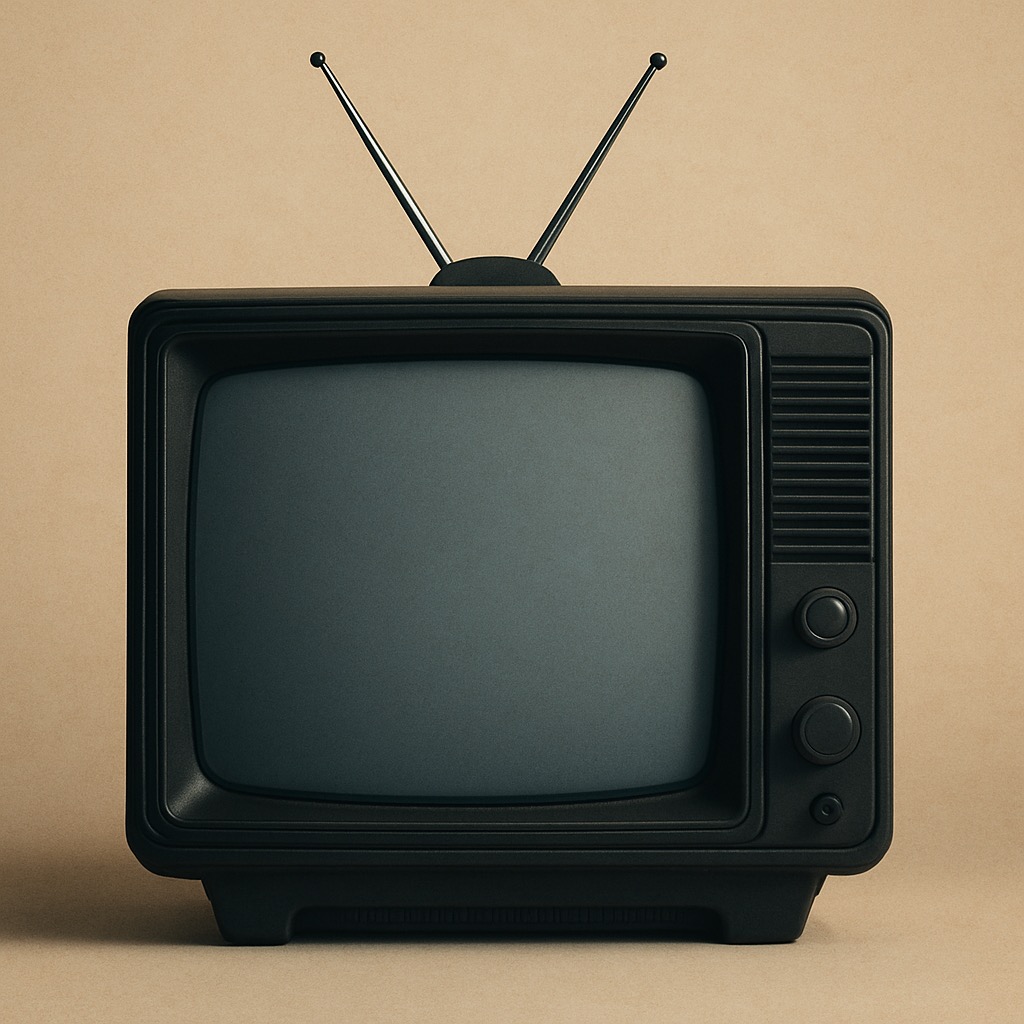
On paper, streaming gave us everything. We can watch what we want, when we want, without waiting, rewinding, or relying on the whims of the TV guide. But somewhere along the way, it quietly took something else: the magic of watching television as an experience — not just entertainment, but a ritual.
A rhythm. A shared pause in the day.
We didn’t just watch shows. We waited for them. We planned around them. We celebrated them. And in that waiting, something sacred lived. In my living room as a kid, we had an old white tv with four buttons on the front. When you wanted to change a channel, you had to get up and press one of the buttons.
Then came NTL, the BT box, Sky. So many channels, but they still have the old charm. Videos and DVDs were a luxury that my household only owned a few of. The life of streaming hadn’t arrived and we didn’t know what we were in for.
The Joy of the Ad Break
There was something chaotic and comforting about the humble advert break. It was a short, frantic window of opportunity — the moment you’d dash to the loo, boil the kettle, or grab biscuits from the cupboard. You’d shout to your family from the kitchen: “It’s back on!” and everyone would shuffle back into the room like it was a matter of national importance.
You couldn’t pause. You couldn’t rewind. If you missed it, you missed it. Adverts didn’t interrupt the story — they framed it. They gave space to breathe, time to process, and a moment to huddle together before the drama resumed. They were annoying, yes. But they were also part of the experience. A rhythm. A reset.
Adverts also held their own special type of magic. Was there anything more amazing as a kid than to see your favourite poster pop up in a new TV ad for a soda or their own brand of lollies? As an adult, nothing signalled the arrival of Christmas more than the sound of jingling bells and the Coca Cola “Holidays are coming” music, turning around to your family and announcing that it was now officially Christmas. What could replace singing that there was a magical place and we were on our way there with a giant giraffe. Nothing—that’s what.
The Sacred Pain of Waiting
Before binge culture, cliffhangers had power. When an episode ended with a gasp, a scream, a villain revealed — and those dreaded words flashed across the screen: “To Be Continued…” — you felt it in your bones. That wasn’t just a tease. That was a sentence. A full week of wondering, worrying, rewatching in your head, and whispering theories at school the next day.
I remember hearing a BBC TV announcer at the end of Buffy say that the scariest words on television were those very ones: To Be Continued. And they were right. Streaming didn’t just remove that fear — it took away the hunger. The build-up. The ache. Now, a lot of the time the next episode plays automatically. The waiting is gone. And with it, the obsession — the kind that burrows into your chest and refuses to leave until next Tuesday at 8.
The Weight of the Terrestrial Premiere
There was a time when the phrase “network premiere” felt like an event. You might have waited years for a beloved cinema film to finally appear on terrestrial TV. It would be advertised days in advance. Circled in the Radio Times. Plans were made around it. You made sure to have a cassette ready in the VCR if you wanted to tape it.
My childhood memories are littered with black video tapes with my mum’s handwriting on. Disney’s Robin Hood and Sword in the Stone taped in all its grainy beauty with Yellow Pages and Tesco christmas ads in between. They were magical and I loved every second.
Watching a film on BBC1 or ITV gave it weight — it meant it had earned its moment. You didn’t scroll past it, distracted. You sat down for it. You watched it when it was on. You couldn’t delay it, and you didn’t need to. Because everyone else was watching too.
Now, most new films skip the cinema entirely or arrive on streaming within weeks. There’s no wait. No fanfare. And sometimes… no one even knows they’re there. They get lost in the jumble of high profile Apple TV straight to streaming mini movies. All of them starring celebrities we would have paid big bucks to watch in a cinema a decade ago. Now they’re in three or four shows a year and we don’t even have time to watch them all!
The Ritual of Scheduled Cartoons
There was nothing like the anticipation of after-school or Saturday morning cartoons. You knew the line-up like it was gospel: the exact moment your favourite show would start, what came before it, and what signalled it was nearly over.
You’d rush home, shoes half-off, to make it in time for the opening theme song. If you were late, you missed it. That was that. And somehow, that mattered. It made it yours. Part of your day, your week, your growing-up rhythm.
Now, kids can watch anything at any time. It’s all available — and somehow, it means less. The ritual is gone. The timing, the chase, the *earned joy* of catching something live has faded into infinite scroll.
The Quiet Ending of the Day
Remember when TV… stopped? When the channel would stop airing and tune into a different channel or just replayed things from the day.
There was a gentleness to it — a signal that the world, even the digital one, needed to rest. Now, streaming never stops. We fall asleep to autoplay, we binge until we can’t keep our eyes open, and we forget to disconnect — because the platforms never do.
The Rhythm We Lost
Streaming is a gift. Of course it is. But it’s also a severing. It cut us off from the slow, shared rituals that once shaped our days. It gave us everything, instantly — but stripped away the structure, the anticipation, the longing that made the story feel sacred.
Neighbours used to be on twice a day, just in case you were too busy to catch it the first time. No fear of that now. You can watch whatever you want, whenever you want. But do we really watch anymore?
We didn’t just watch TV. We lived alongside it. We gathered for it. We waited for it. And when it finally came — when the film started, when the show returned, when the music swelled and everybody sang the theme tune together — it meant something.
And I don’t think we even realised it was disappearing.


