Built in 1918, RAF Henlow has been an important part of the aeronautical community for 104 years. With the imminent closure and removal of the site, now set to happen in 2023, there is no better time to look at the history of the site.
Contents
Origins
Originally chosen as a site for military repair in 1917, RAF Henlow was built the following year. Most likely chosen for the flatness of the land and the absence of waterways, the base was built on 226 acres of farmland. With a local railway line, good communications and a close proximity to industrial goods from Luton, Henlow was a great place to build. The base, built by a company named McAlpine, initially consisted of four Belfast Hangars, which are now classed as Grade II listed buildings.
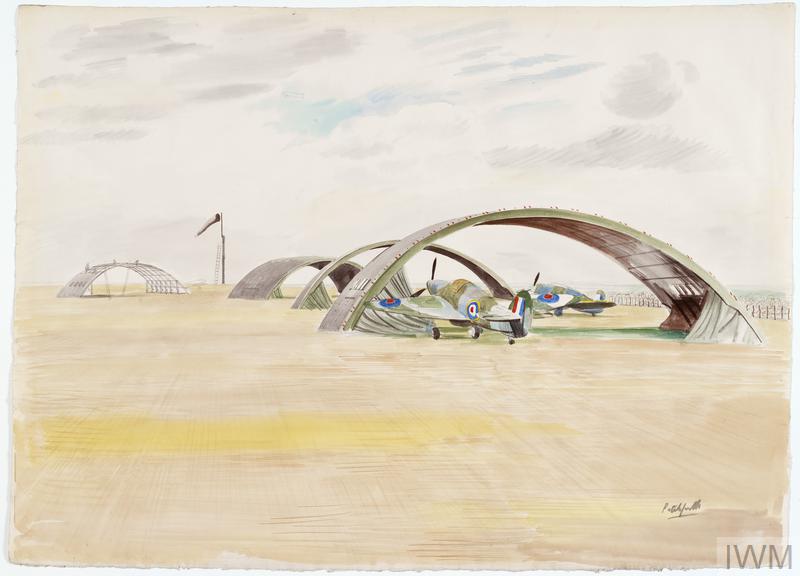
RAF Henlow was officially opened on the 18th May 1918 by Lt Col Robert Francis Stapleton-Cotton, a WWI and Boer War veteran. He was accompanied to the opening by 40 airmen from the then RAF base at Farnborough, 70 miles south of Henlow. By the time of the Armistice in 1918, there were 3000 working at RAF Henlow, including 300 WAAF (Women’s Auxiliary Air Force) employed for fabric works and clerical duties.
Parachute Testing Unit
Whilst continuing to produce aircraft, the 1920’s saw Henlow become the first parachute testing centre, with the installation of the Parachute Testing Unit (PTU). The testing would take place with the parachuters standing on the wings of an aircraft, notably a Vickers Vimy, a heavy bombers aircraft manufactured in the late stages of World War I. Once given the signal the airmen triggered their ‘chutes and floated away from the plane. One of the airmen testing parachutes, John Corlett, vividly remembered his time at the base (c. 1925) in an interview with a newspaper. John fondly remembers the words of the flight sergeant in charge and how he almost forgot how to operate his parachute in the excitement of the moment.
Hasn’t it gone quiet all of a sudden. God!! Where’s me ‘chute?-Should be up there, no sign of it-I’m falling, grab for something. These must be the parachute straps but what’s gone wrong-why do I keep getting glimpses of earth and then sky?
John Corlett
John goes on to say that he safely made it to the ground, although there is no mention of whether or not he braved going up there again!
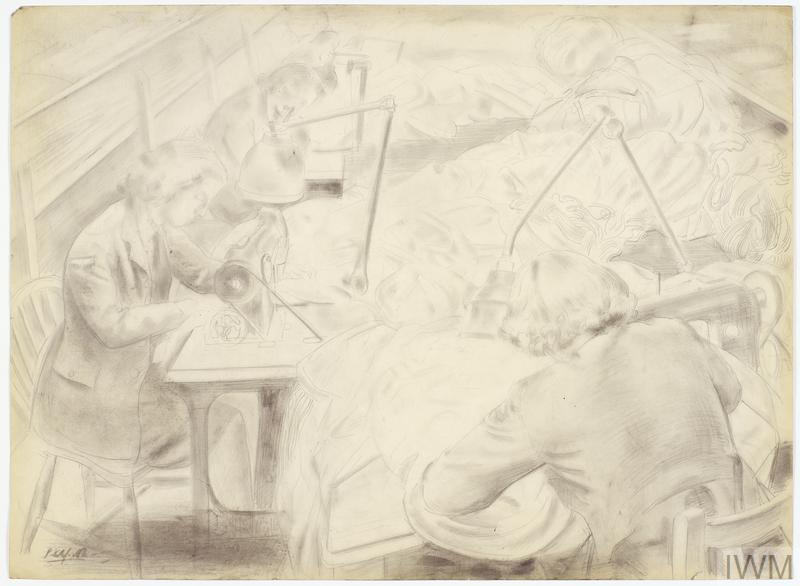
As well as testing the parachutes, the base was also responsible for repairing, packing and supplying the parachutes to squadrons. The parachutes were repaired and packed by WAAF workers employed at the base.
Training
1924 saw the introduction of the Officers’ Engineering School at Henlow, formerly placed at Farnborough. From 1932-1933 the school was attended by Flying Officer Frank Whittle. Whilst studying at Henlow, Whittle continued to work on his idea of an aircraft powered by a jet engine. In 1937, he finally ran the testing for the engine, which was to run Britain’s first jet-engined aircraft. RAF Henlow is very proud of their connection to Frank, naming their nearby funded nursery setting the ‘Whittle Child Centre’.
In the March of 1934, Prime Minister Stanley Baldwin announced that the RAF should be brought up to match the strength of the nearest airforce within striking distance to the UK. June of the following year saw the government announce that the Royal Air Force would be adding to its squadrons, taking the number from 52 to 75. This made a total of 128 squadrons when added to those already abroad. Advertisements were put out in publications to attract new recruits, resulting in 2500 pilots and 27,000 airmen that needed to be trained, and fast.
Several Technical Training Colleges were opened, with one established within Henlow. According to the Operations Record Book of the Home Aircraft Depot, Henlow was recognised as a training centre on the 19th August 1935. This followed a total shuffle of the RAF Common structure, with four new Commands added; Fighter, Bomber, Training and Coastal. Henlow was renovated with a new station headquarters and three new training wings. The college was moved to Cranwell in 1965 and replaced with the RAF Cadet Training Unit, although this also later moved to Cranwell.
World War II
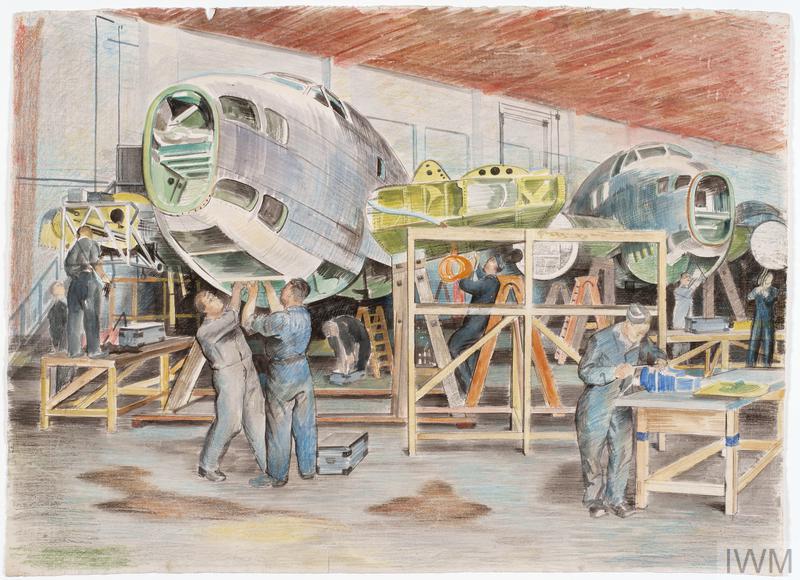
When peacetime was over, RAF Henlow once again ramped up its efforts and became one of the largest maintenance units in the country. The base began constructing a new aircraft, the Hawker Hurricane. Made in Fort William in Canada, the planes were tested, disassembled and shipped to Henlow. Once arrived, the aircrafts were reassembled by Henlow and forwarded on to the relevant squadrons. In 1941 the airmen from the base took part in Operation Quickfire. 100 fitters were deployed onto carriers to take aircraft to awaiting squadrons in Malta to join the fight. In total over 1000 Hurricanes passed through Henlow, 10% of Fort William’s overall production. By 1944 the Hurricanes were replaced by two new aircraft models, the Mosquitoes and the Typhoons. In 1939 the number of people at the station was at 4,232. By 1944, this had almost doubled. To serve the military communities, a large hospital was built on site.
Post War & Modern
After the Second World War, the role of the station changed. With aircraft production slowing down, Henlow became a place for other areas of the Royal Air Force. Radios and communications took a home with the establishment of the Radio Engineering Unit (REU). The UK Military Arms Control and Verification Centre has been there since the 1990s, as well as the Headquarters RAF Provost and Security Services. The Centre of Aviation Medicine, Band of Queen’s Division and Defence Equipment and Support also call Henlow their home.
On 6th September 2016, the UK Defence Secretary announced the closure and sale of multiple MOD sites, to meet the Government demand for new housing. Among these sites was RAF Henlow. There are many plans available online for the site, although no definitive answers for what will happen to the many Grade II listed buildings on the site.
In July of 2020, Henlow closed its airfield to visiting aircraft and recreational fliers. The date for the permanent closure of the station is set for 2023.
Quick Facts
Some other quick facts about RAF Henlow
- The original control tower onsite was constructed from the empty packing crates from the Hawker Hurricanes.
- In 1940, Henlow was bombed by the Luftwaffe. Eight bombs fell on the base and surrounding areas, damaging two of their aircraft hangars.
- Airmen from RAF Henlow helped pull the doomed airship, R101, from its hangar before its last flight. 800 of the men later lined the streets for the funeral of those killed in the disaster.
- In 1968 the base was given the Freedom of Bedfordshire.
- The plane acting as a gate guard at Henlow is a Hawker Hunter (WT612), built in 1954. It was grounded in 1957 and used as an instructional shell until being refurbished and put on guard.
- In 2011, RAF Henlow was identified as one of many sites that were ‘dangerously radioactive’. This is reportedly due to the radium used to finish the dials and other components in the aircraft, so they could be seen in the dark. Radium can be radioactive for thousands of years.
Liked it? Try one of these…
Read more: