History is almost always objective. It is recorded through the eyes of someone who will almost certainly taint it with their own personal biases. The further back you go, the harder it gets. Historical figures are shaped by the sources that are left for us to interpret in our own way. Anne Boleyn is one of those figures.
For many years Anne was regarded by many as a six fingered, man-eating witch. Seducing the King, causing him to divorce his wife and turning him away from his faith. Plotting, planning and scheming her way to the crown. But when we look into it we actually know very little about some aspects of Anne’s life, not even a definite date of birth or what she looked like, and what we do know of her can sometimes come from questionable sources. Sources such as Eustace Capuys, who was a staunch defender of Katherine of Aragon and made no attempt to hide his dislike of Anne.
It is clear however that Anne was not a meek, obedient woman of the times. She was spirited and had her wits about her. She was certainly judged by most in her own century in a bad light. It can be hard for us to judge someone’s character when they lived in a time so different to ours, with a different set of societal rules and values. But taken out of her era and put into ours, would Anne have been viewed differently by modern standards and definitions? Would Anne Boleyn have been a ‘good’ person?
What is a ‘good’ person?
Good, and bad, are usually based on your perspective of things. Whether or not you judge someone as being either is based on what you know, or think you know, of them. But as a society we seem to have a pretty good picture of who or what we deem a good person to be. Here are some definitions of a ‘good’ person from a very modern source… the internet!
A person who is good to other people; helpful and trustworthy.
FREEDICTIONARY.COM
An honest, helpful or morally good person.
MERRIAM-WEBSTER.COM
And the most modern dictionary of all…
A good person is a person who fulfils the following three criteria:
1. Enjoys a happy, satisfying and fulfilling life within their ability.
2. Promotes a happy, satisfying and fulfilling life for those that they care about within their ability.
3. Does not prevent others from a happy, satisfying and fulfilling life within their ability.
URBANDICTIONARY.COM
Most of the definitions I came across all covered the same general areas. Be nice to people, including yourself, and you will be deemed a good person. We will look at how many of these things, among others, Anne worked towards in her life!

Aristotle’s Cardinal Values
Aristotle claimed that there were four cardinal values that you should live by. These values will show that you are leading a virtuous life and by extension be a ‘good’ person. They are;
- Prudence
- Temperance
- Justice
- Fortitude
Prudence can also be thought of as wisdom / shrewdness. Was Anne wise? She could certainly govern herself, and those around her, with her reasoning and logic. Anne could be shrewd in matters both in political and personal settings. She was wise enough to see her sister’s reputation at French court and made a note to herself to not be the same. Whether or not she was hopping into bed with other men, as Henry accused her of later on, is debatable but she certainly kept it on the DL if she did.
When Katherine died Anne (and Henry) is said to have been joyous and showing their daughter off, giving grand gifts to the messenger who bought the news and having a lovely time of celebrating it. But Chapuys also notes that he had had reports of Anne crying. Fearful that she will be next. Henry have already made comments about witchcraft being the cause of their marriage and how he had want of a new wife already. Whether or not she knew of this, she had reason to worry. Anne was shrewd enough to know that if a husband to do that to his wife once he could easily do it again. Unfortunately for her, she would become a cautionary tale of a different kind!
Controlling passions and having self-restraint, or temperance, immediately comes to mind when Henry begins pursuing Anne. She knows that her reputation and chastity are hot commodities. She will not give them up for anything less than marriage and of course the crown. We know from love letters that Henry sent to Anne that he desperately wanted to bed her and her keeping him at arm’s length just made him want her all the more. But keep him away she did!
Anne is often thought to have been a bit of a hot head. If you believe Chapuys’ accounts then Anne frequently threatened the lives of many, including Katherine and Mary. If you believe he was exaggerating overheard words spoken in anger, then at best Anne was prone to rant and rage about her husband’s former family. Controlling some passions may have been easier than others.
Justice is where Anne may fall down. Treating others fairly and with respect? Anne was definitely big on charity. Many of her contemporaries made note of the kindness and donations that came during her reign as Queen, although some may have been slightly exaggerated. Thanks to a campaign by author Hayley Nolan, Anne is now even acknowledged with being the mind behind the Poor Law, previously attributed to Thomas Cromwell. The Poor Law saw free healthcare for the poor and help finding jobs.
So there is justice for the poor. But is there fair treatment and respect for others in her life? It is, again, hard to know how much of history was actually down to Anne. If you read some sources, Alison Weir’s ‘Six Wives of Henry VIII’ for example, you won’t like Anne Boleyn very much. She is accredited for all of the bad treatment Henry dished out to Mary and his former queen. She banned him from seeing his daughter and flew off in rages if he did. Then demanded all of Katharine’s royal jewels, robes and even a christening gown that had been sent with her from Spain all those years ago. Anne is even rumoured to have poisoned the queen and princess. She delighted in tormenting and torturing them and was joyous when Katherine died, cladding herself in bright yellow to mark the occasion.
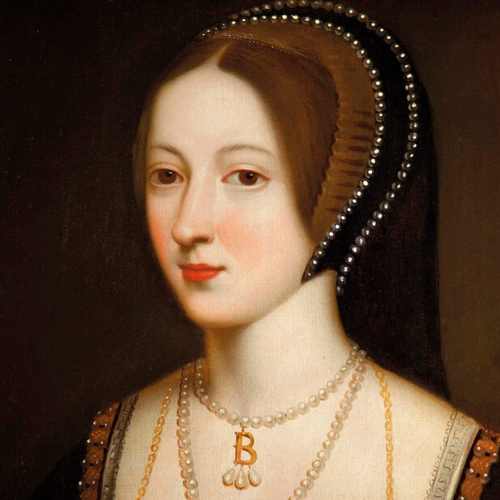
How much of these sources are accurate? How much did Henry himself do? There are letters from Anne attempting reconciliation with Mary, asking her to simply acknowledge her as queen. Mary, of course, refused but how much of that was kindness and how much just trying to get the princess to bend the knee? Sources state Anne repented all of her bad treatment of Mary before her own execution, a late realisation maybe that she hadn’t been just after all. Whatever power Anne may have had over Henry he was the King. He had the final say in all matters and could quite easily have told her so, as he is reported to do so when she chastises him for his affairs. It is also worth noting that his treatment of Mary actually worsened after Anne was gone.
But had Anne believed that the way she treated people was justice? She had after all become queen in the eyes of God. Wasn’t it just that people acknowledged her and treated her as such? Did she only ‘wrong’ those who had wronged her? Katherine, Mary… even Wolsey from the very beginning by declining her first marriage match.
In her life Anne showed plenty of fortitude. She had courage by the truckload! She stood up for what she believed in and even managed to turn people to her point of view. Anne was even caught reading banned religious books that would have been seen as heretical if anyone else had been doing so. However Anne managed to convince Henry to let her keep them and even managed to turn his head to believe that this new religion reform she was so devout to may be the way forward. She got his backing for political changes and rallied him against some of his own men.
Anne had the courage to make Henry wait for what he wanted. To outsmart a King! She was tough, smart, unapologetic and a feminist’s dream!
So… was she good or not?
I believe Anne tried her hardest to lead a good life for herself. She strived to keep a good reputation at French court and also in England once Henry began his wooing. She held out for the crown and the life that it bought with it. Although there is little evidence about the depth of Anne’s feelings for her daughter, she likely would have wanted just as good a life for Elizabeth too.
It is unclear whether or not she actively prevented good lives for Katherine and Mary. We know now that Henry was not the most even tempered man. Even described as a tyrant. Could she have just been unlucky enough to have been around when he began to really show it? With little unbiased evidence we can’t really condemn her for these deeds but we aren’t able to completely clear her of them either. So going by urbandictionary.com’s definition, two out of three isn’t bad!
If we live by Aristotle’s cardinal values, Anne would have looked a pretty virtuous person indeed! Whether or not she always used the values in the ways others would have used them she certainly showed prudence, temperance, justice and fortitude in many aspects of her life. It is a shame that any good that she did do was overshadowed by the view that most people had of her at the time and unfortunately ever since.
In modern society Anne would have been a woman that a charismatic man wooed after telling her that he was split from his wife and was filing for divorce. She would have been reluctant to begin a relationship with the man until he showed good faith that he actually was getting a divorce and that she wasn’t just a mistress. Then she would have unfortunately learnt that he had a wandering eye and would repeat the same behaviour with her. Hopefully he wouldn’t have her head cut off…
Was Anne an angel? No. But does that mean she was a witchcraft wielding, man-eating she-devil? No. If you take Anne and put her in today’s world with modern standards and definitions I personally believe she would have been a ‘good’ person. With the standing of women in society ever changing and evolving, the constraints and expectations Anne lived under would have shifted or disappeared entirely. Lovers before marriage, dating someone looking for a divorce and being unkind to your husband’s ex-wife would not be uncommon. Although we still have societal conceptions of people and prejudices at work, she certainly would have been viewed with different eyes today!
Enjoyed reading it? Why not share it!
Further reading –
‘Six Wives of Henry VIII’ Alison Weir
‘Anne Boleyn: 500 Years of Lies’ Hayley Nolan